Saltar al contenido
MisLibrosTexto
Ad
Ingles · 3ro BGU · 2024

Ministerio de Educación del Ecuador

16/34

Crear organizador gráfico y responder preguntas sobre redes sociales y bienestar

📄 ejercicios ingles 🎓 BGU · 3° BGU Ecuador 🇪🇨 EC 🗣 Español
Página 16
16 de 34
Página 16 de Ingles · 3ro BGU · 2024
Anterior Página 16 / 34 Siguiente

Respuesta rápida

El organizador debe ser coherente con la información de la página 15.

📚 exercise ingles ⭐⭐⭐ Dificultad 3/5 ⏱ 10 min lectura

Solución — Página 16

Ingles · 3ro BGU · 2024

1
Ejercicio 1

Lectura

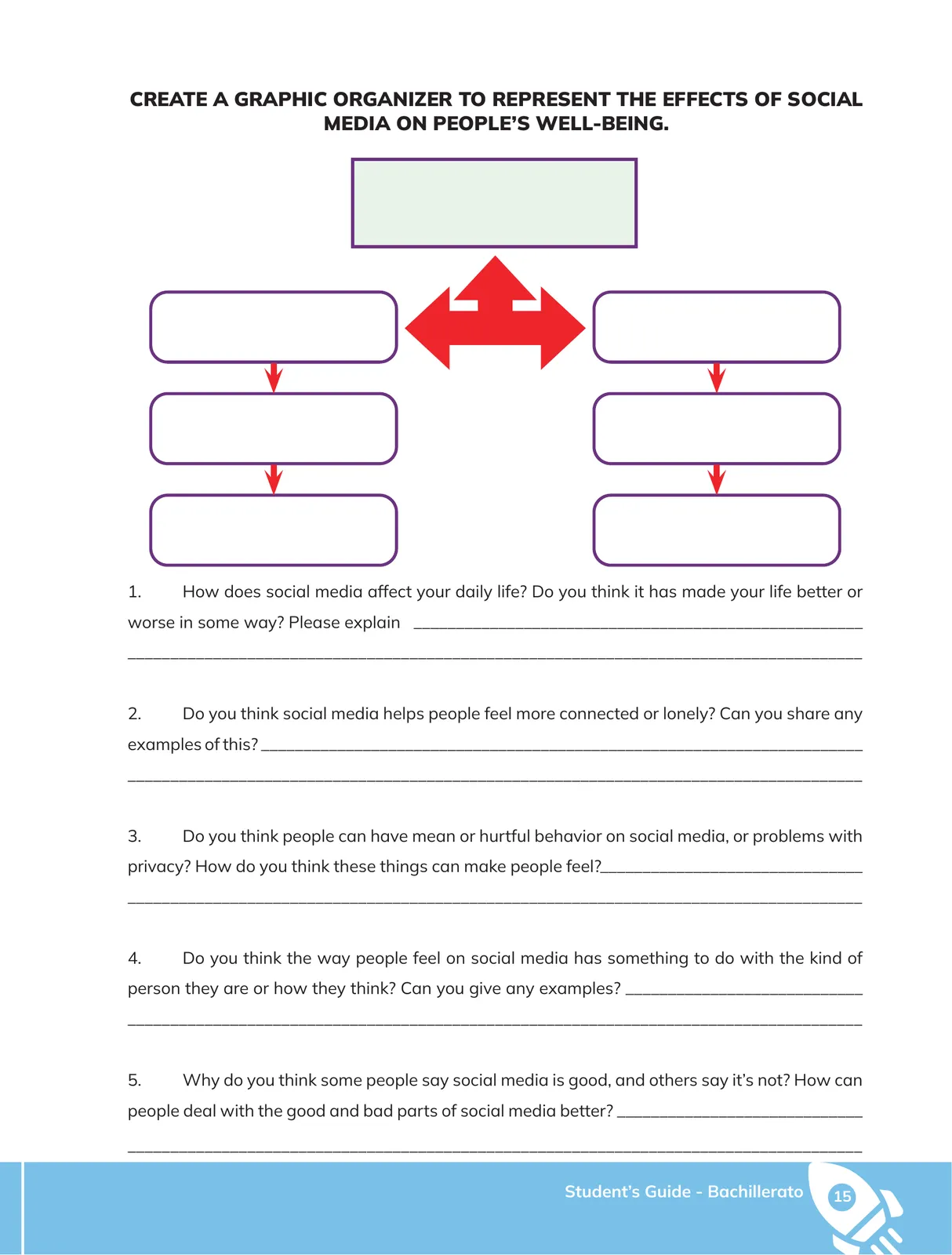
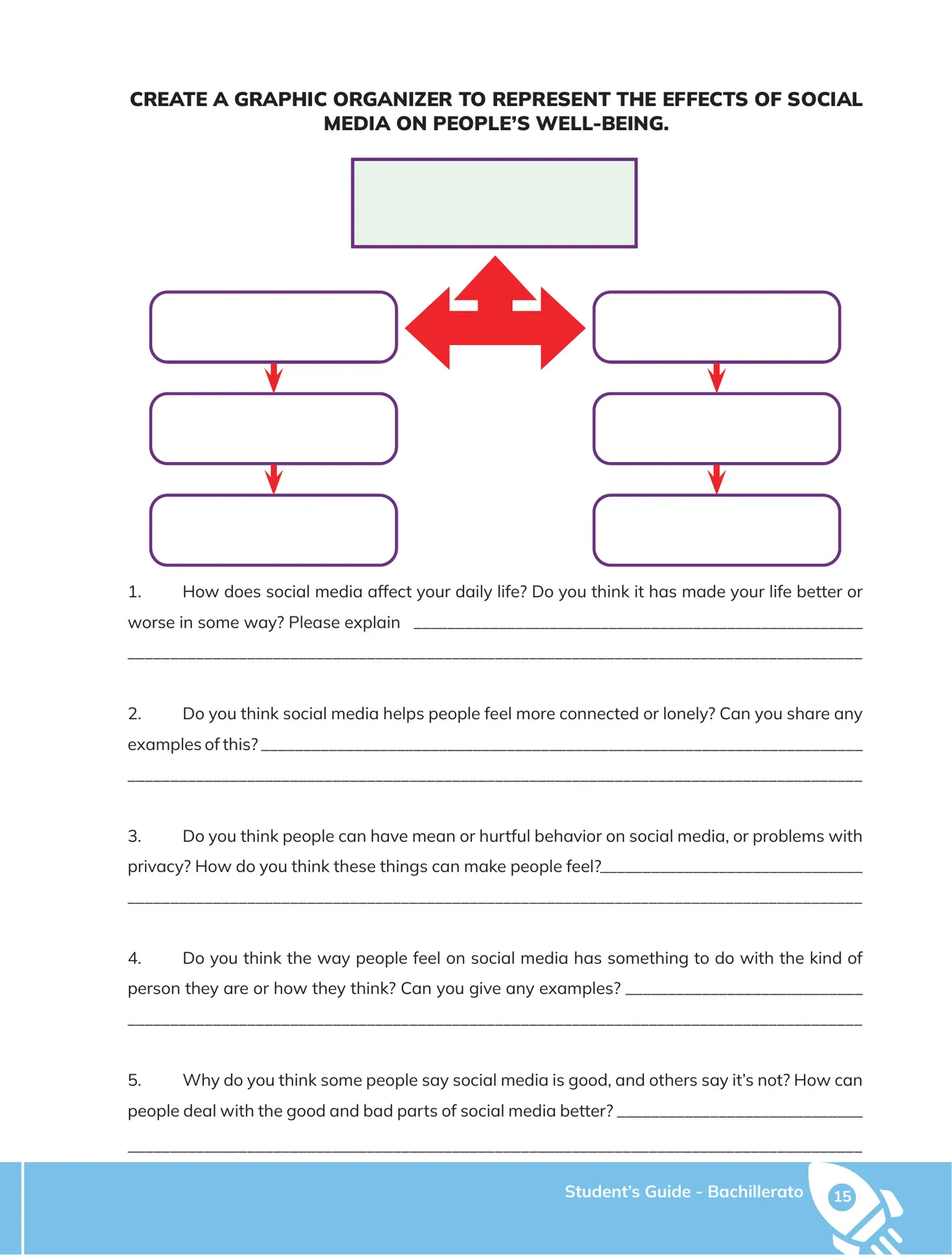
CREATE A GRAPHIC ORGANIZER TO REPRESENT THE EFFECTS OF SOCIAL MEDIA ON PEOPLE'S WELL-BEING.

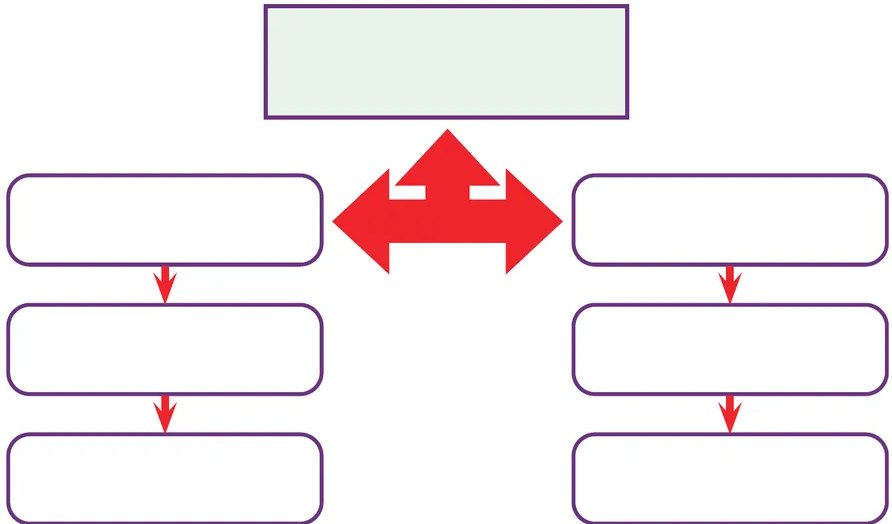
(Diagrama: una caja central conecta con dos columnas (izquierda y derecha) y cada columna tiene tres cajas verticales conectadas por flechas rojas. La estructura sugiere: tema central → dos categorías de efectos (positivos / negativos) → tres efectos específicos para cada categoría.)

1
Ejercicio 1

Create a graphic organizer to represent the effects of social media on people's well-being.

  1. Identificar el tema central (Effects of Social Media on Well-Being).
  2. Dividir en dos categorías: Positive effects (columna izquierda) y Negative effects (columna derecha).
  3. Listar tres efectos positivos: social connectedness, reduce isolation, compensate face-to-face interactions.
  4. Listar tres efectos negativos: anxiety/depression, cyber bullying, privacy concerns.

Preguntas abiertas

Respuesta

El organizador debe ser coherente con la información de la página 15.

1
Ejercicio 1

** How does social media affect your daily life? Do you think it has made your life better or worse in some way? Please explain.

Respuesta orientativa: Respuesta personal: identificar usos (comunicación, estudios, entretenimiento) y evaluar impacto.

Ad
2
Ejercicio 2

** Do you think social media helps people feel more connected or lonely? Can you share any examples of this?

Respuesta orientativa: Argumentación con ejemplos reales: conexión con familiares lejanos vs. aislamiento por scroll pasivo.

3
Ejercicio 3

** Do you think people can have mean or hurtful behavior on social media, or problems with privacy? How do you think these things can make people feel?

Respuesta orientativa: Discutir cyberbullying, exposición de datos, sentimientos de ansiedad, vergüenza, soledad.

4
Ejercicio 4

** Do you think the way people feel on social media has something to do with the kind of person they are or how they think? Can you give any examples?

Respuesta orientativa: Sí, individuos propensos a ansiedad o comparación social pueden sentirse más afectados.

Ad
5
Ejercicio 5

** Why do you think some people say social media is good, and others say it's not? How can people deal with the good and bad parts of social media better?

Respuesta orientativa: Las visiones varían por experiencias personales; estrategias: horarios, contenido positivo, descansos.

Diagrama 1

Plantilla del organizador gráfico sugerido para la página

flowchart TD
  Tema[Effects of Social Media on Well-Being]
  Tema --> Pos[Positive Effects]
  Tema --> Neg[Negative Effects]
  Pos --> P1[Social connectedness]
  P1 --> P2[Reduce isolation]
  P2 --> P3[Compensate face-to-face]
  Neg --> N1[Anxiety / Depression]
  N1 --> N2[Cyber bullying]
  N2 --> N3[Privacy concerns]

Glosario

  • graphic organizer: Organizador gráfico; herramienta visual para representar información.
  • mean behavior: Comportamiento cruel o malintencionado.
  • hurtful: Hiriente; que causa dolor.
  • privacy: Privacidad; intimidad.
¿Te fue útil esta página?

Figuras de la página (1)

Figura 2 de Ingles · 3ro BGU · 2024
Figura 2 image

Preguntas que la gente también hace

How does social media affect your daily life? Do you think it has made your life better or worse in some way? Please explain.
Consulta la solución completa arriba o explora el libro entero para temas relacionados.
Do you think social media helps people feel more connected or lonely? Can you share any examples of this?
Consulta la solución completa arriba o explora el libro entero para temas relacionados.
Do you think people can have mean or hurtful behavior on social media, or problems with privacy? How do you think these things can make people feel?
Consulta la solución completa arriba o explora el libro entero para temas relacionados.
Do you think the way people feel on social media has something to do with the kind of person they are or how they think? Can you give any examples?
Consulta la solución completa arriba o explora el libro entero para temas relacionados.
Why do you think some people say social media is good, and others say it's not? How can people deal with the good and bad parts of social media better?
Consulta la solución completa arriba o explora el libro entero para temas relacionados.
📌 Antes de leer esto
  • Ver pág. 15: Texto fuente para llenar el organizador y responder preguntas.
  • Ver pág. 17: Continuación con consejos para balancear el uso de redes sociales.
Siguiente tema sugerido
How can we find a balance between social media and well-being?
📝 Transcripción de la página (texto seleccionable) 890 caracteres

CREATE A GRAPHIC ORGANIZER TO REPRESENT THE EFFECTS OF SOCIAL MEDIA ON PEOPLE’S WELL-BEING.

( a ( ON q y q y ( y ON 4 y a Ne y qa y ( y ON ( y ON q y q y

  1. How does social media affect your daily life? Do you think it has made your life better or

worse in some way? Please explain

  1. Do you think social media helps people feel more connected or lonely? Can you share any

examples of this?

  1. Do you think people can have mean or hurtful behavior on social media, or problems with

privacy? How do you think these things can make people feel?

  1. Do you think the way people feel on social media has something to do with the kind of

person they are or how they think? Can you give any examples?

  1. Why do you think some people say social media is good, and others say it’s not? How can

people deal with the good and bad parts of social media better?

Student’s Guide - Bachillerato

Ad

Otros libros recomendados

Ver todos →
Ad

Usamos cookies propias y de terceros para personalizar contenido, mostrar publicidad y analizar el tráfico. Las cookies necesarias siempre están activas.