Saltar al contenido
MisLibrosTexto
Ad
Ingles · 9 EGB · 2024

Ministerio de Educación del Ecuador

45/50

S and Z Sounds: voiceless vs voiced

📄 contenido ingles 🎓 EGB · 9° EGB Ecuador 🇪🇨 EC 🗣 Español
Página 45
45 de 50
Página 45 de Ingles · 9 EGB · 2024
Anterior Página 45 / 50 Siguiente

Respuesta rápida

El docente verifica la pronunciación.

📚 theory ingles ⭐⭐⭐ Dificultad 3/5 ⏱ 10 min lectura

Solución — Página 45

Ingles · 9 EGB · 2024

1
Ejercicio 1

Lectura

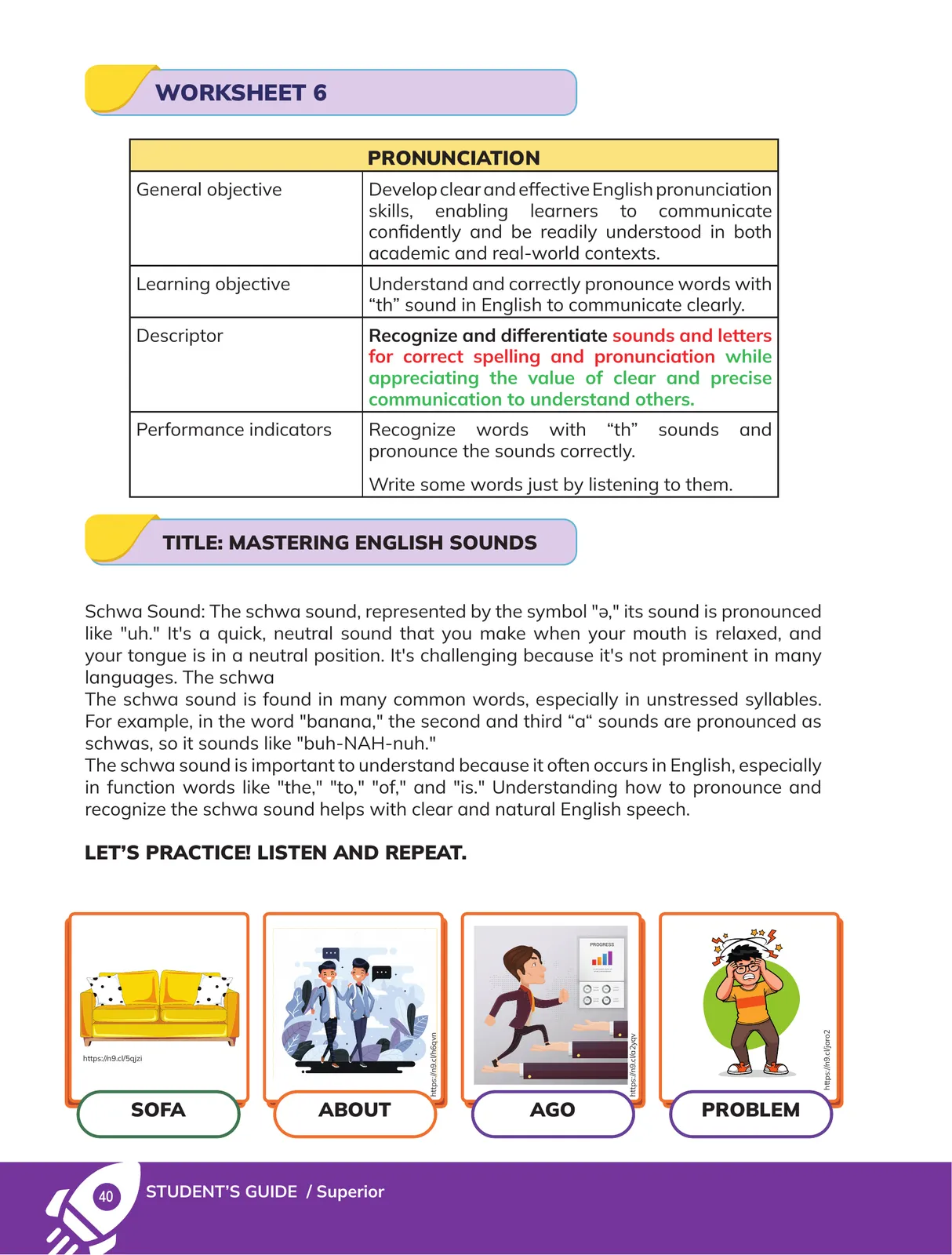
S AND Z SOUNDS

English has both voiceless "s" and voiced "z" sounds, which may not exist in some learners' native languages. The distinction between them is important for word meaning, e.g., "sip" vs. "zip."

"S" SOUND

The "s" sound is like a soft, hissing sound.

When you say words with "s," your vocal cords don't vibrate; they stay still.

To make this sound, place your tongue close to the roof of your mouth (but don't touch it). Then, gently blow air out between your tongue and the roof of your mouth.

"S" SOUND EXAMPLES:

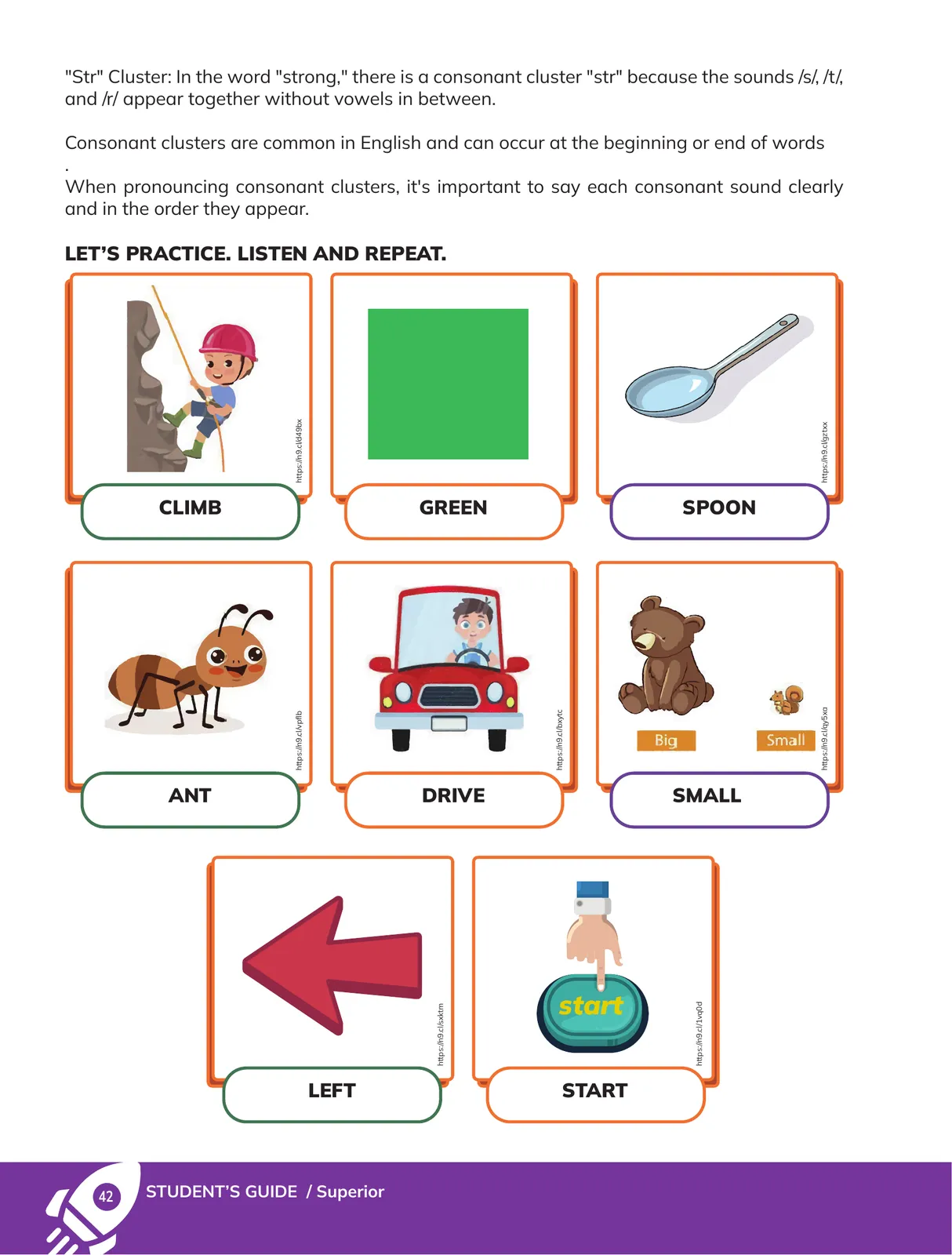
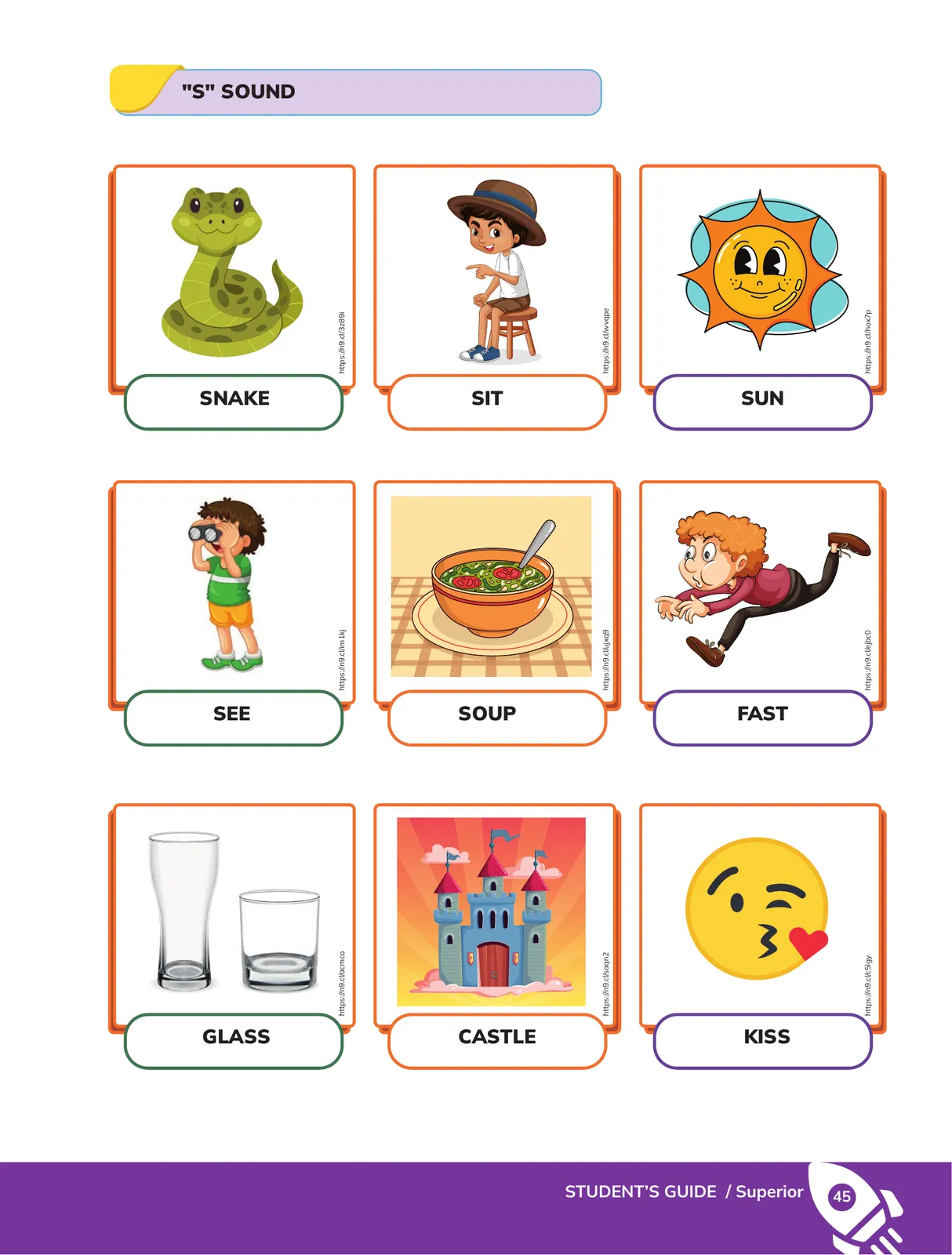
  • snake
  • sit
  • sun
  • see

"Z" SOUND

The "z" sound is similar to the "s" sound, but your vocal cords vibrate when you say it. It's a bit like a buzzing or humming sound.

To make this sound, do the same tongue position as "s," but let your vocal cords vibrate. It should sound like a soft "zzzz."

"Z" SOUND EXAMPLES:

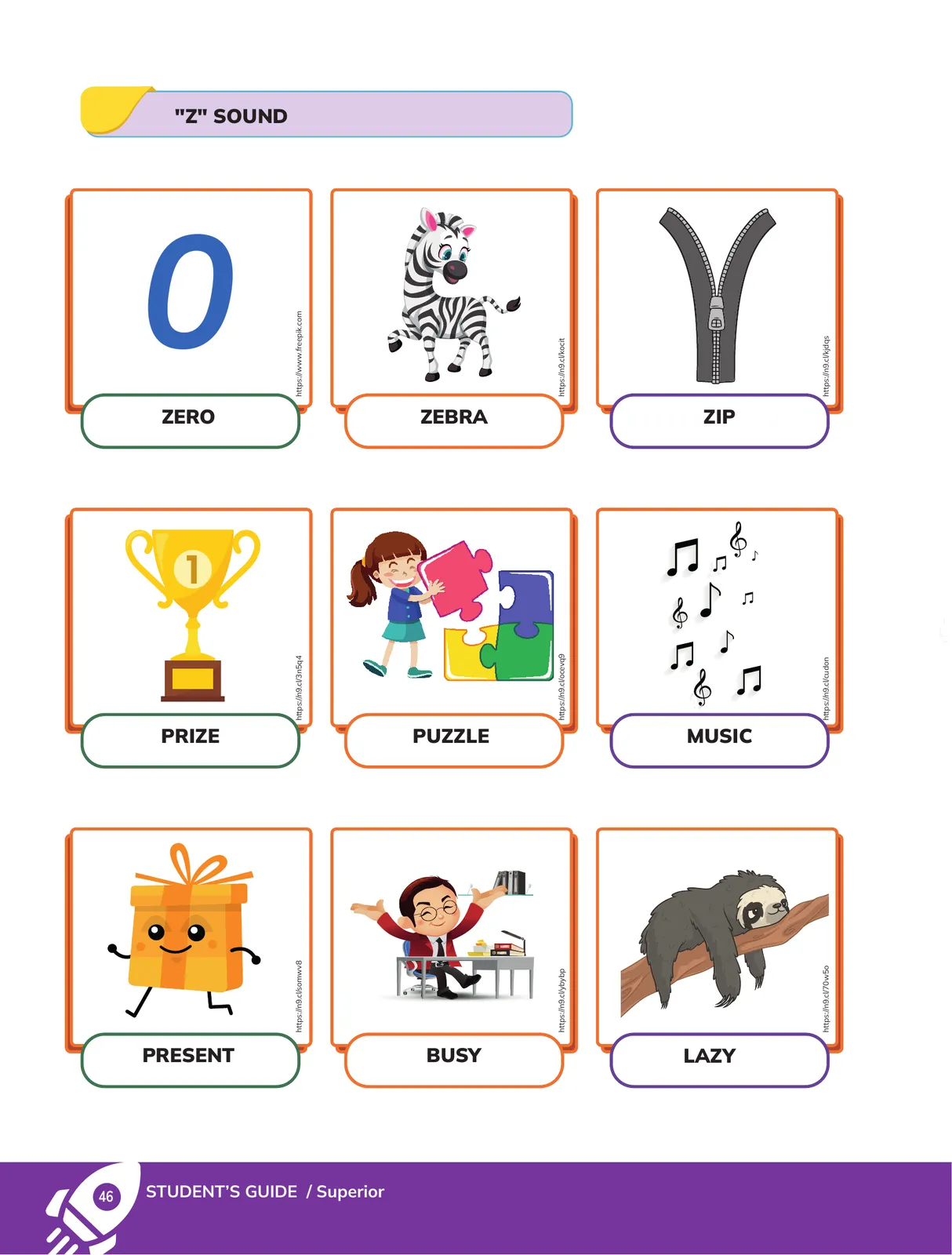
  • zero
  • zebra
  • zip
  • prize

REMEMBER

The main difference is whether your vocal cords vibrate. "S" is quiet (no buzzing), and "z" is like a gentle buzz.

Ready to practice? Listen and repeat.
1
Ejercicio 1

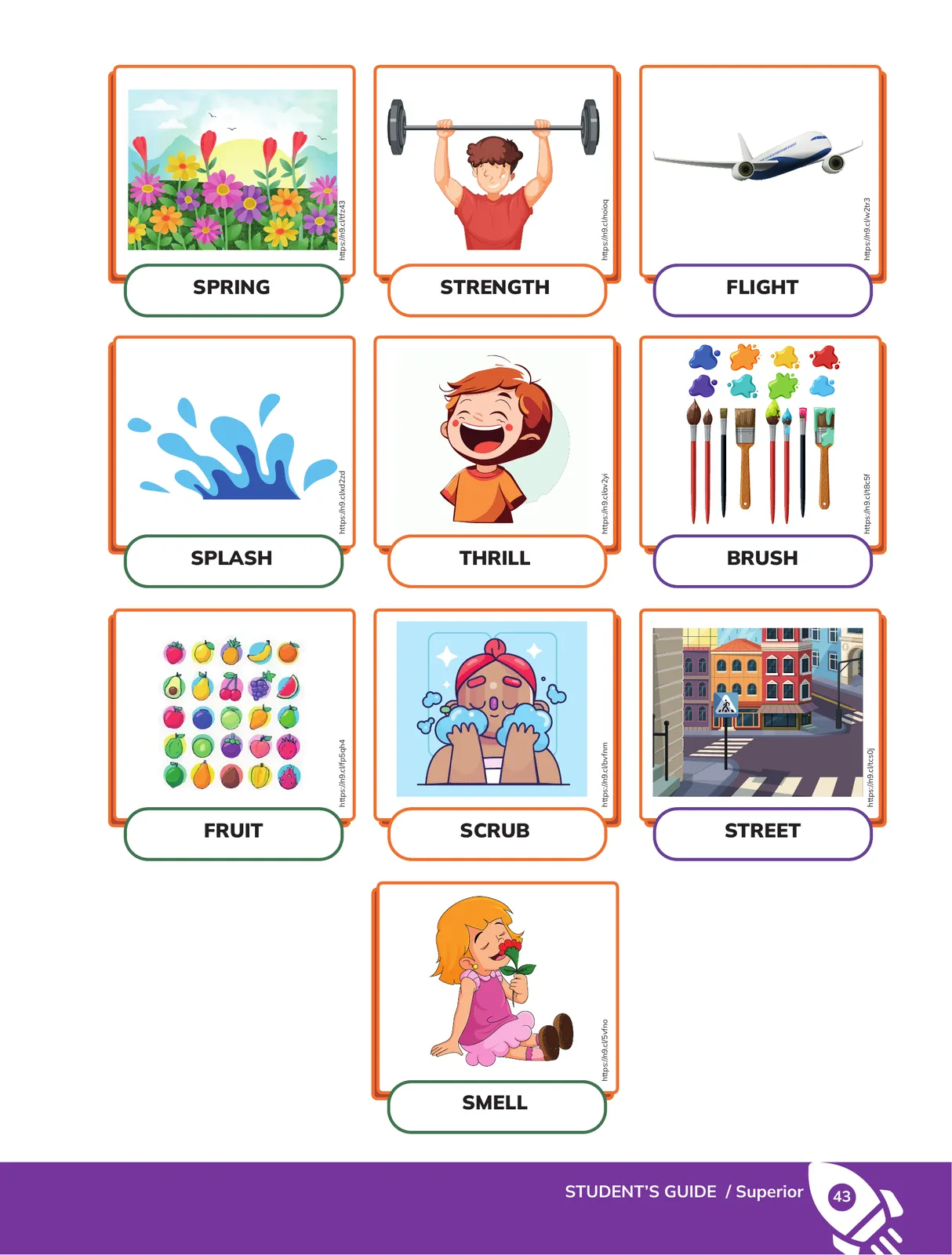
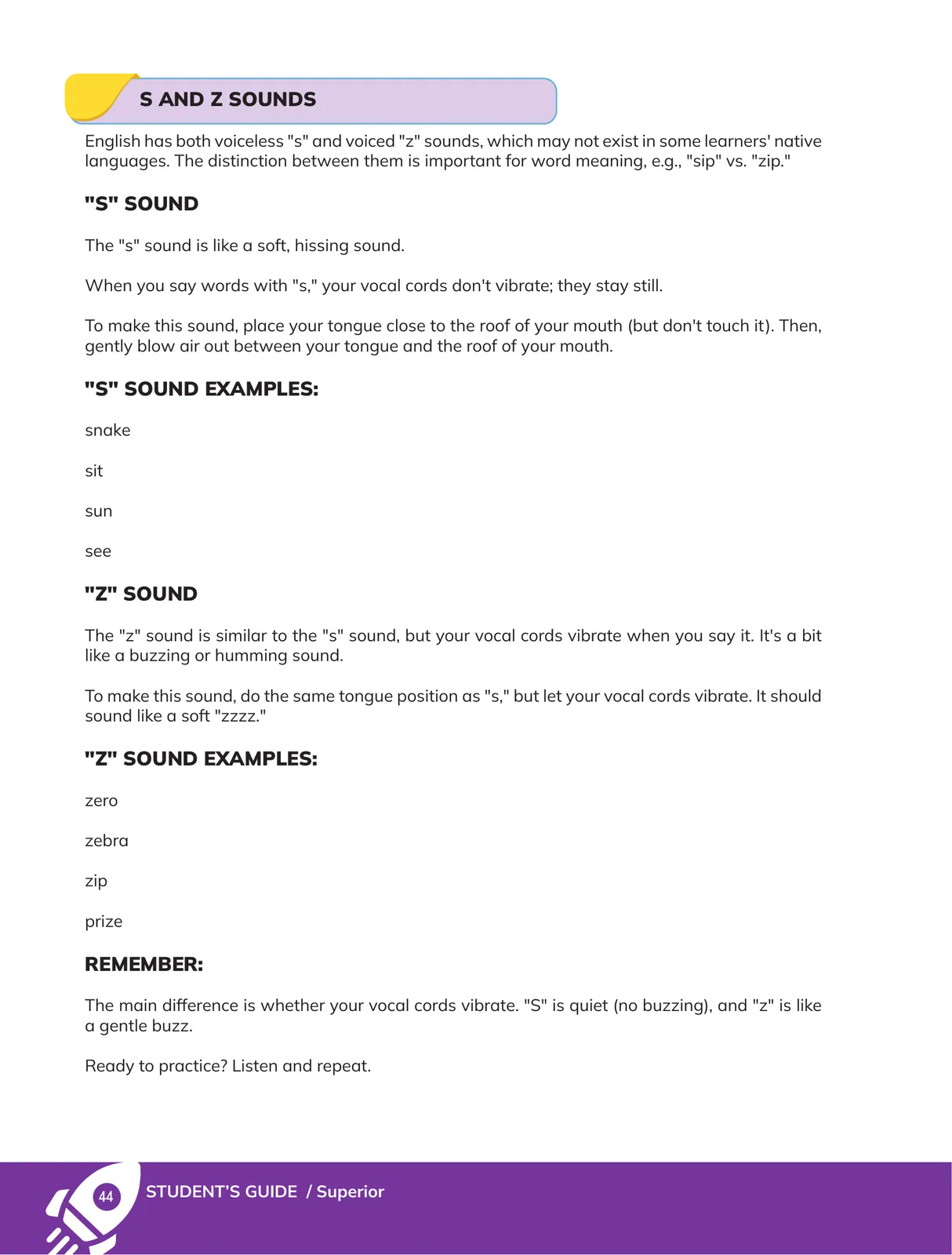
Listen and repeat the examples. Place your hand on your throat to feel the difference between voiceless /s/ and voiced /z/.

  1. Coloca la mano en la garganta.
  2. Pronuncia 'sssss' (sin vibración) y luego 'zzzzz' (con vibración).
  3. Repite las listas de ejemplos.

Ejemplo 1

Diferenciar 'sip' y 'zip'.

  1. Sip: /sɪp/ — sin vibración inicial.
  2. Zip: /zɪp/ — con vibración inicial.
  3. Toca tu garganta al pronunciar; en 'zip' sentirás vibración.

Preguntas abiertas

Respuesta

El docente verifica la pronunciación.

1
Ejercicio 1

** ¿Por qué los hispanohablantes suelen confundir /s/ y /z/?

Respuesta orientativa: Porque en español estándar (excepto algunos dialectos) no existe el fonema /z/, así que tendemos a pronunciar todo como /s/.

Diagrama 1

Comparación de los fonemas /s/ y /z/.

classDiagram
  class Phoneme {
    +tongue_position
    +airflow
  }
  Phoneme <|-- S
  Phoneme <|-- Z
  S : voiceless
  S : no vibration
  S : hissing
  Z : voiced
  Z : vibration
  Z : buzzing

Tablas

Característica /s/ /z/
Vibración cuerdas No
Calidad Siseo Zumbido
Posición lengua Cerca del paladar Igual
Ejemplos snake, sit, sun, see zero, zebra, zip, prize
Minimal pair sip zip

Glosario

  • voiceless: Sordo/a; sonido producido sin vibración de cuerdas vocales (/s/, /t/, /p/...).
  • voiced: Sonoro/a; sonido producido con vibración de cuerdas vocales (/z/, /d/, /b/...).
  • vocal cords: Cuerdas vocales.
  • hissing: Siseo; sonido como el de una serpiente.
  • buzzing: Zumbido.
  • minimal pair: Par mínimo; dos palabras que difieren en un solo sonido (sip/zip).
¿Te fue útil esta página?

Preguntas que la gente también hace

¿Por qué los hispanohablantes suelen confundir /s/ y /z/?
Consulta la solución completa arriba o explora el libro entero para temas relacionados.
📌 Antes de leer esto
  • Ver pág. 44: Práctica previa con consonant clusters.
  • Ver pág. 46: Continúa con más sonidos clave.
Siguiente tema sugerido
S Sound: práctica con tarjetas
📝 Transcripción de la página (texto seleccionable) 1071 caracteres

os AND Z SOUNDS )

English has both voiceless "s" and voiced "z" sounds, which may not exist in some learners' native languages. The distinction between them is important for word meaning, e.g., "sip" vs. "Zip."

"S" SOUND The "s" sound is like a soft, hissing sound. When you say words with "s," your vocal cords don't vibrate; they stay still.

To make this sound, place your tongue close to the roof of your mouth (but don't touch it). Then, gently blow air out between your tongue and the roof of your mouth.

"S" SOUND EXAMPLES: snake

sit

sun

see

"Z" SOUND

The "z" sound is similar to the "s" sound, but your vocal cords vibrate when you say it. It's a bit like a buzzing or humming sound.

To make this sound, do the same tongue position as "s," but let your vocal cords vibrate. It should sound like a soft "zzzz."

"Z" SOUND EXAMPLES: zero

zebra

zip

prize

REMEMBER:

The main difference is whether your vocal cords vibrate. "S" is quiet (no buzzing), and "z" is like a gentle buzz.

Ready to practice? Listen and repeat.
(44 ) STUDENT’S GUIDE / Superior

Ad

Otros libros recomendados

Ver todos →
Ad

Usamos cookies propias y de terceros para personalizar contenido, mostrar publicidad y analizar el tráfico. Las cookies necesarias siempre están activas.