















Ejercicio 1
Teoría: Presente simple vs. presente progresivo (continuo)
Preguntas introductorias (traducción)
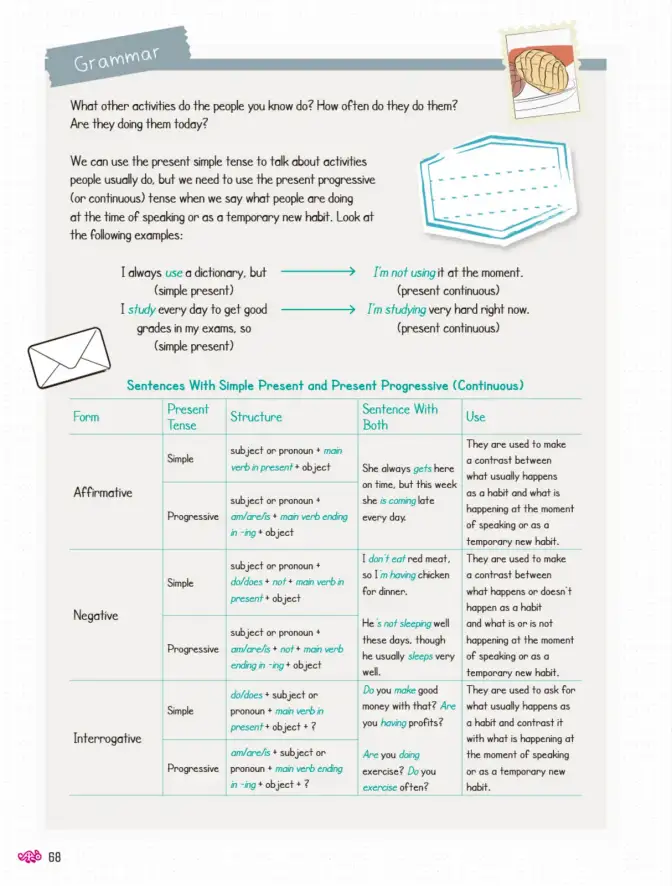
¿Qué otras actividades hacen las personas que conoces? ¿Con qué frecuencia las hacen? ¿Las están haciendo hoy?
Respuesta orientativa: mi hermana lee todas las noches (habit → presente simple: she reads every night), pero hoy está leyendo un cuento nuevo (ahora mismo → presente progresivo: she is reading now).
Explicación del contenido
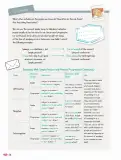
- Presente simple (simple present): se usa para hablar de actividades que la gente suele hacer, es decir, hábitos y rutinas.
- Señales frecuentes: always (siempre), every day (todos los días), often (a menudo), usually (usualmente).
- Ejemplo del libro: I always use a dictionary = Yo siempre uso un diccionario (hábito).
- Ejemplo del libro: I study every day to get good grades = Yo estudio todos los días para sacar buenas calificaciones (hábito).
- Presente progresivo o continuo (present progressive/continuous): se usa para decir qué la gente está haciendo en el momento de hablar, o para un hábito nuevo y temporal.
- Señales frecuentes: right now (ahora mismo), at the moment (en este momento), these days (estos días).
- Ejemplo del libro: I'm not using it at the moment = No lo estoy usando en este momento (acción actual).
- Ejemplo del libro: I'm studying very hard right now = Estoy estudiando muy duro justo ahora (acción actual o temporal).
- Regla de contraste: el libro usa los dos tiempos en la misma oración para contrastar el hábito con lo que ocurre ahora: She always gets here on time, but this week she is coming late every day (Ella siempre llega a tiempo, pero esta semana está llegando tarde cada día).