














Saltar al contenido
MisLibrosTexto
Ad

Hot Potato: compartir opiniones y reflexionar sobre las fuentes de información

📄 ejercicios lengua-y-literatura 🎓 secundaria · 2° Secundaria México 🇲🇽 MX 🗣 Español
Página 12
12 de 171
Página 12 de Uérakua anapu uantakua. Projects and Readings.  Libro de Educación Secundaria Grado 2°  Ciclo Escolar 2025 - 2026
Anterior Página 12 / 171 Siguiente

Respuesta rápida

Actividad 3: juego "hot potato" para opinar y reflexionar sobre fuentes de información. Ejercicio 4: los medios pueden uniformar la opinión; hay que verificar fuentes y fomentar el pensamiento crítico.

📚 exercise lengua-y-literatura ⭐⭐ Dificultad 2/5 ⏱ 6 min lectura

Solución — Página 12

Uérakua anapu uantakua. Projects and Readings. Libro de Educación Secundaria Grado 2° Ciclo Escolar 2025 - 2026

1
Ejercicio 1

Actividad 3 (continuación): Hot Potato

Enunciado: en comunidad, discutan los temas propuestos y compartan las fuentes de donde obtuvieron la información; luego jueguen al "hot potato" para expresar opiniones.

  1. Paso c) Discutir y compartir fuentes. Cada estudiante comenta qué sabe del tema y de dónde lo obtuvo (libro, noticia, documental, red social, conversación familiar).
  2. Paso d) Elegir un tema. El grupo selecciona uno de los temas sugeridos: aprendizajes, datos interesantes, temas controversiales, opiniones encontradas, información científica, información de medios o hallazgos de investigación.
  3. Paso e) Objeto para pasar. Se usa una pelota, un juguete o un pañuelo: es la "hot potato" (papa caliente).
  4. Paso f) Música. Una persona se encarga de la música (cantar, usar el celular o cualquier sonido).
  5. Paso g) Circular. Cuando empieza la música, se pasa la papa caliente lo más rápido posible.
  6. Paso h) Se detiene la música. Quien tenga la papa caliente expresa su opinión sobre el tema y la información que posee.
  7. Paso i) Repetir. Al terminar su participación, vuelve a circular el objeto. Debe participar toda la comunidad.
  8. Paso j) Reflexionar. El grupo comparte reflexiones sobre: aprendizajes del tema, datos interesantes, temas controversiales, opiniones en conflicto, información científica, información de medios y hallazgos de investigación.

Respuesta orientativa: la actividad muestra que cada persona se acerca a la información de manera distinta y que algunas son más críticas que otras respecto a las fuentes que sostienen sus opiniones. Por eso es necesario evitar la desinformación y buscar fuentes confiables.


4
Ejercicio 4

En comunidad, lean y reflexionen sobre la siguiente situación y cómo se relaciona con su comunidad escolar.

Problematic situation 1. The information broadcast through the media is considered to be true by most people, which leads to a uniform public opinion and generates a deep lack of criticism.

  1. Identificar el problema: la mayoría acepta como verdadera la información de los medios sin verificarla.
  2. Reconocer la consecuencia: se forma una opinión pública uniforme y disminuye el pensamiento crítico.
  3. Relacionarlo con la escuela: si en la comunidad escolar se repite un rumor o una noticia sin comprobarla, se puede excluir o juzgar injustamente a alguien.
  4. Proponer acciones: contrastar la noticia en al menos dos fuentes confiables, revisar autor y fecha, preguntar al docente y debatir respetuosamente antes de opinar.

Respuesta orientativa: la situación advierte que creer todo lo que difunden los medios produce una opinión única y acrítica. En la escuela conviene verificar la información, comparar fuentes y argumentar con evidencias para formar una comunidad informada y crítica.

Contenido de la página

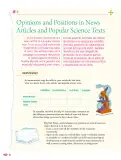
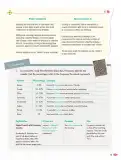
c) Discuss what you know about the topics and share the sources where you got the information.

d) Choose one of the topics you suggested.

e) You'll need something to pass around, like a ball, a toy, or even just a tissue. This will be the "hot potato"!

f) One person will be in charge of playing the music (for example, singing a song, using a phone, or anything that makes noise).

g) When the music starts, pass the hot potato around the circle as fast as you can go!

h) Suddenly, the music will stop! Whoever is holding the hot potato will express and share their opinion on the topic previously chosen, as well as the information they have about it.

i) Once their participation finishes, the hot potato will pass around again. Repeat the process. The whole community must participate.

j) Now share your reflections on the following topics:

  • Learnings about the topic discussed
  • Finding out interesting data
  • Controversial issues
  • Conflicting opinions
  • Science information
  • Information from the media
  • Research findings

As you can see, each person approaches information differently. There are those who are more critical than others regarding the sources of information that underpin their opinions. This is a reminder that it is necessary to avoid disinformation and to research trustworthy sources on topics of interest.

  1. In community, read and reflect on the following situations, and how they relate to your school community. If you believe it is necessary, with the guidance of your teacher, modify the approach as you see fit.

Problematic situation 1. The information broadcast through the media is considered to be true by most people, which leads to a uniform public opinion and generates a deep lack of criticism.

Glosario (4)

hot potato
Juego en el que un objeto se pasa rápidamente mientras suena la música; quien lo tiene al parar la música participa.
disinformation
Información falsa difundida intencionalmente para engañar.
trustworthy sources
Fuentes confiables y verificables de información.
public opinion
Opinión compartida por la mayoría de una sociedad.

Preguntas para practicar

¿Por qué es importante verificar las fuentes de información?

Porque permite distinguir hechos de opiniones o rumores, evitar la desinformación y formar opiniones fundamentadas. Al contrastar varias fuentes confiables se reduce el riesgo de difundir datos falsos.

¿Cómo se relaciona la situación problemática 1 con tu comunidad escolar?

En la escuela circulan rumores o noticias sin verificar que pueden generar opiniones uniformes y excluir a alguien. Fomentar el debate con evidencias y consultar fuentes confiables ayuda a formar una comunidad más crítica.

Temas y conceptos clave

Discusión comunitariaFuentes de informaciónDesinformaciónPensamiento críticohot potatofuentes confiablesopinión públicadesinformaciónpensamiento crítico
¿Te fue útil esta página?

Figuras de la página (3)

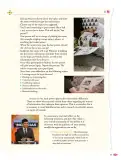
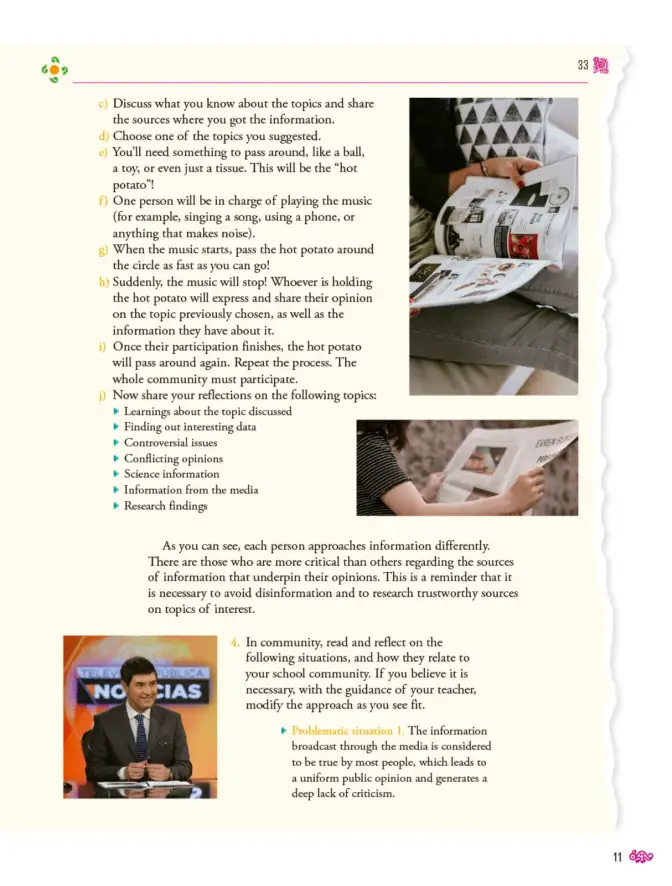
Persona sentada leyendo un periódico o revista.
Figura 1 image
Persona sosteniendo y leyendo un periódico.
Figura 2 image
Conductor de noticias en un set de televisión con el letrero 'NO CIAS'.
Figura 3 image

Preguntas que la gente también hace

¿Cómo saber si una fuente de información es confiable?
Consulta la solución completa arriba o explora el libro entero para temas relacionados.
¿Qué es la desinformación y cómo evitarla?
Consulta la solución completa arriba o explora el libro entero para temas relacionados.
¿Por qué los medios pueden formar una opinión pública uniforme?
Consulta la solución completa arriba o explora el libro entero para temas relacionados.
📌 Antes de leer esto
  • • Identificar ideas principales y opiniones
  • • Vocabulario básico en inglés sobre medios y noticias
  • • Participación en discusiones grupales
Siguiente tema sugerido
Problematic situation 2: análisis de otras situaciones relacionadas con la información y la comunidad escolar
📝 Transcripción de la página (texto seleccionable) 1866 caracteres

c)Discuss what you know about the topics and share the sources where you got the information.

d) Choose one of the topics you suggested.

e) You'll need something to pass around, like a ball,a toy, or even just a tissue. This will be the "hot potato"!

广One person will be in charge of playing the music (for example, singing a song, using a phone, or anything that makes noise).

g)When the music starts, pass the hot potato around the circle as fast as you can go!

h) Suddenly, the music will stop! Whoever is holding the hot potato will express and share their opinion on the topic previously chosen, as well as the information they have about it.

i)Once their participation finishes, the hot potato will pass around again. Repeat the process. The whole community must participate.

)Now share your reflections on the following topics:

c Learnings about the topic discussed

(ci F inding out interesting data

Controversial issues

Conflicting opinions

Science information

c Information from the media

c esearch findings

As you can see, each person approaches information differently.There are those who are more critical than others regarding the sources of information that underpin their opinions. This is a reminder that it is necessary to avoid disinformation and to research trustworthy sources on topics of interest.

  1. In community, read and reflect on the following situations, and how they relate to your school community. If you believe it is necessary, with the guidance of your teacher,modify the approach as you see fit.

Problematic situation 1. The information broadcast through the media is considered to be true by most people, which leads to a uniform public opinion and generates a deep lack of criticism.

33

![](page=0,bbox=[642, 755, 1042, 929])

![](page=0,bbox=[737, 174, 1043, 712])

![](page=0,bbox=[114, 1146, 391, 1439])

11

Ad

Páginas cercanas

Otros libros recomendados

Ver todos →
Ad

Usamos cookies propias y de terceros para personalizar contenido, mostrar publicidad y analizar el tráfico. Las cookies necesarias siempre están activas.