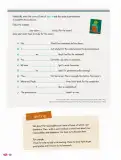
















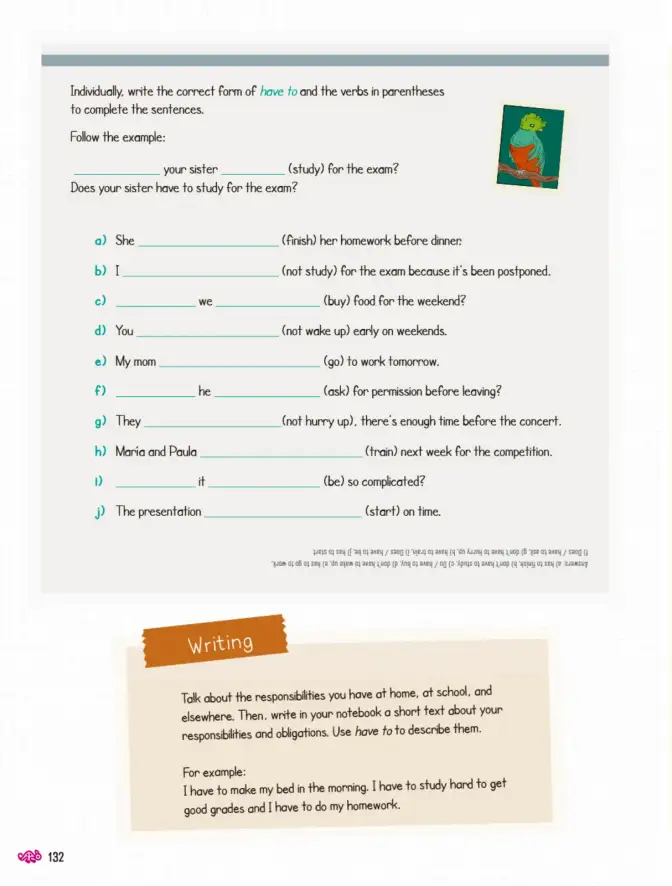
Individually, write the correct form of have to and the verbs in parentheses to complete the sentences. (Escribe la forma correcta de have to y el verbo entre paréntesis para completar las oraciones.)
Example: Does your sister have to study for the exam?
She ___ (finish) her homework before dinner.
- Sujeto She (3.ª persona singular) → has to.
- Verbo en forma base: finish.
She has to finish her homework before dinner.
I ___ (not study) for the exam because it's been postponed.
- Sujeto I → have to.
- Negativa: don't have to + verbo base study.
I don't have to study for the exam because it's been postponed.
___ we ___ (buy) food for the weekend?
- Interrogativa con we → auxiliar Do.
- Estructura: Do + we + have to + verbo base.
Do we have to buy** food for the weekend?
You ___ (not wake up) early on weekends.
- Sujeto You → have to.
- Negativa: don't have to + wake up.
You don't have to wake up early on weekends.
My mom ___ (go) to work tomorrow.
- Sujeto My mom (3.ª persona singular) → has to.
- Verbo base: go.
My mom has to go to work tomorrow.
___ he ___ (ask) for permission before leaving?
- Interrogativa con he → auxiliar Does.
- Estructura: Does + he + have to + verbo base.
Does he have to ask** for permission before leaving?
They ___ (not hurry up), there's enough time before the concert.
- Sujeto They → have to.
- Negativa: don't have to + hurry up.
They don't have to hurry up, there's enough time before the concert.
María and Paula ___ (train) next week for the competition.
- Sujeto plural María and Paula → have to.
- Verbo base: train.
María and Paula have to train next week for the competition.
___ it ___ (be) so complicated?
- Interrogativa con it → auxiliar Does.
- Estructura: Does + it + have to + be.
Does it have to be** so complicated?
The presentation ___ (start) on time.
- Sujeto The presentation (3.ª persona singular) → has to.
- Verbo base: start.
The presentation has to start on time.