















Saltar al contenido
MisLibrosTexto
Ad

Comprehension and Production: Composing an Anthology of Folktales

📄 ejercicios ingles 🎓 secundaria · 2° Secundaria México 🇲🇽 MX 🗣 Español
Página 135
135 de 171
Página 135 de Uérakua anapu uantakua. Projects and Readings.  Libro de Educación Secundaria Grado 2°  Ciclo Escolar 2025 - 2026
Anterior Página 135 / 171 Siguiente

Respuesta rápida

  1. Tabla de vocabulario completada. 2) Lectura comunitaria de los relatos. 3) Antología organizada en 6 secciones: Front page, Index, Foreword, Contents, Conclusions, Comments and Sources.
📚 exercise ingles ⭐⭐ Dificultad 2/5 ⏱ 6 min lectura

Solución — Página 135

Uérakua anapu uantakua. Projects and Readings. Libro de Educación Secundaria Grado 2° Ciclo Escolar 2025 - 2026

1
Ejercicio 1

Individually, choose one of the folktales or legends you found in your research.

  1. Revisa tu investigación comunitaria y elige un relato (folktale o legend).
  2. Lee el relato en inglés y subraya las palabras o frases que no entiendas.
  3. Búscalas en el diccionario y completa la tabla en tu cuaderno.

Respuesta orientativa: Tabla completada con vocabulario real del relato elegido. Ejemplo:

Words or Phrases I Looked Up How Are They Used in the Text? Definition in English
once upon a time Once upon a time, there was a poor farmer. a traditional story opening meaning "a long time ago"
trickster The trickster fooled the whole village. a character who deceives others
harvest The harvest was good that year. the time or act of gathering crops
wise The wise old woman gave advice. having experience, knowledge and good judgment
a
Parte 1.a

Identify words or phrases you don't understand and look them up in a dictionary.

  1. Selecciona de 4 a 6 palabras o frases desconocidas.
  2. Copia la tabla de tres columnas en tu cuaderno.
  3. Escribe la palabra, una oración del texto donde aparece y su definición en inglés.
Respuesta

Tabla de vocabulario completada (ver ejemplo arriba).

2
Ejercicio 2

In community, read the folktales or legends you selected.

  1. Formen equipos y compartan los relatos elegidos.
  2. Lean en voz alta turnándose y comenten el significado.
  3. Registren acuerdos sobre cuáles incluir en la antología.

Respuesta orientativa: Lectura comunitaria realizada; se acordó incluir relatos de al menos tres continentes distintos para representar la diversidad cultural del inglés.

3
Ejercicio 3

Choose the folktales or legends you liked best for your anthology.

  1. Seleccionen los relatos favoritos del grupo.
  2. Verifiquen que provengan de todos los continentes donde se habla inglés.
  3. Organicen la antología en las seis secciones indicadas.

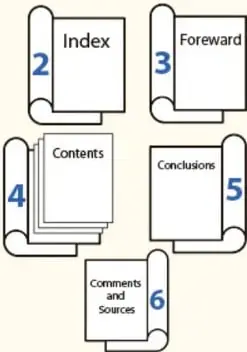
Respuesta: Antología organizada en seis secciones: 1) Front page, 2) Index, 3) Foreword, 4) Contents, 5) Conclusions, 6) Comments and Sources.

a
Parte 3.a

It's important to have it organized into the following sections:

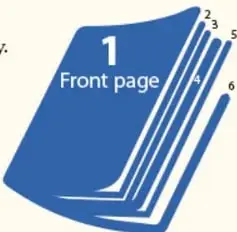
  1. Front page: datos oficiales (escuela, docente, grupo, título).
  2. Index: contenido de la antología.
  3. Foreword: texto del docente como introducción.
  4. Contents: colección de folktales y leyendas en inglés.
  5. Conclusions: texto del grupo sobre la importancia de leer literatura y su relación con la identidad de los países anglohablantes.
  6. Comments and Sources: comentarios de la comunidad escolar tras la presentación en "Broadcasting" y fuentes en orden alfabético.
Respuesta

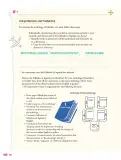
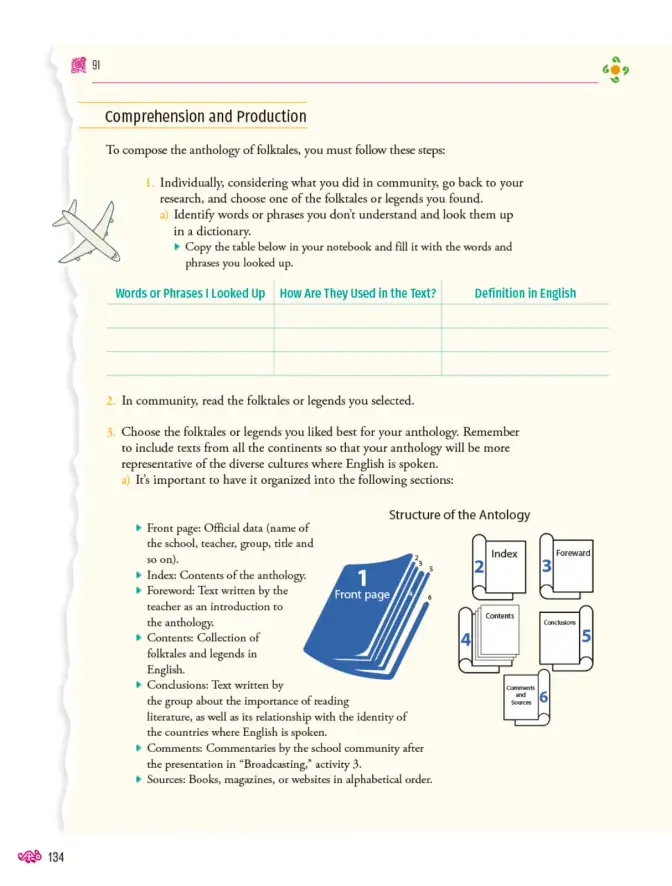
Estructura de la antología definida según el diagrama de la página.

Contenido de la página

Comprehension and Production

To compose the anthology of folktales, you must follow these steps:

  1. Individually, considering what you did in community, go back to your research, and choose one of the folktales or legends you found. a) Identify words or phrases you don't understand and look them up in a dictionary.
    • Copy the table below in your notebook and fill it with the words and phrases you looked up.
Words or Phrases I Looked Up How Are They Used in the Text? Definition in English
  1. In community, read the folktales or legends you selected.

  2. Choose the folktales or legends you liked best for your anthology. Remember to include texts from all the continents so that your anthology will be more representative of the diverse cultures where English is spoken. a) It's important to have it organized into the following sections:

    • Front page: Official data (name of the school, teacher, group, title and so on).
    • Index: Contents of the anthology.
    • Foreword: Text written by the teacher as an introduction to the anthology.
    • Contents: Collection of folktales and legends in English.
    • Conclusions: Text written by the group about the importance of reading literature, as well as its relationship with the identity of the countries where English is spoken.
    • Comments: Commentaries by the school community after the presentation in "Broadcasting," activity 3.
    • Sources: Books, magazines, or websites in alphabetical order.

Structure of the Anthology

  1. Front page
  2. Index
  3. Foreword
  4. Contents
  5. Conclusions
  6. Comments and Sources

Ejemplos resueltos

Fill the vocabulary table with words from a folktale you chose.

Words or Phrases I Looked Up How Are They Used in the Text? Definition in English
once upon a time Once upon a time, there was a poor farmer. a traditional story opening meaning "a long time ago"
trickster The trickster fooled the whole village. a character who deceives others
harvest The harvest was good that year. the time or act of gathering crops

Tabla

Words or Phrases I Looked Up How Are They Used in the Text? Definition in English

Diagrama

graph TD
  A[Structure of the Anthology] --> B[1. Front page]
  A --> C[2. Index]
  A --> D[3. Foreword]
  A --> E[4. Contents]
  A --> F[5. Conclusions]
  A --> G[6. Comments and Sources]

Glosario (6)

anthology
A collection of literary works, such as stories or poems, in one book.
folktale
A traditional story passed down orally among common people.
legend
A traditional story sometimes popularly regarded as historical but not authenticated.
foreword
A short introduction to a book, typically written by someone other than the author.
index
An alphabetical list of names, subjects, etc., with references to the pages where they occur.
sources
Books, magazines or websites used to obtain information.

Preguntas para practicar

Why is it important to include texts from all the continents where English is spoken?

Because English is spoken in many cultures around the world, and including texts from different continents makes the anthology more representative of that diversity. It also helps readers understand different identities and traditions linked to the language.

Temas y conceptos clave

Comprensión y producción de textosAntología de folktales y leyendasVocabulario en contextoDiversidad cultural del inglésanthologyfolktalelegendforewordindexconclusionssources
¿Te fue útil esta página?

Figuras de la página (3)

Avión de papel dibujado en línea.
Figura 1 image
Diagrama de la estructura de la antología con seis secciones numeradas.
Figura 2 image
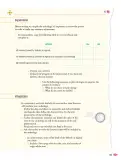
Ilustración de un libro azul abierto con el número 1 y la etiqueta 'Front page'.
Figura 3 image

Preguntas que la gente también hace

¿Qué es una antología de folktales y leyendas?
Consulta la solución completa arriba o explora el libro entero para temas relacionados.
¿Cómo se organiza una antología en inglés?
Consulta la solución completa arriba o explora el libro entero para temas relacionados.
¿Qué secciones debe tener una antología escolar?
Consulta la solución completa arriba o explora el libro entero para temas relacionados.
📌 Antes de leer esto
  • • Lectura de textos narrativos en inglés
  • • Uso del diccionario bilingüe
  • • Investigación comunitaria previa sobre folktales
Siguiente tema sugerido
Redacción del prólogo y las conclusiones de la antología
📝 Transcripción de la página (texto seleccionable) 1732 caracteres

Comprehension and Production

To compose the anthology of folktales, you must follow these steps:

  1. Individually, considering what you did in community, go back to your research, and choose one of the folktales or legends you found.

a) Identify words or phrases you don't understand and look them up in a dictionary.

Copy the table below in your notebook and fill it with the words and phrases you looked up.

  1. Choose the folktales or legends you liked best for your anthology. Remember to include texts from all the continents so that your anthology will be more representative of the diverse cultures where English is spoken.

a) It's important to have it organized into the following sections:

cFront page: Official data (name of the school, teacher, group, title and so on).

(c Index: Contents of the anthology.

(cidForeword: Text written by the teacher as an introduction to the anthology.

-Contents: Collection of folktales and legends in English.

Conclusions: Text written by

the group about the importance of reading

literature, as well as its relationship with the identity of the countries where English is spoken.

Comments: Commentaries by the school community after the presentation in "Broadcasting," activity 3.

Sources: Books, magazines, or websites in alphabetical order.

g

![](page=0,bbox=[94, 355, 217, 473])

Definition in English
  1. In community, read the folktales or legends you selected.

Structure of the Antology

![](page=0,bbox=[825, 959, 1072, 1311])

![](page=0,bbox=[545, 993, 782, 1225])

乐

134

Ad

Otros libros recomendados

Ver todos →
Ad

Usamos cookies propias y de terceros para personalizar contenido, mostrar publicidad y analizar el tráfico. Las cookies necesarias siempre están activas.