















Saltar al contenido
MisLibrosTexto
Ad

Náhuatl Language: Past Perfect Tense and Project Reflection

📄 ejercicios ingles 🎓 bachillerato · 3° Secundaria México 🇲🇽 MX 🗣 Español
Página 68
68 de 187
Página 68 de Uérakua anapu uantakua. Projects and Readings.  Libro de Educación Secundaria Grado 3°  Ciclo Escolar 2025 - 2026
Anterior Página 68 / 187 Siguiente

Respuesta rápida

1.a had developed; 1.b had declined; 1.c had stopped; 1.d had taken over / had disrupted. 2. Reflexión guiada sobre organización, texto argumentativo y materiales del proyecto.

📚 exercise ingles ⭐⭐ Dificultad 2/5 ⏱ 6 min lectura

Solución — Página 68

Uérakua anapu uantakua. Projects and Readings. Libro de Educación Secundaria Grado 3° Ciclo Escolar 2025 - 2026

1
Ejercicio 1

Complete the sentences with the correct form of the verb in the past perfect tense.

a
Parte 1.a

Before the arrival of the Spanish, the Aztecs ___ (developed) a complex writing system to record their history and culture.

  1. Identifico el sujeto: the Aztecs (plural).
  2. El past perfect se forma con had + past participle.
  3. El verbo develop es regular: participio developed.
  4. Oración: Before the arrival of the Spanish, the Aztecs had developed a complex writing system...
Respuesta

had developed

b
Parte 1.b

By the 18th century, the use of Náhuatl ___ (decline) significantly due to the dominance of Spanish.

  1. Sujeto: the use of Náhuatl (singular).
  2. Verbo decline es regular: participio declined.
  3. Estructura: had declined.
Respuesta

had declined

c
Parte 1.c

Unfortunately, many people ___ (stop) speaking Náhuatl fluently before the Mexican War of Independence began.

  1. Sujeto: many people (plural).
  2. Verbo stop es regular: participio stopped (se duplica la consonante final).
  3. Estructura: had stopped.
Respuesta

had stopped

d
Parte 1.d

By the 16th century, the Spanish ___ (take over) most of Mesoamerica, an action that ___ (disrupt) the use of many Indigenous languages, including Náhuatl.

  1. Primer espacio: sujeto the Spanish (plural), verbo frasal take over, participio taken over → had taken over.
  2. Segundo espacio: antecedente an action (singular), verbo disrupt, participio disrupted → had disrupted.
Respuesta

had taken over / had disrupted

2
Ejercicio 2

In assembly, reflect and identify this project's challenges and progress.

a
Parte 2.a

Organization of the work required to carry out the project.

Respuesta orientativa: El equipo debe valorar la participación de los compañeros, las dificultades surgidas en la toma de decisiones y el apoyo recibido. Se sugiere registrar en una tabla qué funcionó, qué obstaculizó el avance y cómo se resolvió, para mejorar la organización en proyectos futuros.

b
Parte 2.b

Write the argumentative text for the Compendium of Stories, Sayings, and Proverbs.

Respuesta orientativa: El texto argumentativo debe defender la relevancia del compendio para preservar y difundir la lengua materna. Conviene usar un lenguaje claro para el lector, citar fuentes confiables y ser breve pero bien documentado, incluyendo ejemplos de relatos y refranes recopilados.

c
Parte 2.c

Materials: problems in finding and translating the sayings, proverbs, and stories.

Respuesta orientativa: Se recomienda mencionar las dificultades para localizar relatos y refranes en la comunidad, así como los retos de traducción cuando no existe equivalencia exacta. Una solución es consultar a hablantes nativos y registrar variantes dialectales para conservar el sentido original.

Contenido de la página

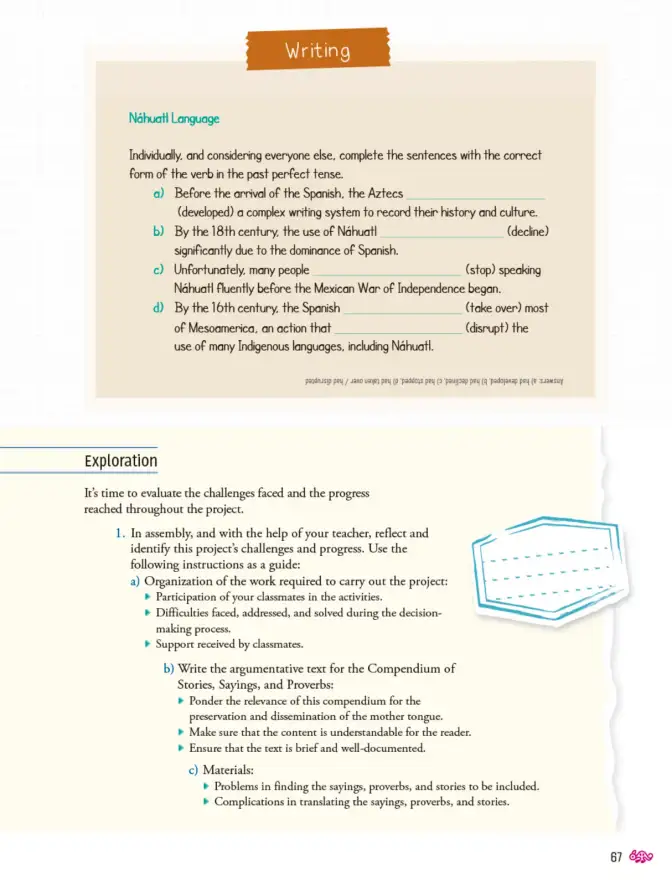
Writing

Náhuatl Language

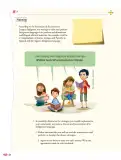
Individually, and considering everyone else, complete the sentences with the correct form of the verb in the past perfect tense.

a) Before the arrival of the Spanish, the Aztecs ___ (developed) a complex writing system to record their history and culture.

b) By the 18th century, the use of Náhuatl ___ (decline) significantly due to the dominance of Spanish.

c) Unfortunately, many people ___ (stop) speaking Náhuatl fluently before the Mexican War of Independence began.

d) By the 16th century, the Spanish ___ (take over) most of Mesoamerica, an action that ___ (disrupt) the use of many Indigenous languages, including Náhuatl.

Exploration

It's time to evaluate the challenges faced and the progress reached throughout the project.

  1. In assembly, and with the help of your teacher, reflect and identify this project's challenges and progress. Use the following instructions as a guide:

a) Organization of the work required to carry out the project:

  • Participation of your classmates in the activities.
  • Difficulties faced, addressed, and solved during the decision-making process.
  • Support received by classmates.

b) Write the argumentative text for the Compendium of Stories, Sayings, and Proverbs:

  • Ponder the relevance of this compendium for the preservation and dissemination of the mother tongue.
  • Make sure that the content is understandable for the reader.
  • Ensure that the text is brief and well-documented.

c) Materials:

  • Problems in finding the sayings, proverbs, and stories to be included.
  • Complications in translating the sayings, proverbs, and stories.

Ejemplos resueltos

Before the arrival of the Spanish, the Aztecs ___ (developed) a complex writing system.

Sujeto plural + had + participio pasado: had developed.

Glosario (5)

past perfect
Tiempo verbal que expresa una acción pasada anterior a otra acción pasada; se forma con had + participio.
Náhuatl
Lengua indígena de México, hablada por los aztecas y otros pueblos mesoamericanos.
Mesoamerica
Región cultural de México y Centroamérica donde florecieron civilizaciones como la azteca y la maya.
compendium
Colección organizada de textos, relatos o refranes.
mother tongue
Lengua materna, primera lengua que aprende una persona.

Preguntas para practicar

Why is it important to preserve the Náhuatl language?

Preserving Náhuatl keeps alive the history, culture, and identity of millions of people in Mexico. It also protects linguistic diversity and traditional knowledge transmitted through stories and sayings.

Temas y conceptos clave

Past perfect tenseNáhuatl languageProject evaluationArgumentative writinghad + past participleregular and irregular verbslanguage preservationargumentative text structure
¿Te fue útil esta página?

Figuras de la página (1)

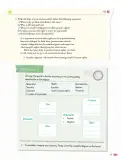
Número de página 67 con un adorno decorativo.
Figura 1 image

Preguntas que la gente también hace

¿Cómo se forma el past perfect en inglés?
Consulta la solución completa arriba o explora el libro entero para temas relacionados.
¿Qué pasó con el náhuatl después de la llegada de los españoles?
Consulta la solución completa arriba o explora el libro entero para temas relacionados.
¿Cómo hacer un texto argumentativo sobre la preservación de la lengua materna?
Consulta la solución completa arriba o explora el libro entero para temas relacionados.
📌 Antes de leer esto
  • • Conocer el past simple y los participios pasados
  • • Identificar sujeto y verbo en una oración
  • • Nociones básicas de historia de Mesoamérica
Siguiente tema sugerido
Present perfect vs. past perfect: diferencias y usos
📝 Transcripción de la página (texto seleccionable) 1667 caracteres

Writing

Náhuatl Language

Individually, and considering everyone else, complete the sentences with the correct form of the verb in the past perfect tense.

a)Before the arrival of the Spanish, the Aztecs (developed) a complex writing system to record their history and culture.

b)By the 18th century, the use of Náhuatl (decline)significantly due to the dominance of Spanish.

c)Unfortunately, many people (stop) speaking Náhuatl fluently before the Mexican War of Independence began.

d)By the 16th century, the Spanish (take over) most of Mesoamerica, an action that (disrupt) the use of many Indigenous languages, including Náhuatl.

pans aa p pas a p paaa a

Exploration

It's time to evaluate the challenges faced and the progress reached throughout the project.

  1. In assembly, and with the help of your teacher, reflect and identify this project's challenges and progress. Use the following instructions as a guide:

a) Organization of the work required to carry out the project: Participation of your classmates in the activities.

c Difficulties faced, addressed, and solved during the decisionmaking process.

Support received by classmates.

b) Write the argumentative text for the Compendium of Stories, Sayings, and Proverbs:

Ponder the relevance of this compendium for the preservation and dissemination of the mother tongue.

Make sure that the content is understandable for the reader.

i Ensure that the text is brief and well-documented.

c) Materials:

Problems in finding the sayings, proverbs, and stories to be included.

Complications in translating the sayings, proverbs, and stories.

![](page=0,bbox=[849, 927, 1140, 1142])

67

Ad

Otros libros recomendados

Ver todos →
Ad

Usamos cookies propias y de terceros para personalizar contenido, mostrar publicidad y analizar el tráfico. Las cookies necesarias siempre están activas.