














Saltar al contenido
MisLibrosTexto
Ad

Human Rights: Reflection and Vocabulary Classification

📄 ejercicios ingles 🎓 bachillerato · 3° Secundaria México 🇲🇽 MX 🗣 Español
Página 72
72 de 187
Página 72 de Uérakua anapu uantakua. Projects and Readings.  Libro de Educación Secundaria Grado 3°  Ciclo Escolar 2025 - 2026
Anterior Página 72 / 187 Siguiente

Respuesta rápida

2.a) Suspensión del derecho al agua por infringir leyes. 2.b) Ciudadanos y comunidad. 2.c) Respetar derechos y cumplir obligaciones. 2.d) Cuando se infringen leyes o no se paga el servicio. 2.e) Diálogo, tarifas sociales y educación. Vocabulary: Topic: Youth's human rights; Roles: Moderator, Presenter; Arguments: Positive: Education, Freedom of expression, Security, Health; Negative: Discrimination, Injustice, Violence; Problems: Discrimination, Injustice, Violence; Rights: Education, Health, Security, Freedom of expression.

📚 exercise ingles ⭐⭐ Dificultad 2/5 ⏱ 10 min lectura

Solución — Página 72

Uérakua anapu uantakua. Projects and Readings. Libro de Educación Secundaria Grado 3° Ciclo Escolar 2025 - 2026

2
Ejercicio 2

With the help of your teacher, reflect about the following questions.

a
Parte 2.a

Enunciado: What is the problem described in this case?

  1. Se identifica que el caso describe la posible suspensión del derecho al agua cuando se infringen las leyes.
  2. El problema central es el conflicto entre el derecho humano al agua y la obligación de pagar por el servicio.
  3. También se plantea que los derechos pueden suspenderse cuando no se cumplen las leyes.
Respuesta

The problem is that the right to water can be suspended when laws are infringed, creating a conflict between human rights and citizens' obligations.

b
Parte 2.b

Enunciado: Who is affected and how?

  1. Se menciona a los ciudadanos que no pagan el servicio de agua.
  2. También se afecta a la comunidad, porque el agua es un recurso común.
  3. Los gobiernos y las instituciones encargadas de garantizar el derecho al agua también intervienen.
Respuesta

Citizens who do not pay for water service are affected because their right to water can be suspended; the community is also affected because water is a common good.

c
Parte 2.c

Enunciado: What are people's obligations to other people's rights?

  1. Las leyes incluyen obligaciones ciudadanas para el bien común.
  2. Respetar los derechos de los demás es una obligación fundamental.
  3. Cumplir con deberes como pagar el servicio de agua permite que otros también ejerzan sus derechos.
Respuesta

People must respect other people's rights, fulfill their civic obligations for the common good, and pay for services like water.

d
Parte 2.d

Enunciado: In what cases can the right to water be suspended?

  1. El texto indica que los derechos pueden suspenderse cuando se infringen las leyes.
  2. En el caso del agua, la suspensión ocurre cuando no se paga el servicio.
  3. Esto se relaciona con el incumplimiento de obligaciones establecidas por el gobierno.
Respuesta

The right to water can be suspended when laws are infringed, for example, when citizens do not pay for the water service.

e
Parte 2.e

Enunciado: How would you solve this problem?

  1. Se puede promover el diálogo entre autoridades y ciudadanos.
  2. Se pueden crear apoyos o tarifas sociales para quienes no pueden pagar.
  3. Es importante educar sobre derechos y obligaciones para evitar suspensiones injustas.
Respuesta

I would promote dialogue, create social tariffs for those who cannot pay, and educate people about their rights and obligations.

3
Ejercicio 3

In pairs, organize a discussion about young people's human rights.

  1. Se elige un moderador y un presentador.
  2. Se definen argumentos positivos y negativos sobre los derechos de los jóvenes.
  3. Se identifican problemas y derechos específicos que afectan a los jóvenes.

Respuesta orientativa: En parejas, los estudiantes deben preparar una discusión estructurada con un moderador, un presentador, argumentos a favor y en contra, problemas actuales y derechos de los jóvenes.

Vocabulary

1
Ejercicio 1

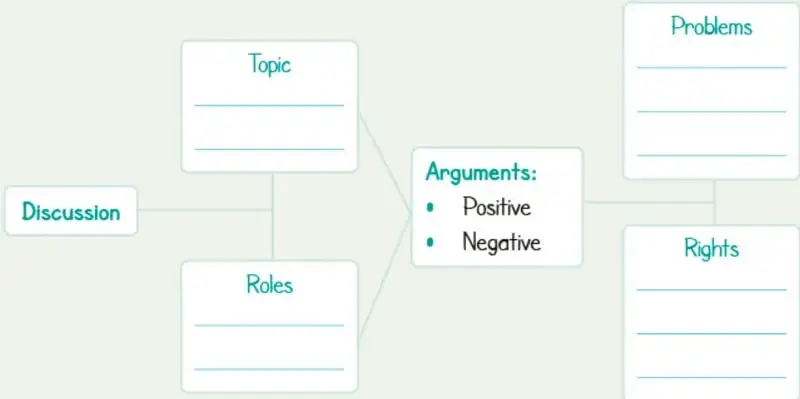
Arrange the words in the box according to the corresponding classification in the diagram.

  1. Se leen las palabras del recuadro: Moderator, Health, Discrimination, Security, Injustice, Violence, Education, Youth's human rights, Presenter, Freedom of expression.
  2. Se identifican las categorías del diagrama: Topic, Roles, Arguments (Positive/Negative), Problems, Rights.
  3. Se clasifica cada palabra según su significado.
Respuesta
  • Topic: Youth's human rights
  • Roles: Moderator, Presenter
  • Arguments: Positive: Education, Freedom of expression, Security, Health; Negative: Discrimination, Injustice, Violence
  • Problems: Discrimination, Injustice, Violence
  • Rights: Education, Health, Security, Freedom of expression, Youth's human rights
Ad
2
Ejercicio 2

In assembly, compare your answers. Finally, write the complete diagram on the board.

  1. Se comparan las respuestas en grupo.
  2. Se corrige la clasificación si es necesario.
  3. Se escribe el diagrama completo en el pizarrón.

Respuesta orientativa: Los estudiantes deben comparar sus diagramas, justificar la clasificación de cada palabra y escribir la versión final en el pizarrón.

Contenido de la página

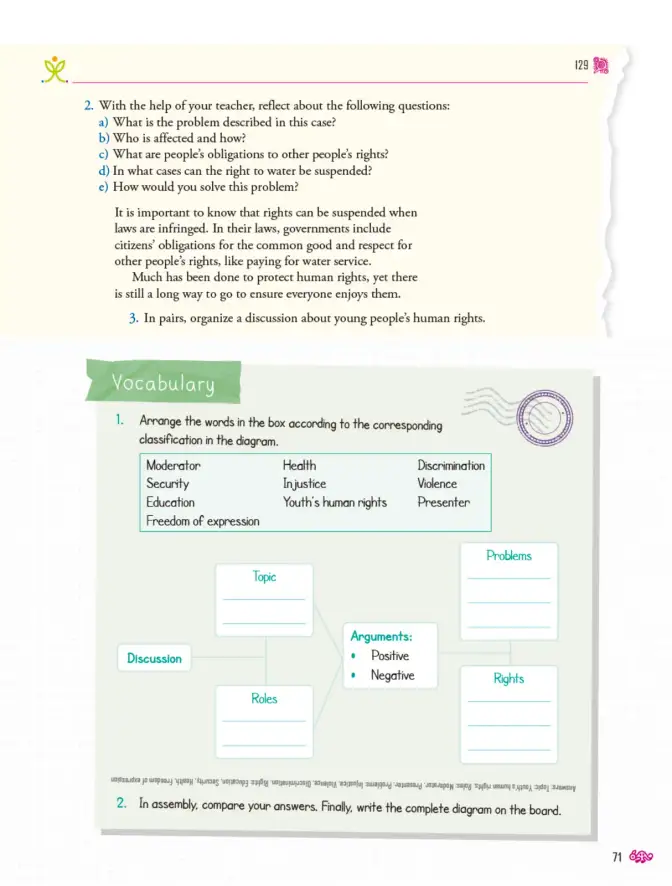
  1. With the help of your teacher, reflect about the following questions:

a) What is the problem described in this case?

b) Who is affected and how?

c) What are people's obligations to other people's rights?

d) In what cases can the right to water be suspended?

e) How would you solve this problem?

It is important to know that rights can be suspended when laws are infringed. In their laws, governments include citizens' obligations for the common good and respect for other people's rights, like paying for water service.

Much has been done to protect human rights, yet there is still a long way to go to ensure everyone enjoys them.

  1. In pairs, organize a discussion about young people's human rights.

Vocabulary

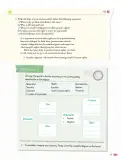
  1. Arrange the words in the box according to the corresponding classification in the diagram.

Moderator | Health | Discrimination Security | Injustice | Violence Education | Youth's human rights | Presenter Freedom of expression

Diagrama:

  • Discussion
    • Topic
    • Roles
    • Arguments: Positive, Negative
    • Problems
    • Rights
  1. In assembly, compare your answers. Finally, write the complete diagram on the board.

Tabla

Category Words
Topic Youth's human rights
Roles Moderator, Presenter
Arguments (Positive) Education, Freedom of expression, Security, Health
Arguments (Negative) Discrimination, Injustice, Violence
Problems Discrimination, Injustice, Violence
Rights Education, Health, Security, Freedom of expression, Youth's human rights

Diagrama

graph TD
    D[Discussion] --> T[Topic]
    D --> R[Roles]
    D --> A[Arguments]
    D --> P[Problems]
    D --> Ri[Rights]
    A --> AP[Positive]
    A --> AN[Negative]
    T --> T1[Youth's human rights]
    R --> R1[Moderator]
    R --> R2[Presenter]
    AP --> AP1[Education]
    AP --> AP2[Freedom of expression]
    AP --> AP3[Security]
    AP --> AP4[Health]
    AN --> AN1[Discrimination]
    AN --> AN2[Injustice]
    AN --> AN3[Violence]
    P --> P1[Discrimination]
    P --> P2[Injustice]
    P --> P3[Violence]
    Ri --> Ri1[Education]
    Ri --> Ri2[Health]
    Ri --> Ri3[Security]
    Ri --> Ri4[Freedom of expression]
    Ri --> Ri5[Youth's human rights]

Glosario (10)

Moderator
Persona que dirige una discusión o debate.
Presenter
Persona que presenta o expone un tema.
Discrimination
Trato desigual e injusto hacia una persona o grupo.
Injustice
Falta de justicia; situación contraria al derecho.
Violence
Uso de la fuerza para causar daño.
Freedom of expression
Derecho a expresar opiniones libremente.
Youth's human rights
Derechos humanos específicos de los jóvenes.
Security
Estado de protección y ausencia de peligro.
Health
Estado de bienestar físico y mental.
Education
Derecho a recibir formación académica.

Preguntas para practicar

What is the problem described in this case?

The problem is that the right to water can be suspended when laws are infringed, creating a conflict between human rights and citizens' obligations.

Who is affected and how?

Citizens who do not pay for water service are affected because their right to water can be suspended; the community is also affected because water is a common good.

What are people's obligations to other people's rights?

People must respect other people's rights, fulfill their civic obligations for the common good, and pay for services like water.

In what cases can the right to water be suspended?

The right to water can be suspended when laws are infringed, for example, when citizens do not pay for the water service.

How would you solve this problem?

I would promote dialogue, create social tariffs for those who cannot pay, and educate people about their rights and obligations.
Temas y conceptos clave

Derechos humanosDerecho al aguaVocabulario de discusiónObligaciones ciudadanasHuman rightsRight to waterSuspension of rightsCitizens' obligationsDiscussion rolesArgumentsProblemsRights
¿Te fue útil esta página?

Figuras de la página (2)

Número de página 129 con un ícono decorativo.
Figura 1 image
Diagrama de clasificación con las categorías Discussion, Topic, Roles, Arguments (Positive/Negative), Problems y Rights.
Figura 2 image

Preguntas que la gente también hace

¿Cuándo se puede suspender el derecho al agua?
Consulta la solución completa arriba o explora el libro entero para temas relacionados.
¿Qué obligaciones tienen las personas frente a los derechos de los demás?
Consulta la solución completa arriba o explora el libro entero para temas relacionados.
¿Cómo se organiza una discusión sobre los derechos humanos en inglés?
Consulta la solución completa arriba o explora el libro entero para temas relacionados.
📌 Antes de leer esto
  • • Vocabulario básico en inglés sobre derechos y sociedad
  • • Conocimiento general sobre derechos humanos
  • • Habilidad para clasificar palabras por categorías
Siguiente tema sugerido
Debate y argumentación sobre derechos humanos en inglés
📝 Transcripción de la página (texto seleccionable) 1130 caracteres
  1. With the help of your teacher, reflect about the following questions:

a) What is the problem described in this case?

b) Who is affected and how?

c) What are people's obligations to other people's rights?

d) In what cases can the right to water be suspended?

e) How would you solve this problem?

It is important to know that rights can be suspended when laws are infringed. In their laws, governments include citizens' obligations for the common good and respect for other people's rights, like paying for water service.

Much has been done to protect human rights, yet there is still a long way to go to ensure everyone enjoys them.

  1. In pairs, organize a discussion about young people's human rights.

Vocabulary

  1. Annange the words in the box according to the corresponding classification in the diagram.

Moderator Health Discrimination Security Injustice Violence Education Youth's human rights Presenter Freedom of expression

  1. In assembly, compare your answers. Finally, wnite the complete diagram on the boand.

灾

129

![](page=0,bbox=[831, 694, 1035, 805])

![](page=0,bbox=[208, 977, 1008, 1376])

7180

Ad

Otros libros recomendados

Ver todos →
Ad

Usamos cookies propias y de terceros para personalizar contenido, mostrar publicidad y analizar el tráfico. Las cookies necesarias siempre están activas.