
















Saltar al contenido
MisLibrosTexto
Ad

Direct Speech and Reported Speech: Grammar and Writing Practice

📄 ejercicios ingles 🎓 otro · 3° TELESECUNDARIA México 🇲🇽 MX 🗣 Español
Página 118
118 de 187
Página 118 de Uérakua anapu uantakua. Projects and Readings.  Libro de Educación Telesecundaria Grado 3°  Ciclo Escolar 2025 - 2026
Anterior Página 118 / 187 Siguiente

Respuesta rápida

a) Aristotle said (that) he had made significant contributions to the field of literature. b) Sappho said (that) she had written 'Ode to Aphrodite' to express emotions. c) Sor Juana Inés de la Cruz said (that) she was neither a scholar nor a philosopher; she was nothing more than a woman.


📚 exercise ingles ⭐⭐ Dificultad 2/5 ⏱ 8 min lectura

Solución — Página 118

Uérakua anapu uantakua. Projects and Readings. Libro de Educación Telesecundaria Grado 3° Ciclo Escolar 2025 - 2026

1
Ejercicio 1

Grammar: Direct Speech vs. Reported Speech

En el discurso directo se escriben las palabras exactas de alguien entre comillas. En el discurso indirecto (reported speech) comunicamos lo que alguien dijo sin usar sus palabras exactas, con pequeños cambios.

Ejemplo:

  • Direct: Achilles said, "I will not fight for King Agamemnon."
  • Reported: Achilles said that he wouldn't fight for Agamemnon.

Reglas clave:

  1. Cambiar los pronombres para que coincidan con la persona a la que se refieren. Aquiles habla de sí mismo, así que usamos he en lugar de I.
  2. Retroceder el tiempo verbal un paso al pasado: will not fight → wouldn't fight.
  3. A menudo se puede omitir that cuando va seguido de un pronombre sujeto: Achilles said (that) he wouldn't fight for Agamemnon.

Writing

a
Parte 1.a

Aristotle said, "I made significant contributions to the field of literature."

  1. Identifico el verbo introductorio: said (pasado).
  2. Cambio el pronombre I → he (Aristóteles habla de sí mismo).
  3. Retrocedo el tiempo verbal: made (past simple) → had made (past perfect).
  4. Elimino las comillas y uno con that.
Respuesta

Aristotle said (that) he had made significant contributions to the field of literature.

b
Parte 1.b

Sappho said, "I wrote 'Ode to Aphrodite' to express emotions."

  1. Verbo introductorio: said.
  2. Pronombre I → she (Safo habla de sí misma).
  3. Tiempo verbal: wrote (past simple) → had written (past perfect).
  4. Mantengo el título de la obra entre comillas simples.
Respuesta

Sappho said (that) she had written 'Ode to Aphrodite' to express emotions.

c
Parte 1.c

Sor Juana Inés de la Cruz said, "I am neither a scholar nor a philosopher; I am nothing more than a woman."

  1. Verbo introductorio: said.
  2. Pronombres I → she (dos veces).
  3. Tiempo verbal: am (present simple) → was (past simple).
  4. Uno las dos oraciones con and o punto y coma dentro del reported speech.
Respuesta

Sor Juana Inés de la Cruz said (that) she was neither a scholar nor a philosopher; she was nothing more than a woman.
Contenido de la página

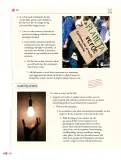
Grammar

Direct Speech Reported Speech
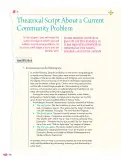
In this speech, someone's exact words are written in quotation marks. In this speech, we communicate what someone else said without using their exact words: We change them slightly to express what they said.
Example: Achilles said, "I will not fight for King Agamemnon." Example: Achilles said that he wouldn't fight for Agamemnon.

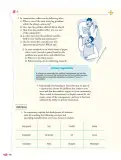
We need to change the pronouns to make them coincide with the person they refer to. Achilles is talking about himself, so we use he in the reported sentence, instead of I.

Note that in reported speech we often move the tense back one step into the past so that, in the example, will not fight becomes wouldn't fight.

Also, we can often omit that when it is followed by a subject pronoun. For example: Achilles said (that) he wouldn't fight for Agamemnon.

Writing

Individually, considering everyone else, read the following sentences and rewrite each one, transforming direct speech into reported speech.

a) Direct speech: Aristotle said, "I made significant contributions to the field of literature." Reported speech: ________________________________________

b) Direct speech: Sappho said, "I wrote 'Ode to Aphrodite' to express emotions." Reported speech: ________________________________________

c) Sor Juana Inés de la Cruz said, "I am neither a scholar nor a philosopher; I am nothing more than a woman." Reported speech: ________________________________________

Answers: a) Aristotle said (that) he had made significant contributions to the field of literature. b) Sappho said (that) she had written 'Ode to Aphrodite' to express emotions. c) Sor Juana Inés de la Cruz said (that) she was neither a scholar nor a philosopher; she was nothing more than a woman.
Ejemplos resueltos

Achilles said, "I will not fight for King Agamemnon."

Achilles said that he wouldn't fight for Agamemnon.

Tabla

Direct Speech Reported Speech
In this speech, someone's exact words are written in quotation marks. In this speech, we communicate what someone else said without using their exact words: We change them slightly to express what they said.
Example: Achilles said, "I will not fight for King Agamemnon." Example: Achilles said that he wouldn't fight for Agamemnon.

Diagrama

flowchart LR
  A[Direct Speech] -->|cambiar pronombres| B[Reported Speech]
  A -->|retroceder tiempo verbal| B
  A -->|omitir that (opcional)| B
  B --> C[Ejemplo: Achilles said that he wouldn't fight for Agamemnon]

Glosario (7)

Direct speech
Discurso directo: se escriben las palabras exactas de alguien entre comillas.
Reported speech
Discurso indirecto: se comunica lo que alguien dijo sin usar sus palabras exactas.
Quotation marks
Comillas (") que encierran las palabras exactas en el discurso directo.
Pronoun
Pronombre: palabra que sustituye al nombre (I, he, she, they...).
Tense
Tiempo verbal (present, past, future...).
Scholar
Erudito/a, académico/a.
Philosopher
Filósofo/a.

Preguntas para practicar

Why do we change pronouns in reported speech?

Because the speaker is no longer the original person; the pronoun must match the person who is being referred to from the reporter's point of view. For example, when Achilles talks about himself with I, the reporter changes it to he.

When can we omit 'that' in reported speech?

We can often omit that when it is followed by a subject pronoun, as in 'Achilles said (that) he wouldn't fight for Agamemnon.' The meaning stays the same with or without that.

Temas y conceptos clave

Direct SpeechReported SpeechGrammarWritingDiscurso directoDiscurso indirectoCambio de pronombresRetroceso del tiempo verbal (backshift)Omisión de 'that'
¿Te fue útil esta página?

Figuras de la página (1)

Ilustración de un paisaje con acantilados y un cielo azul, decorativa.
Figura 1 image

Preguntas que la gente también hace

¿Cómo se cambia el tiempo verbal en reported speech?
Consulta la solución completa arriba o explora el libro entero para temas relacionados.
¿Cuándo se puede omitir 'that' en reported speech?
Consulta la solución completa arriba o explora el libro entero para temas relacionados.
¿Cómo se transforman los pronombres al pasar de direct a reported speech?
Consulta la solución completa arriba o explora el libro entero para temas relacionados.
📌 Antes de leer esto
  • • Uso de comillas en inglés
  • • Tiempos verbales: present simple, past simple, past perfect
  • • Pronombres personales y posesivos en inglés
Siguiente tema sugerido
Reported questions and commands (preguntas y órdenes en estilo indirecto)
📝 Transcripción de la página (texto seleccionable) 1473 caracteres

Grammar

We need to change the pronouns to make them coincide with the person they refen to. Achilles is talking about himself, so we use he in the reported sentence, instead of I.

Note that in reported speech we often move the tense back one step into the past so that, in the example, willnot fight becomes wouldn't fight.

Also, we can often omit that when it is followed by a subject pronoun. For example: Achilles said (that) he wouldn't fight for Agamemnon.

Writing

Individually, considering everyone else, read the follwing sentences and rewnite each one,transforming direct speech into reported speech.

a)Direct speech: Aristotle said,"I made significant contributions to the field of literature."

b)Direct speech: Sappho said,"I wrote Ode to Aphrodite' to express emotions."Reported speech:

c)Sor Juana Inés de la Cruz said,"I am neither a scholar nor a philosopher I am nothing more than a woman."

Reported speech:

s ) suamsuy

![](page=0,bbox=[941, 83, 1054, 223])

Dinect SpeechReported Speech
In this speech, someone's exact wonds ane written in quotation manks.In this speech, we communicate what someone else said without using their exact wonds: We change them slighthy to express what they said.
Example: Achilles said,"I will not fight for King Agamemnon."Example: Achilles said that he wouldn't fight for Agamemnon.
Ad

Otros libros recomendados

Ver todos →
Ad

Usamos cookies propias y de terceros para personalizar contenido, mostrar publicidad y analizar el tráfico. Las cookies necesarias siempre están activas.