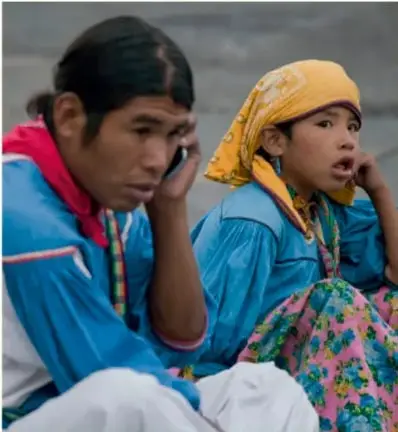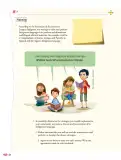
















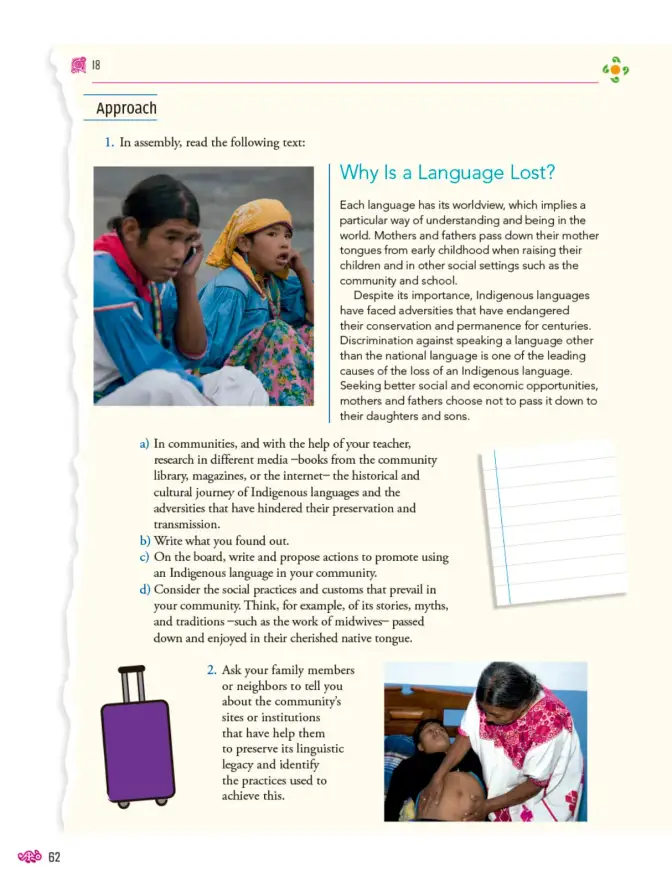
In assembly, read the following text: Why Is a Language Lost?
In communities, and with the help of your teacher, research in different media —books from the community library, magazines, or the internet— the historical and cultural journey of Indigenous languages and the adversities that have hindered their preservation and transmission.
Respuesta orientativa: Cada lengua indígena es portadora de una cosmovisión propia: una manera particular de nombrar el mundo, de organizar el tiempo, de entender la naturaleza y las relaciones sociales. A lo largo de la historia, la colonización, la imposición del español como lengua nacional, la discriminación hacia quienes hablan lenguas originarias y la migración en busca de mejores oportunidades económicas han provocado que muchas familias dejen de transmitir su lengua materna a hijas e hijos. En México se hablan 68 lenguas indígenas (364 variantes), pero varias están en riesgo de desaparecer porque cada vez menos niños las aprenden como primera lengua.
Write what you found out.
Respuesta orientativa: Se puede redactar un párrafo como: "Investigando en la biblioteca y en internet encontré que el náhuatl, el maya y el mixteco son algunas de las lenguas indígenas con más hablantes en México, mientras que otras como el kiliwa o el paipai tienen muy pocos. Las principales causas de su pérdida son la discriminación, la falta de enseñanza en las escuelas y la migración. Sin embargo, existen proyectos comunitarios, radios indígenas y programas de educación intercultural bilingüe que buscan revitalizarlas."
On the board, write and propose actions to promote using an Indigenous language in your community.
Respuesta orientativa: Algunas acciones concretas: (1) organizar un taller semanal de conversación en la lengua originaria de la comunidad; (2) rotular los espacios públicos (escuela, mercado, clínica) con su nombre en lengua indígena y en español; (3) crear un mural con palabras, refranes y canciones tradicionales; (4) invitar a abuelas y abuelos a contar historias en su lengua materna; (5) grabar podcasts o videos con leyendas locales para compartirlos en redes; (6) incluir saludos y frases cotidianas en la lengua originaria durante los actos cívicos.
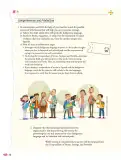
Consider the social practices and customs that prevail in your community. Think, for example, of its stories, myths, and traditions —such as the work of midwives— passed down and enjoyed in their cherished native tongue.
Respuesta orientativa: En muchas comunidades, la partería tradicional, los rezos, las curaciones con plantas medicinales, los consejos de los mayores, los cuentos sobre el origen del maíz o de los cerros, y las fiestas patronales se transmiten oralmente en la lengua originaria. Estos saberes no solo conservan la lengua, sino también la memoria histórica y la identidad colectiva. Cuando una abuela atiende un parto o narra un mito en su lengua, está realizando un acto de resistencia cultural y de transmisión intergeneracional.