















Saltar al contenido
MisLibrosTexto
Ad

Consideration and Advances: Presentation and Dissemination of the Compendium

📄 ejercicios ingles 🎓 otro · 3° TELESECUNDARIA México 🇲🇽 MX 🗣 Español
Página 70
70 de 187
Página 70 de Uérakua anapu uantakua. Projects and Readings.  Libro de Educación Telesecundaria Grado 3°  Ciclo Escolar 2025 - 2026
Anterior Página 70 / 187 Siguiente

Respuesta rápida

Discurso y estrategia de difusión presentados; preguntas formuladas; reflexiones sobre el compendio y acuerdos de asamblea registrados.

📚 exercise ingles ⭐⭐ Dificultad 2/5 ⏱ 8 min lectura

Solución — Página 70

Uérakua anapu uantakua. Projects and Readings. Libro de Educación Telesecundaria Grado 3° Ciclo Escolar 2025 - 2026

5
Ejercicio 5

Write a speech to introduce the compendium, outlining its purpose, the steps you took to carry out the compilation, its usefulness, and its content.

  1. Propósito: presentar el compendio como herramienta para valorar y preservar la lengua indígena.
  2. Pasos: recopilación de relatos, dichos o proverbios; entrevistas a hablantes; transcripción y traducción; edición final.
  3. Utilidad: difundir el legado lingüístico, histórico y cultural de la comunidad.
  4. Contenido: textos bilingües, autorías, contexto cultural y actividades de difusión.
Respuesta

Discurso modelo: Good morning, teachers and classmates. Today I present our Compendium of Stories, Sayings, or Proverbs. Its purpose is to value and preserve our Indigenous language. We collected oral texts, interviewed elders, transcribed and translated them, and edited the final book. It is useful because it keeps our linguistic and cultural legacy alive. It contains stories, sayings, and proverbs in the Indigenous language and Spanish.


6
Ejercicio 6

Present your dissemination strategy to the attendees and readers of the text and ask for their opinions.

a
Parte 6.a

Ask them if the strategy helps fulfill the project's goal: To value and preserve the Indigenous language. Formulate relevant questions.

  1. ¿Por qué el compendio es un medio excelente para difundir y preservar el legado lingüístico, histórico y cultural de una lengua indígena?
  2. ¿Qué mejoras pueden sugerir?
  3. ¿A qué acciones se comprometen para preservar el legado de las lenguas indígenas?

Consideration and Advances

Respuesta

Why is the compendium an excellent medium to disseminate and preserve an Indigenous language's linguistic, historical, and cultural legacy? What improvements can you suggest? What actions do you commit yourself to perform to preserve the legacy of Indigenous languages?*

1
Ejercicio 1

Once the presentation has concluded, in community, discuss the suggestions received.

Respuesta orientativa: Se organiza un círculo de diálogo donde cada asistente comparte una sugerencia; se agrupan por temas (contenido, difusión, traducción) y se eligen las más viables para mejorar el compendio.

Ad
2
Ejercicio 2

Gather the comments and responses of the attendees to know what the impact of the compendium was.

Respuesta orientativa: Se elabora una tabla o cuaderno de campo con comentarios textuales, emociones expresadas y propuestas; luego se sintetiza el impacto en tres categorías: valoración cultural, aprendizaje lingüístico y participación comunitaria.

3
Ejercicio 3

Discuss what you can improve about the collaborative work performed in the community. On a sheet of paper, write down the most important aspects.

Respuesta orientativa: Aspectos a mejorar: distribución de tareas, comunicación entre equipos, tiempos de entrega, inclusión de más hablantes y uso de recursos tecnológicos para la edición.

4
Ejercicio 4

Reflect on the knowledge gained and lived experiences throughout this project.

Respuesta orientativa: El proyecto permitió comprender que la lengua indígena es un patrimonio vivo; se aprendió a investigar, entrevistar, traducir y trabajar en equipo, y se vivió el orgullo de compartir la cultura propia con la comunidad escolar.

Ad
5
Ejercicio 5

Think of the following activities and discuss what they meant to you:

a
Parte 5.a

Writing argumentative texts.

Respuesta orientativa: Significó aprender a defender ideas con razones y evidencias sobre la importancia de preservar la lengua indígena.

b
Parte 5.b

Carrying out actions to promote the use of an Indigenous language.

Respuesta orientativa: Implicó usar la lengua en carteles, anuncios y conversaciones cotidianas para que más personas la escuchen y la valoren.

c
Parte 5.c

Identifying the historical path of some Indigenous languages.

Respuesta orientativa: Permitió conocer su origen, expansión, desplazamiento y resistencia a lo largo del tiempo.

d
Parte 5.d

Valuing its linguistic legacy.

Respuesta orientativa: Significó reconocer que cada palabra y expresión indígena guarda sabiduría, identidad y memoria colectiva.

6
Ejercicio 6

Look for spaces to share your Compendium of Stories, Sayings, or Proverbs with other school communities, families, and friends.

Respuesta orientativa: Se pueden organizar ferias culturales, lecturas públicas, préstamo del compendio en la biblioteca escolar, presentaciones en otras telesecundarias y difusión en redes sociales con autorización comunitaria.

7
Ejercicio 7

Finally, write in your notebooks the assembly agreements reached by the community regarding the development of the Compendium of Stories, Sayings, or Proverbs.

Respuesta orientativa: Acuerdos modelo: continuar la recopilación cada ciclo escolar, integrar a nuevos hablantes, cuidar la traducción, publicar una segunda edición y compartir el compendio con la comunidad.

Contenido de la página

  1. Write a speech to introduce the compendium, outlining its purpose, the steps you took to carry out the compilation, its usefulness, and its content.

  2. Present your dissemination strategy to the attendees and readers of the text and ask for their opinions.

a) Ask them if the strategy helps fulfill the project's goal: To value and preserve the Indigenous language. Formulate relevant questions, such as the following:

  • Why is the compendium an excellent medium to disseminate and preserve an Indigenous language's linguistic, historical, and cultural legacy?
  • What improvements can you suggest?
  • What actions do you commit yourself to perform to preserve the legacy of Indigenous languages?

Consideration and Advances

  1. Once the presentation has concluded, in community, discuss the suggestions received.

  2. Gather the comments and responses of the attendees to know what the impact of the compendium was.

  3. Discuss what you can improve about the collaborative work performed in the community. On a sheet of paper, write down the most important aspects.

  4. Reflect on the knowledge gained and lived experiences throughout this project.

  5. Think of the following activities and discuss what they meant to you:

a) Writing argumentative texts.

b) Carrying out actions to promote the use of an Indigenous language.

c) Identifying the historical path of some Indigenous languages.

d) Valuing its linguistic legacy.

  1. Look for spaces to share your Compendium of Stories, Sayings, or Proverbs with other school communities, families, and friends.

  2. Finally, write in your notebooks the assembly agreements reached by the community regarding the development of the Compendium of Stories, Sayings, or Proverbs.

Glosario (5)

Compendium
Colección organizada de relatos, dichos o proverbios.
Dissemination
Difusión o divulgación de un material o idea.
Legacy
Legado o herencia cultural que se transmite.
Assembly agreements
Acuerdos tomados en asamblea comunitaria.
Indigenous language
Lengua originaria de un pueblo indígena.

Preguntas para practicar

Why is the compendium an excellent medium to disseminate and preserve an Indigenous language's linguistic, historical, and cultural legacy?

Porque reúne textos bilingües que documentan la lengua viva y su contexto cultural, permitiendo que nuevas generaciones la conozcan y la usen.

What improvements can you suggest?

Incluir audios, más hablantes, ilustraciones y una versión digital accesible.

What actions do you commit yourself to perform to preserve the legacy of Indigenous languages?

Hablar la lengua en casa, enseñarla a otros, participar en proyectos escolares y difundir el compendio.

Temas y conceptos clave

Presentación del compendioEstrategia de difusiónReflexión sobre el aprendizajeAcuerdos comunitariosCompendiumDissemination strategyIndigenous languageLinguistic legacyCollaborative workAssembly agreements
¿Te fue útil esta página?

Figuras de la página (2)

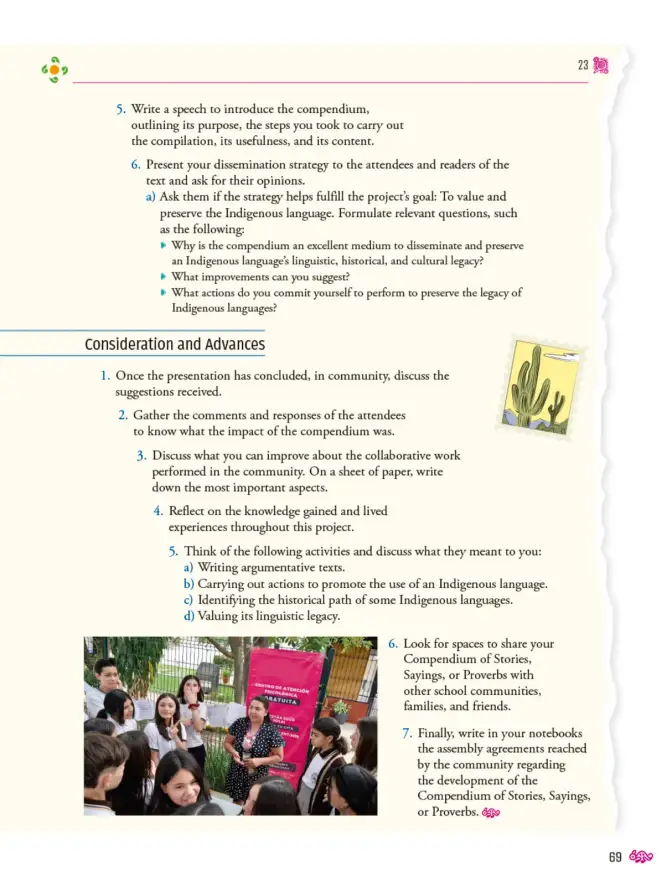
Ilustración de un cactus en un paisaje desértico.
Figura 1 image
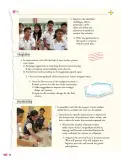
Fotografía de estudiantes y una persona adulta frente a un cartel rosa que dice 'CENTRO DE ATENCIÓN PSICOLÓGICA GRATUITA'.
Figura 2 image

Preguntas que la gente también hace

¿Cómo escribir un discurso en inglés para presentar un compendio?
Consulta la solución completa arriba o explora el libro entero para temas relacionados.
¿Qué acciones ayudan a preservar una lengua indígena?
Consulta la solución completa arriba o explora el libro entero para temas relacionados.
¿Cómo evaluar el impacto de un proyecto comunitario escolar?
Consulta la solución completa arriba o explora el libro entero para temas relacionados.
📌 Antes de leer esto
  • • Redacción de textos argumentativos en inglés
  • • Recopilación de relatos, dichos o proverbios
  • • Vocabulario sobre lenguas indígenas y cultura
Siguiente tema sugerido
Evaluación final del proyecto y publicación del compendio
📝 Transcripción de la página (texto seleccionable) 1809 caracteres
  1. Write a speech to introduce the compendium,outlining its purpose, the steps you took to carry out the compilation, its usefulness, and its content.

  2. Present your dissemination strategy to the attendees and readers of the text and ask for their opinions.

a) Ask them if the strategy helps fulfill the project's goal: To value and preserve the Indigenous language. Formulate relevant questions, such as the following:

Why is the compendium an excellent medium to disseminate and preserve an Indigenous language's linguistic, historical, and cultural legacy?

What improvements can you suggest?

What actions do you commit yourself to perform to preserve the legacy of Indigenous languages?

Consideration and Advances

  1. Once the presentation has concluded, in community, discuss the suggestions received.

  2. Gather the comments and responses of the attendees to know what the impact of the compendium was.

  3. Discuss what you can improve about the collaborative work performed in the community. On a sheet of paper, write down the most important aspects.

  4. Reflect on the knowledge gained and lived experiences throughout this project.

  5. Think of the following activities and discuss what they meant to you:a) Writing argumentative texts.

b) Carrying out actions to promote the use of an Indigenous language.c) Identifying the historical path of some Indigenous languages.

d) Valuing its linguistic legacy.

  1. Look for spaces to share your Compendium of Stories,Sayings, or Proverbs with other school communities,families, and friends.

  2. Finally, write in your notebooks the assembly agreements reached by the community regarding the development of the Compendium of Stories, Sayings,or Proverbs.8

23o

![](page=0,bbox=[896, 598, 1053, 790])

![](page=0,bbox=[150, 1146, 682, 1471])

69

Ad

Otros libros recomendados

Ver todos →
Ad

Usamos cookies propias y de terceros para personalizar contenido, mostrar publicidad y analizar el tráfico. Las cookies necesarias siempre están activas.