
Saltar al contenido
MisLibrosTexto
Ad
Ingles · 1ro BGU · 2024

Ministerio de Educación del Ecuador

26/34

Expressing Through Art Images - Oswaldo Guayasamín

📄 contenido ingles 🎓 BGU · 1° BGU Ecuador 🇪🇨 EC 🗣 Español
Página 26
26 de 34
Página 26 de Ingles · 1ro BGU · 2024
Anterior Página 26 / 34 Siguiente
📚 theory ingles ⭐⭐⭐ Dificultad 3/5 ⏱ 1 min lectura

Solución — Página 26

Ingles · 1ro BGU · 2024

1
Ejercicio 1

TITLE: EXPRESSING THROUGH ART IMAGES

OSWALDO GUAYASAMÍN

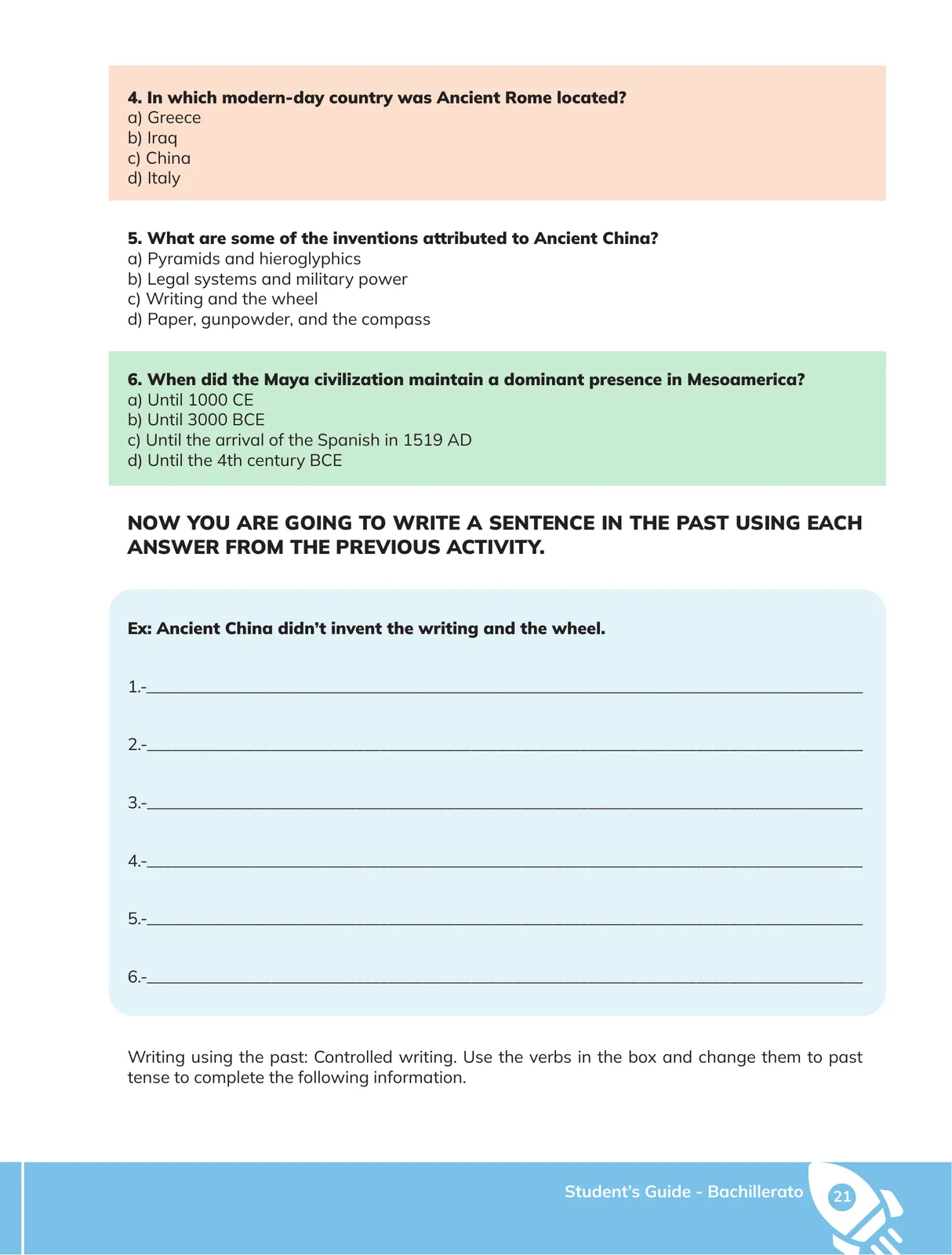
Oswaldo Guayasamín is an Ecuadorian artist who was born on July 6, 1919, in Quito, Ecuador. He came from a humble background, with a Kichwa father and a Mestiza mother. He was the oldest of ten siblings. Even as a child, he loved to draw and was quite talented. His father worked as a carpenter, and he worked as a taxi and truck driver.

Guayasamín followed his passion for art and attended the School of Fine Arts in Quito for seven years. He was excellent in his studies and earned the title of painter and sculptor in 1941. In 1942, he held his first art exhibition in Quito, which caused controversy because of his strong social critique of his artwork.


Preguntas abiertas

1
Ejercicio 1

** ¿Por qué crees que la obra de Guayasamín causó controversia?

Respuesta orientativa: Por su fuerte crítica social a la desigualdad, la pobreza y la opresión, temas incómodos para parte de la élite.

Diagrama 1

Cronología biográfica de Oswaldo Guayasamín

timeline
  title Oswaldo Guayasamín
  1919 : Nace en Quito (6 de julio)
  Infancia : Familia humilde, padre Kichwa, madre Mestiza, 10 hermanos
  1934-1941 : Estudia en la Escuela de Bellas Artes de Quito (7 años)
  1941 : Obtiene el título de pintor y escultor
  1942 : Primera exposición de arte en Quito (con controversia)

Tablas

Dato Información
Nombre Oswaldo Guayasamín
Nacionalidad Ecuatoriano
Nacimiento 6 de julio de 1919, Quito
Familia Padre Kichwa, madre Mestiza, 10 hermanos (el mayor)
Formación School of Fine Arts (Quito), 7 años
Título Pintor y escultor (1941)
Primera exposición 1942, Quito (controvertida)
Característica Fuerte crítica social en su obra

Glosario

  • Ecuadorian: Ecuatoriano/a.
  • humble background: Origen humilde.
  • Kichwa: Pueblo indígena andino del Ecuador.
  • Mestiza: Mujer mestiza (mezcla de ascendencia indígena y europea).
  • carpenter: Carpintero.
  • sculptor: Escultor.
  • exhibition: Exposición.
  • controversy: Controversia, polémica.
  • social critique: Crítica social.

Fuentes

¿Te fue útil esta página?

Figuras de la página (2)

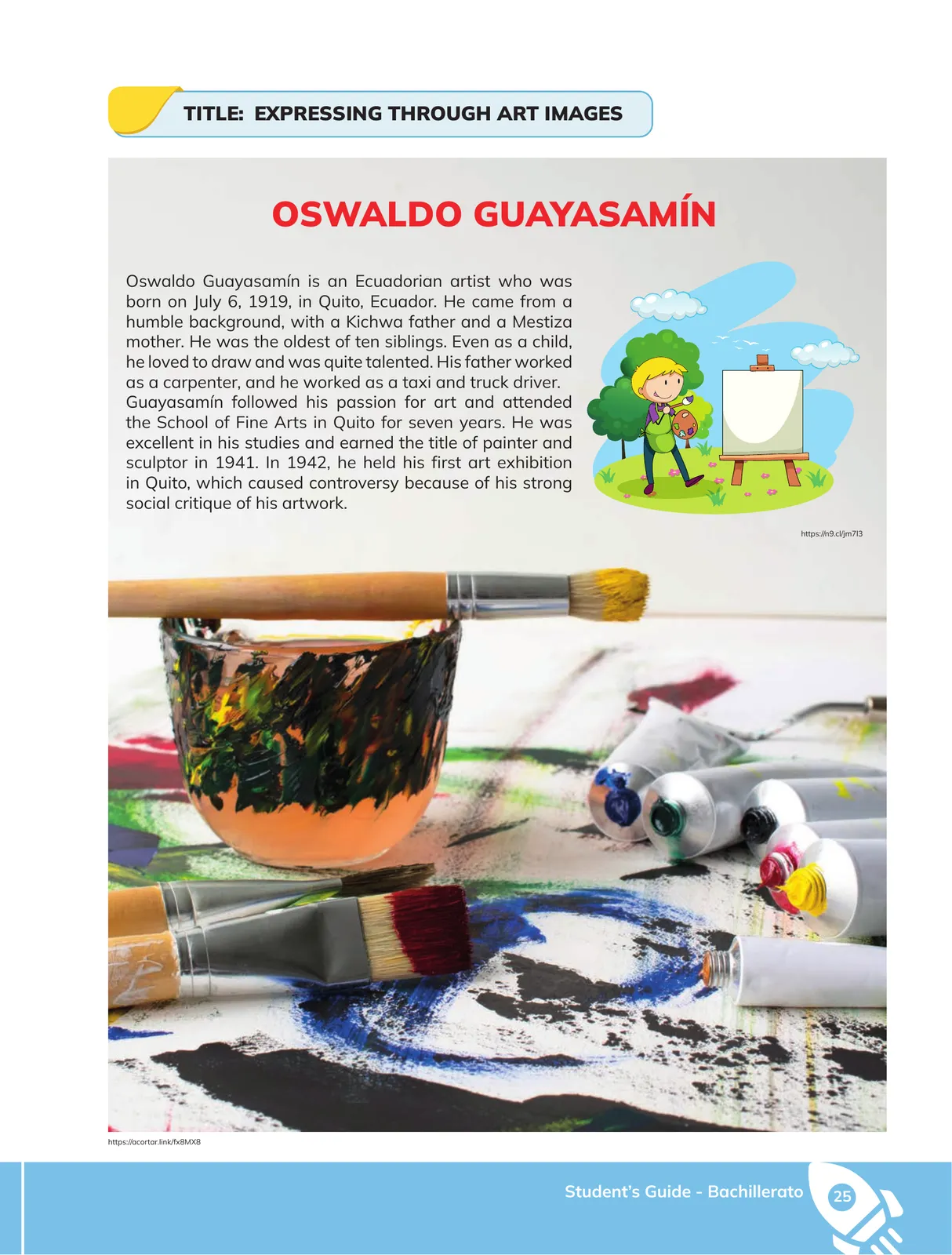
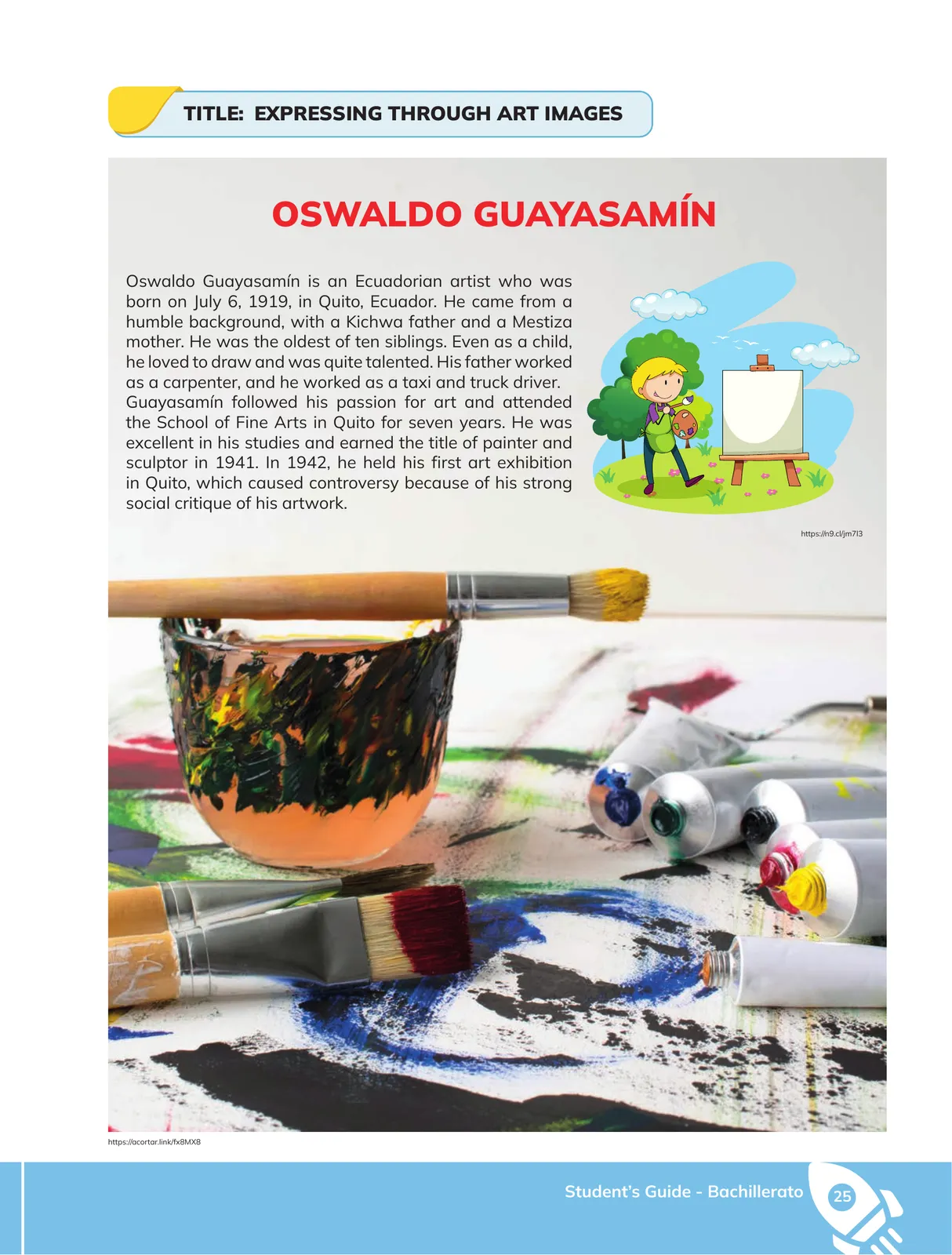
Fotografía de tubos de pintura al óleo, pinceles y paleta con pintura, simbolizando el oficio del pintor.
Figura 2 image
Figura 3 de Ingles · 1ro BGU · 2024
Figura 3 image

Preguntas que la gente también hace

¿Por qué crees que la obra de Guayasamín causó controversia?
Consulta la solución completa arriba o explora el libro entero para temas relacionados.
📌 Antes de leer esto
  • Ver pág. 25: Apertura del Worksheet 5 sobre Language Through the Arts.
  • Ver pág. 27: Continúa con ejercicios sobre la biografía de Guayasamín.
Siguiente tema sugerido
Guayasamín (final) + Art and emotions + Let's Learn Some Emotions
📝 Transcripción de la página (texto seleccionable) 763 caracteres

ome: EXPRESSING THROUGH ART IMAGES

OSWALDO GUAYASAMIN

Oswaldo Guayasamin is an Ecuadorian artist who was born on July 6, 1919, in Quito, Ecuador. He came from a humble background, with a Kichwa father and a Mestiza mother. He was the oldest of ten siblings. Even as a child, he loved to draw and was quite talented. His father worked as a carpenter, and he worked as a taxi and truck driver. Guayasamin followed his passion for art and attended the School of Fine Arts in Quito for seven years. He was excellent in his studies and earned the title of painter and sculptor in 1941. In 1942, he held his first art exhibition in Quito, which caused controversy because of his strong social critique of his artwork.
https:/in9.cl/jm713

https://acortar-link/fxBMX8

Ad

Otros libros recomendados

Ver todos →
Ad

Usamos cookies propias y de terceros para personalizar contenido, mostrar publicidad y analizar el tráfico. Las cookies necesarias siempre están activas.