Saltar al contenido
MisLibrosTexto
Ad
Ingles · 1ro BGU · 2024

Ministerio de Educación del Ecuador

29/34

What emotions do you feel? + You are an Artist!

📄 ejercicios ingles 🎓 BGU · 1° BGU Ecuador 🇪🇨 EC 🗣 Español
Página 29
29 de 34
Página 29 de Ingles · 1ro BGU · 2024
Anterior Página 29 / 34 Siguiente

Respuesta rápida

  1. Ejemplo: 'When I see these paintings, I feel sadness and anger because of the dark colors and the suffering faces; sometimes I also feel hope because Guayasamín wanted peace.'
  2. Actividad creativa abierta; el docente evalúa coherencia entre la imagen, las emociones declaradas y el uso del vocabulario.
📚 exercise ingles ⭐⭐⭐⭐ Dificultad 4/5 ⏱ 48 min lectura

Solución — Página 29

Ingles · 1ro BGU · 2024

1
Ejercicio 1

Lectura

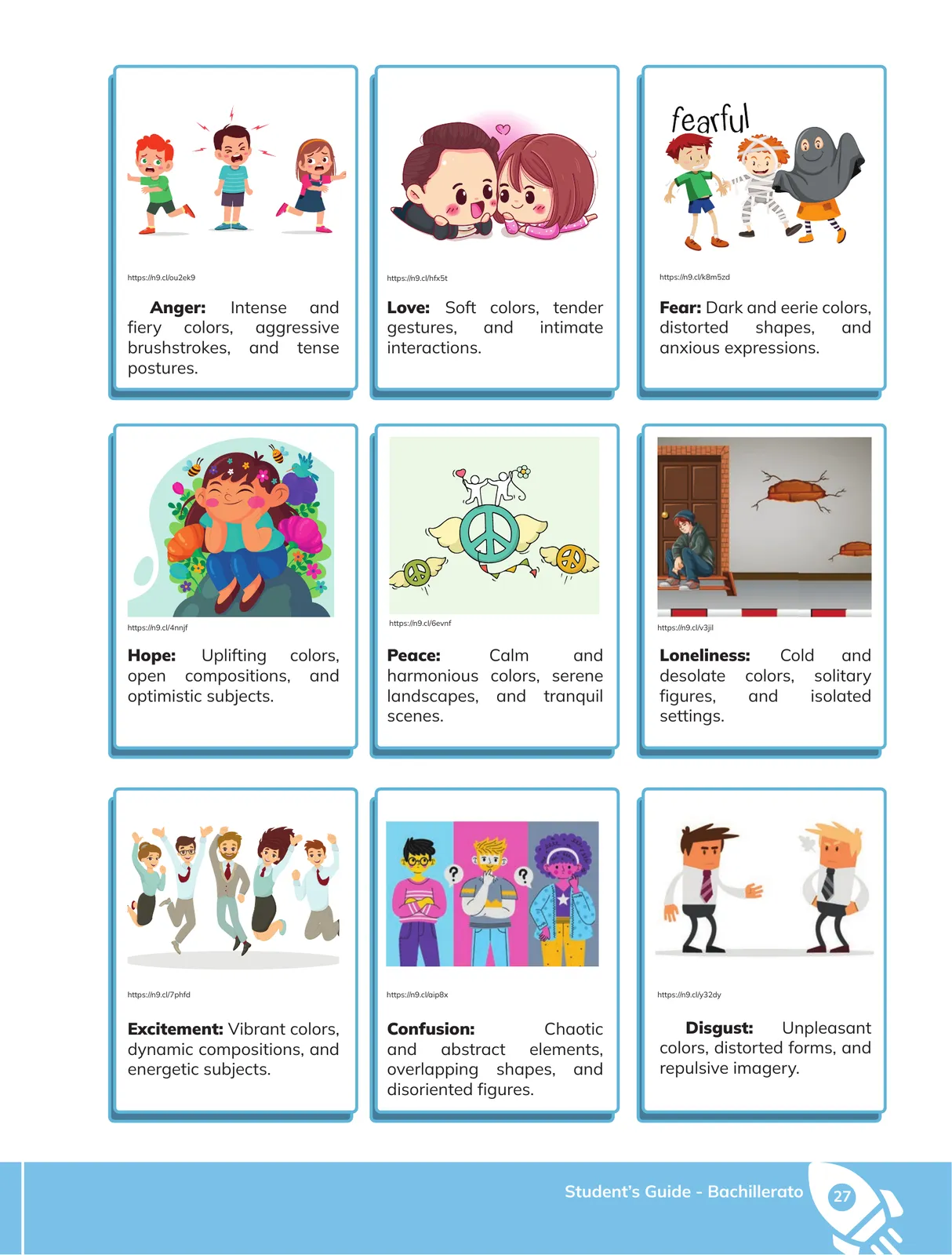
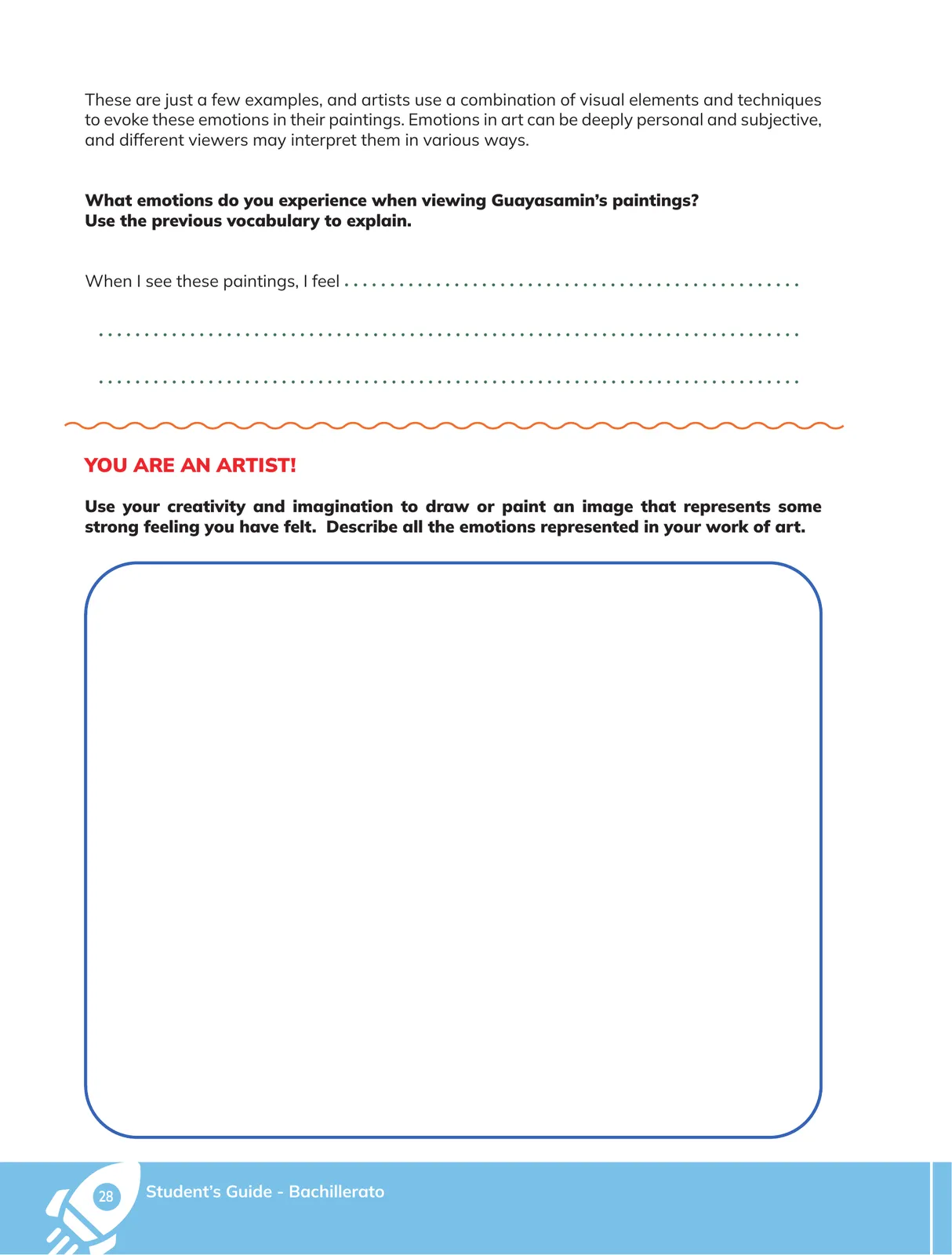
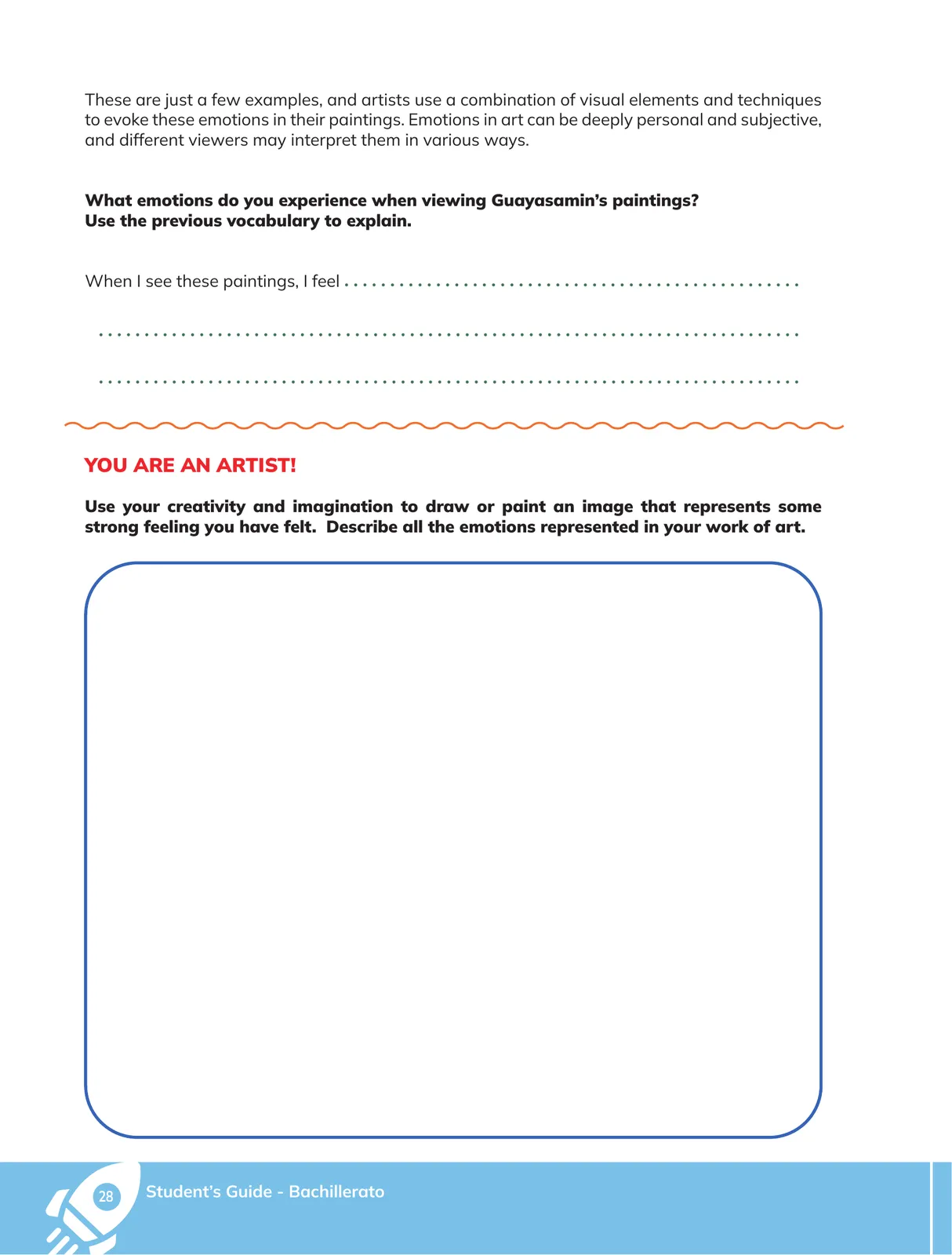
These are just a few examples, and artists use a combination of visual elements and techniques to evoke these emotions in their paintings. Emotions in art can be deeply personal and subjective, and different viewers may interpret them in various ways.

What emotions do you experience when viewing Guayasamín's paintings?

Use the previous vocabulary to explain.

When I see these paintings, I feel _______________________________________


YOU ARE AN ARTIST!

Use your creativity and imagination to draw or paint an image that represents some strong feeling you have felt. Describe all the emotions represented in your work of art.

(Espacio cuadrado grande para que el estudiante dibuje/pinte.)
1
Ejercicio 1

What emotions do you experience when viewing Guayasamín's paintings? Use the previous vocabulary to explain.

  1. Recordar imágenes de Guayasamín (manos, rostros sufrientes, colores oscuros).
  2. Elegir 2-3 emociones del glosario (sadness, anger, fear, loneliness, hope, etc.).
  3. Redactar la oración comenzando con 'When I see these paintings, I feel...'.
Respuesta

Ejemplo: 'When I see these paintings, I feel sadness and anger because of the dark colors and the suffering faces; sometimes I also feel hope because Guayasamín wanted peace.'

2
Ejercicio 2

YOU ARE AN ARTIST! Use your creativity and imagination to draw or paint an image that represents some strong feeling you have felt. Describe all the emotions represented in your work of art.

  1. Elegir un sentimiento personal fuerte (alegría intensa, pérdida, sorpresa, esperanza...).
  2. Bocetar el dibujo aplicando los marcadores visuales aprendidos (colores, gestos, escena).
  3. Pintar/colorear el dibujo.
  4. Redactar 2-4 oraciones que describan qué emociones aparecen y por qué.

Glosario

  • to evoke: Evocar, provocar (una emoción).
  • subjective: Subjetivo/a (depende de la persona).
  • viewer: Espectador/a, persona que observa una obra.
  • to interpret: Interpretar.
  • creativity: Creatividad.
  • imagination: Imaginación.
Respuesta

Actividad creativa abierta; el docente evalúa coherencia entre la imagen, las emociones declaradas y el uso del vocabulario.

¿Te fue útil esta página?
📌 Antes de leer esto
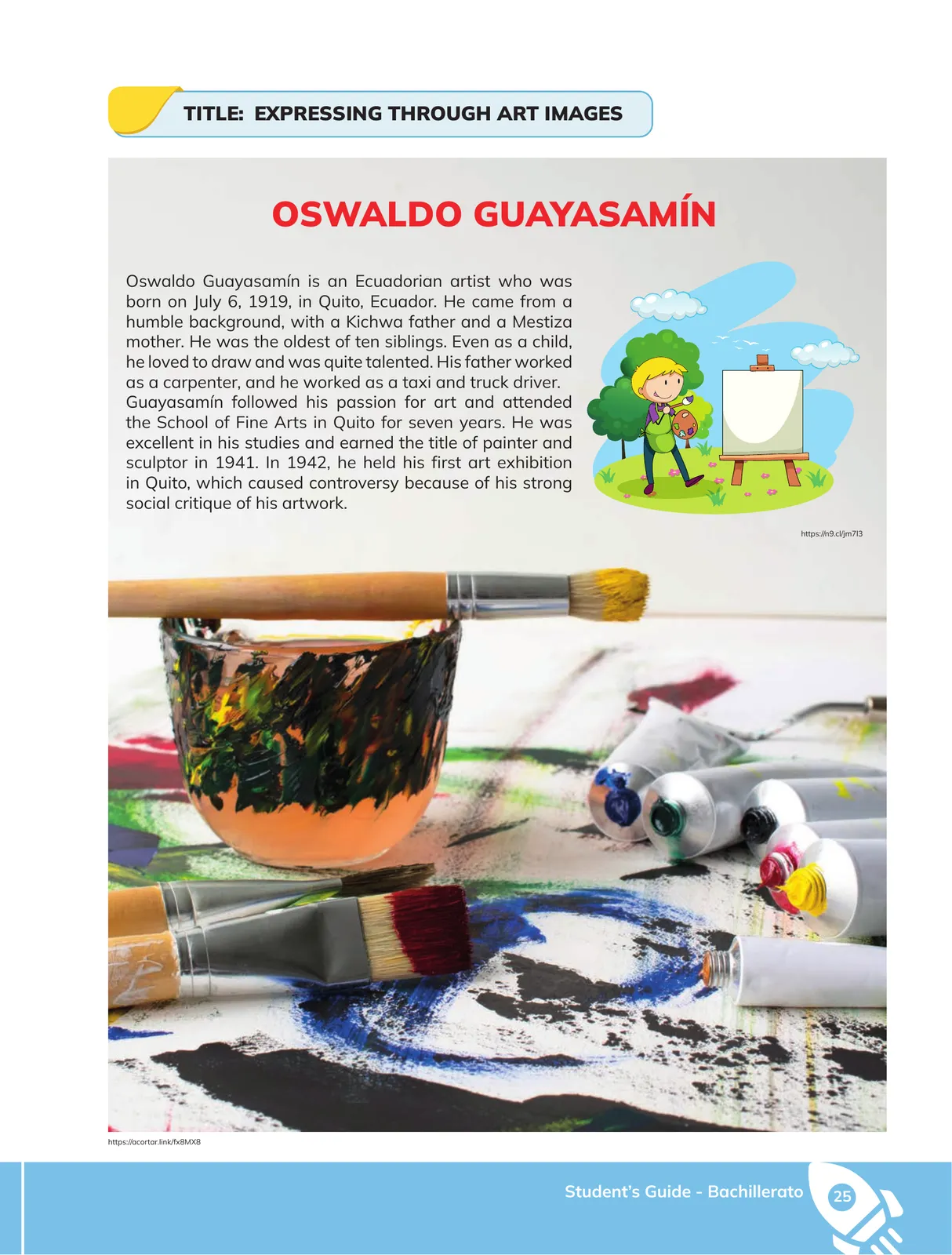
  • Ver pág. 26: Biografía de Guayasamín.
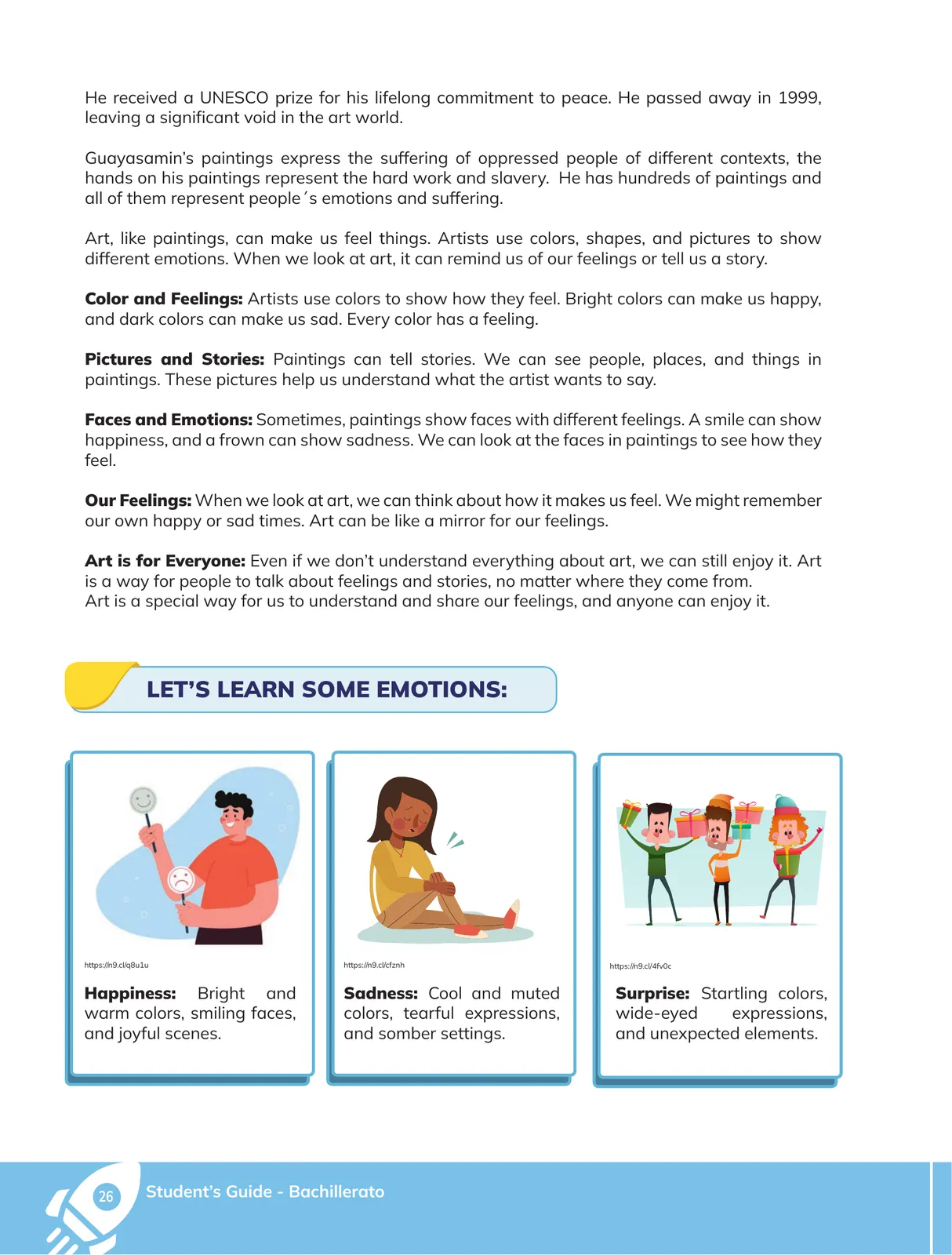
  • Ver pág. 27: Cómo el arte expresa emociones (color, rostros, etc.).
  • Ver pág. 28: Glosario visual de emociones que se usará para describir.
Siguiente tema sugerido
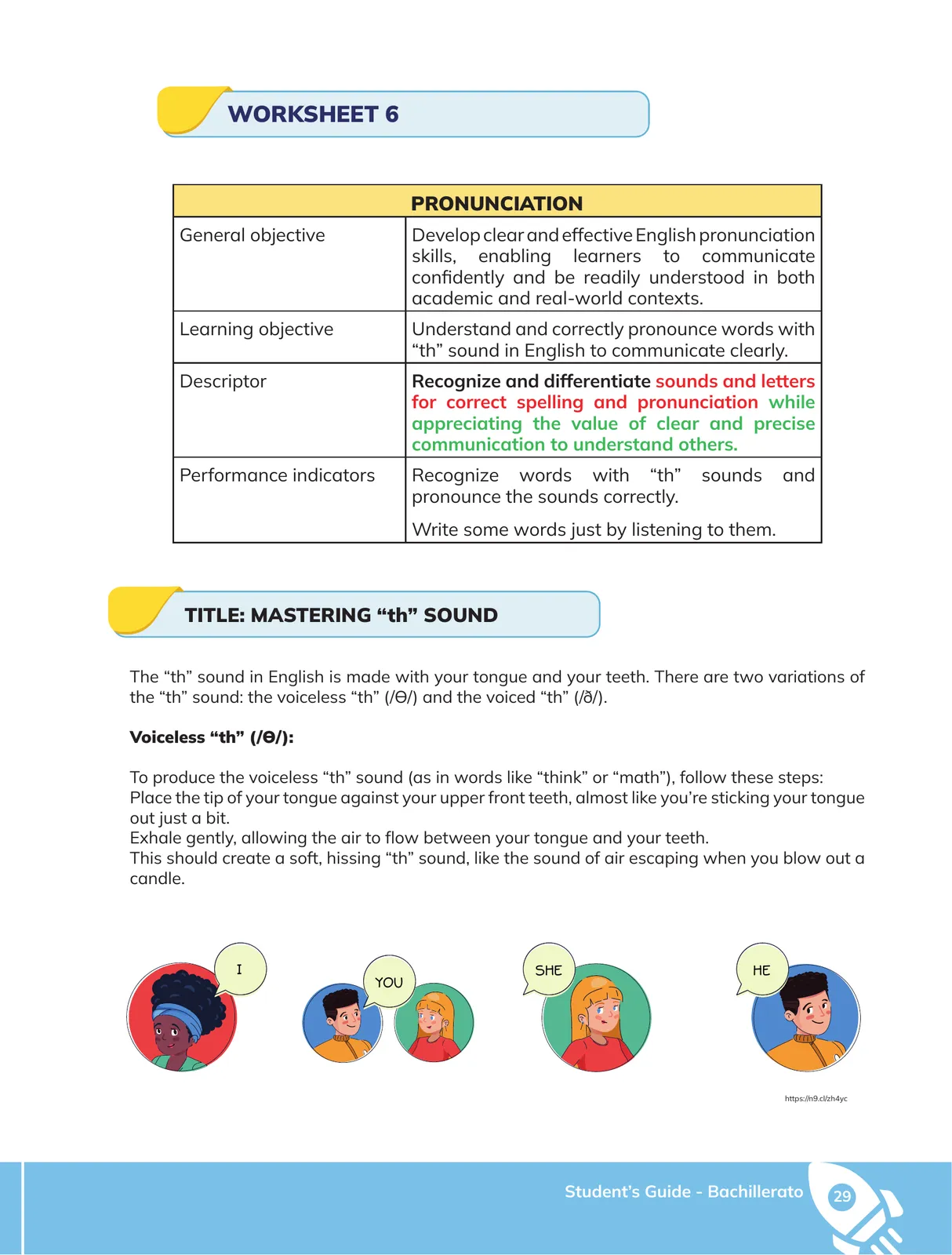
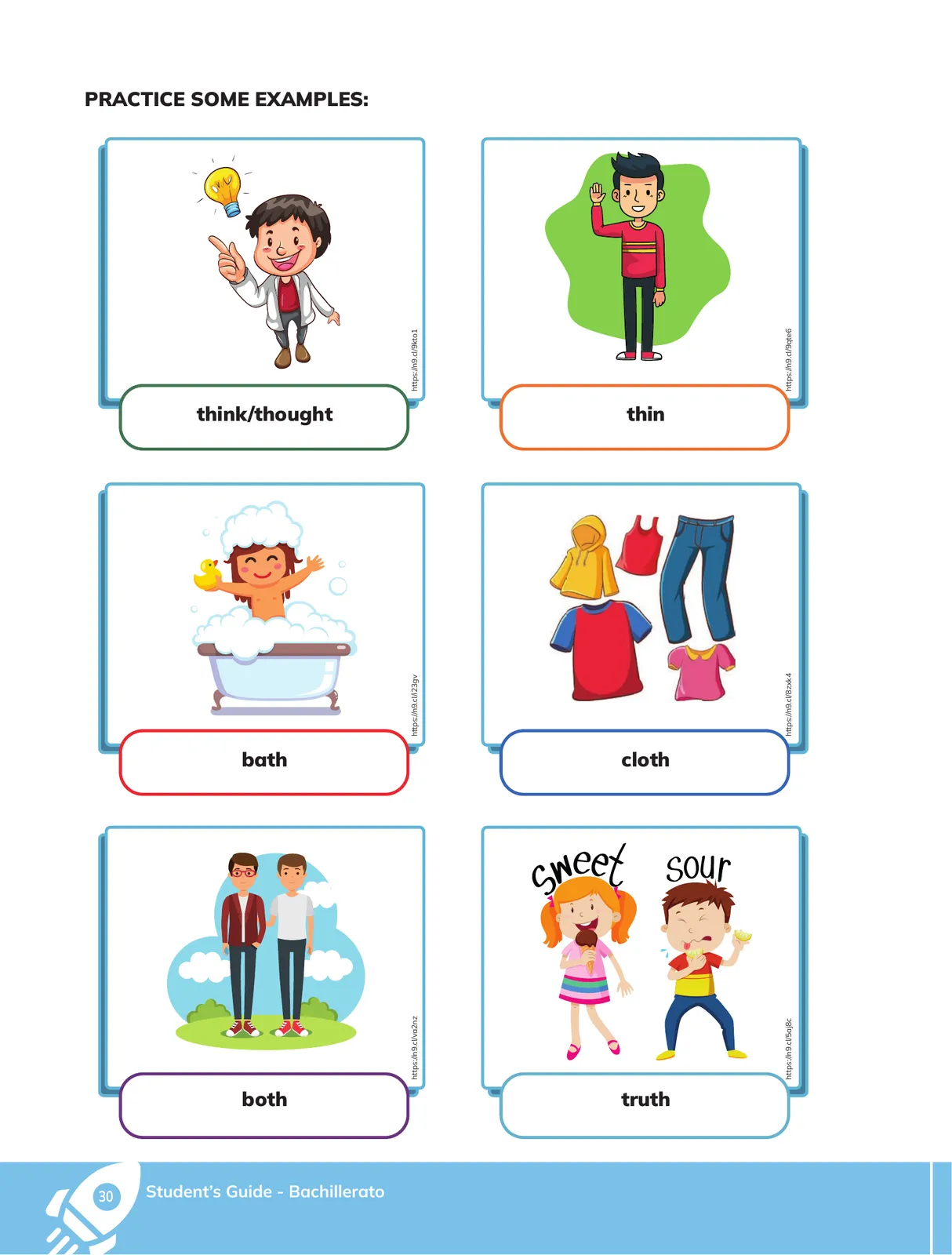
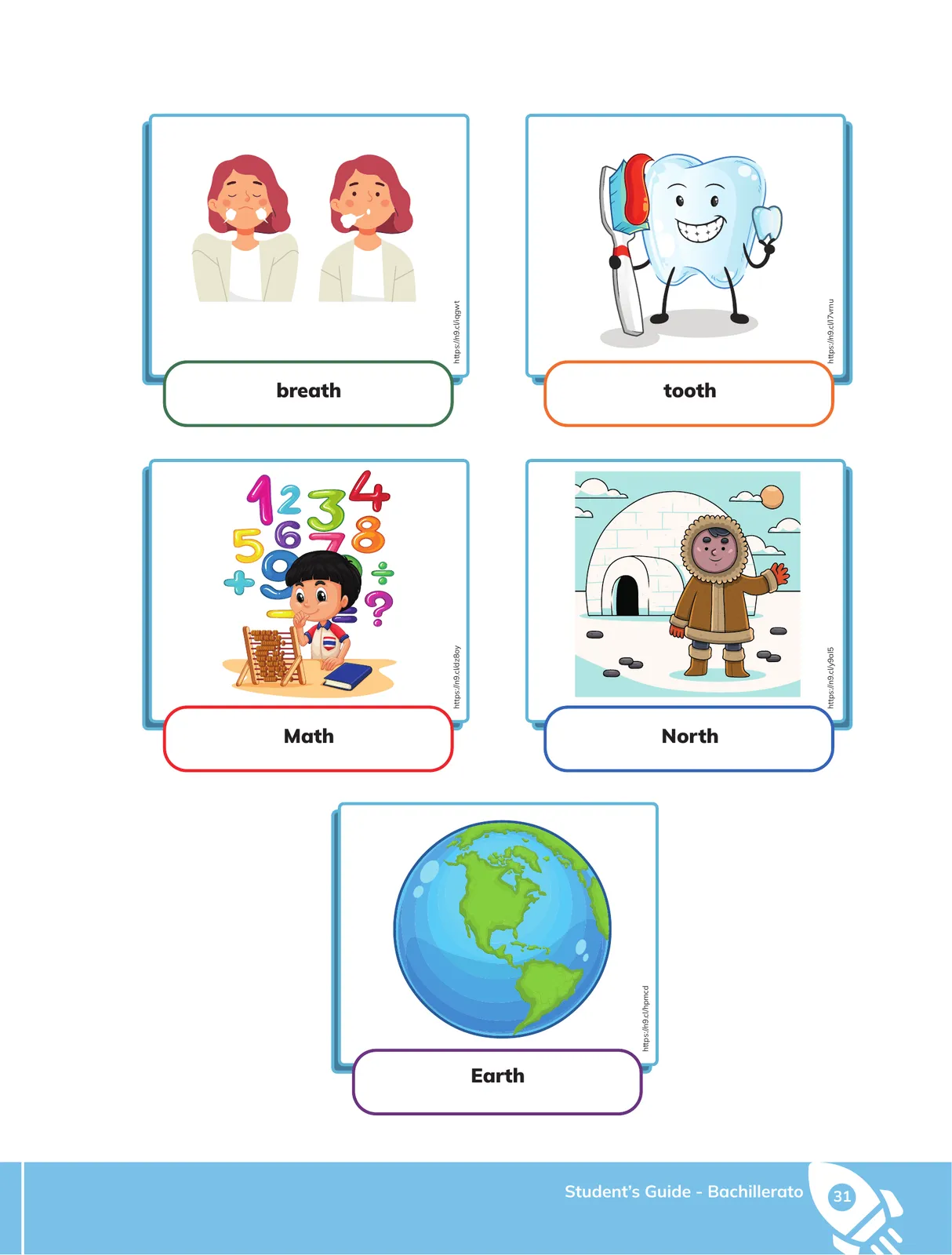
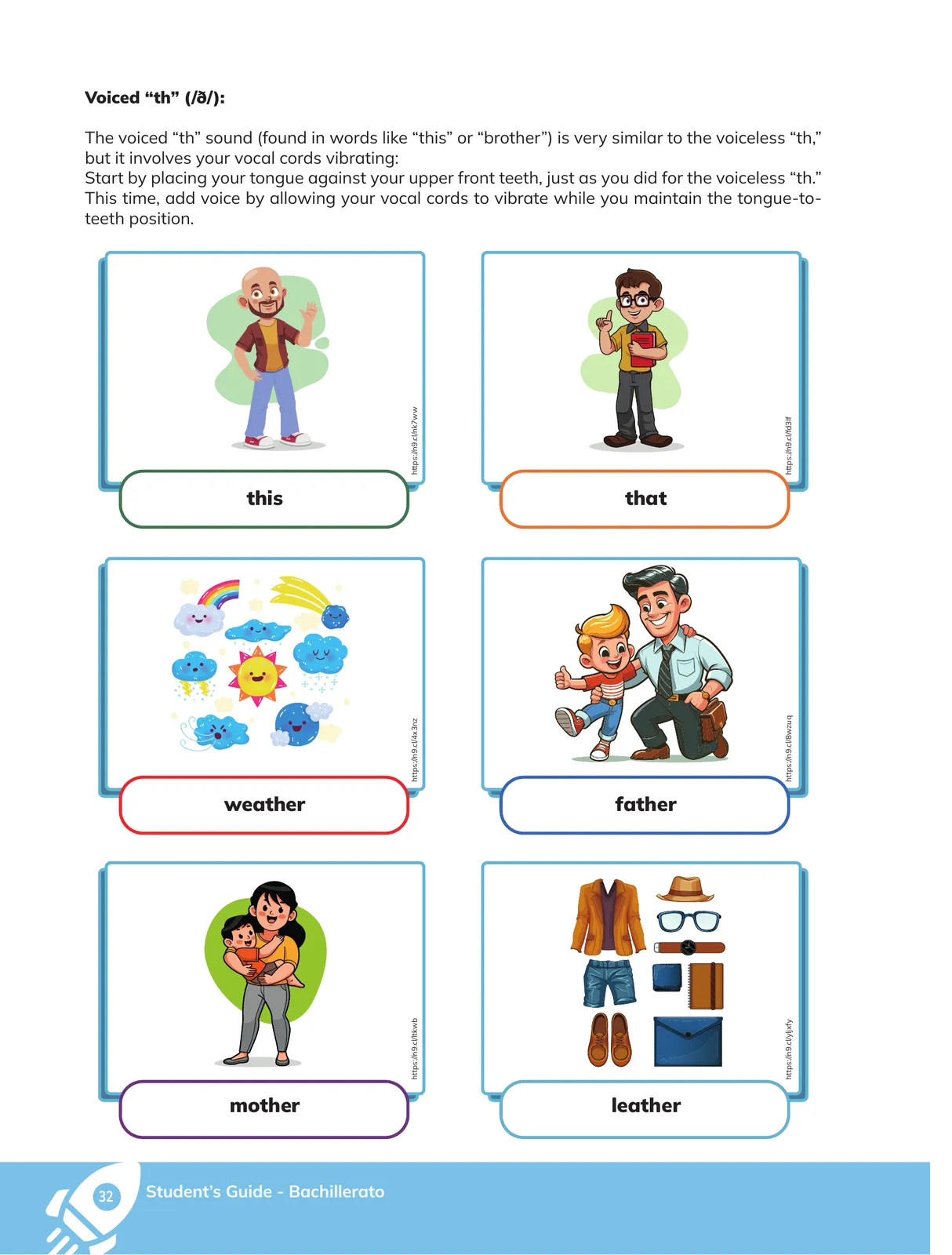
Worksheet 6 - Pronunciation: Mastering the 'th' sound (voiceless /θ/)
📝 Transcripción de la página (texto seleccionable) 560 caracteres

These are just a few examples, and artists use a combination of visual elements and techniques

to evoke these emotions in their paintings. Emotions in art can be deeply personal and subjective, and different viewers may interpret them in various ways.

What emotions do you experience when viewing Guayasamin's paintings? Use the previous vocabulary to explain.

YOU ARE AN ARTIST!

Use your creativity and imagination to draw or paint an image that represents some strong feeling you have felt. Describe all the emotions represented in your work of art.

a >

Ad

Otros libros recomendados

Ver todos →
Ad

Usamos cookies propias y de terceros para personalizar contenido, mostrar publicidad y analizar el tráfico. Las cookies necesarias siempre están activas.