Saltar al contenido
MisLibrosTexto
Ad
Ingles · 3ro BGU · 2024

Ministerio de Educación del Ecuador

10/34

Día de Muertos - Mexico - Preguntas y actividad de Speaking

📄 ejercicios ingles 🎓 BGU · 3° BGU Ecuador 🇪🇨 EC 🗣 Español
Página 10
10 de 34
Página 10 de Ingles · 3ro BGU · 2024
Anterior Página 10 / 34 Siguiente

Respuesta rápida

  1. El texto lo afirma directamente.
  2. El texto lo dice literalmente.
  3. Frase tomada directamente del texto.
  4. Información directa del texto.
📚 exercise ingles ⭐⭐ Dificultad 2/5 ⏱ 8 min lectura

Solución — Página 10

Ingles · 3ro BGU · 2024

1
Ejercicio 1

Lectura

DÍA DE MUERTOS - MEXICO

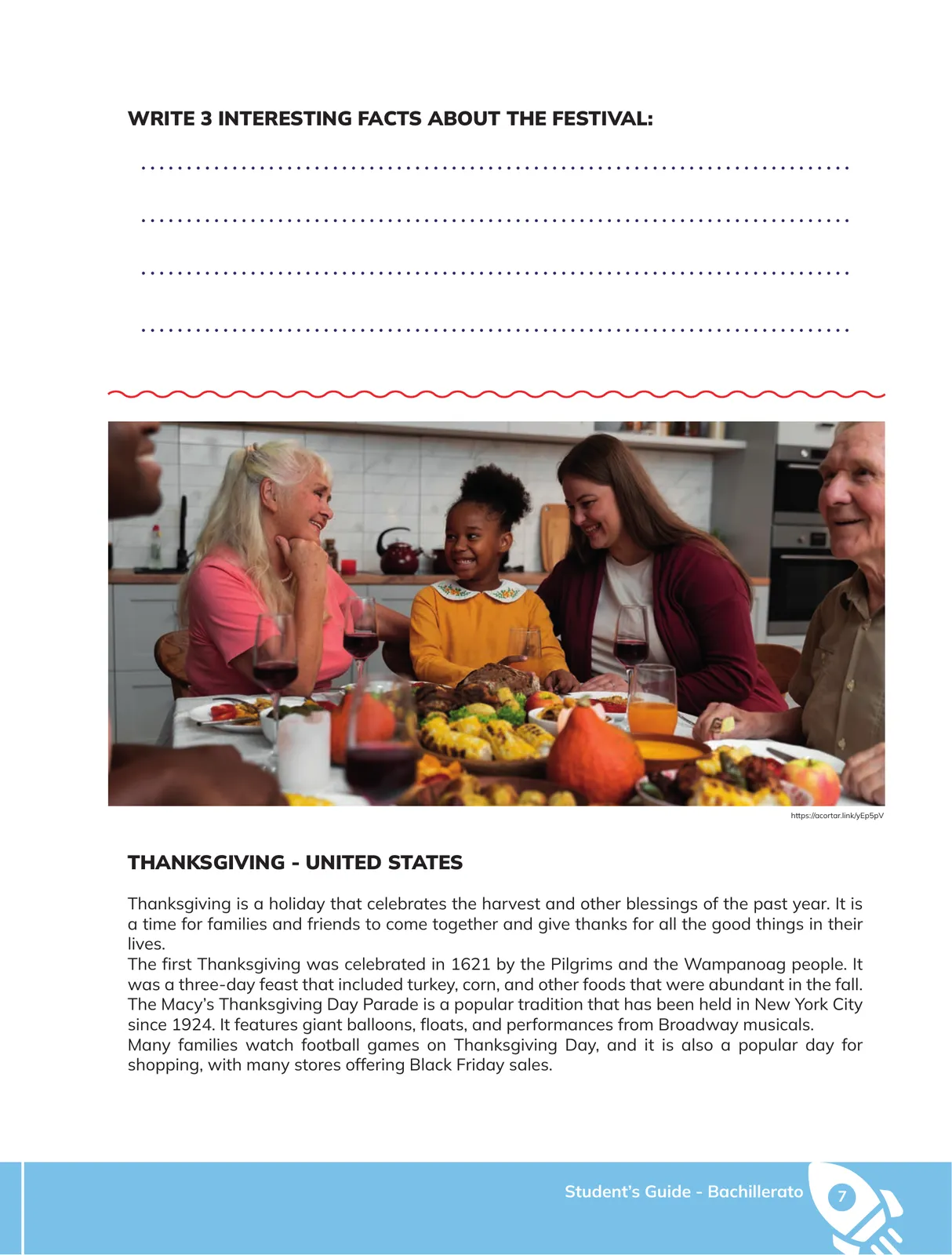
Día de Muertos is a special celebration that's all about life, not death. It's a time when families and friends get together to remember and honor their loved ones who have passed away. People believe that the spirits of the deceased come back to be with their families during this time.

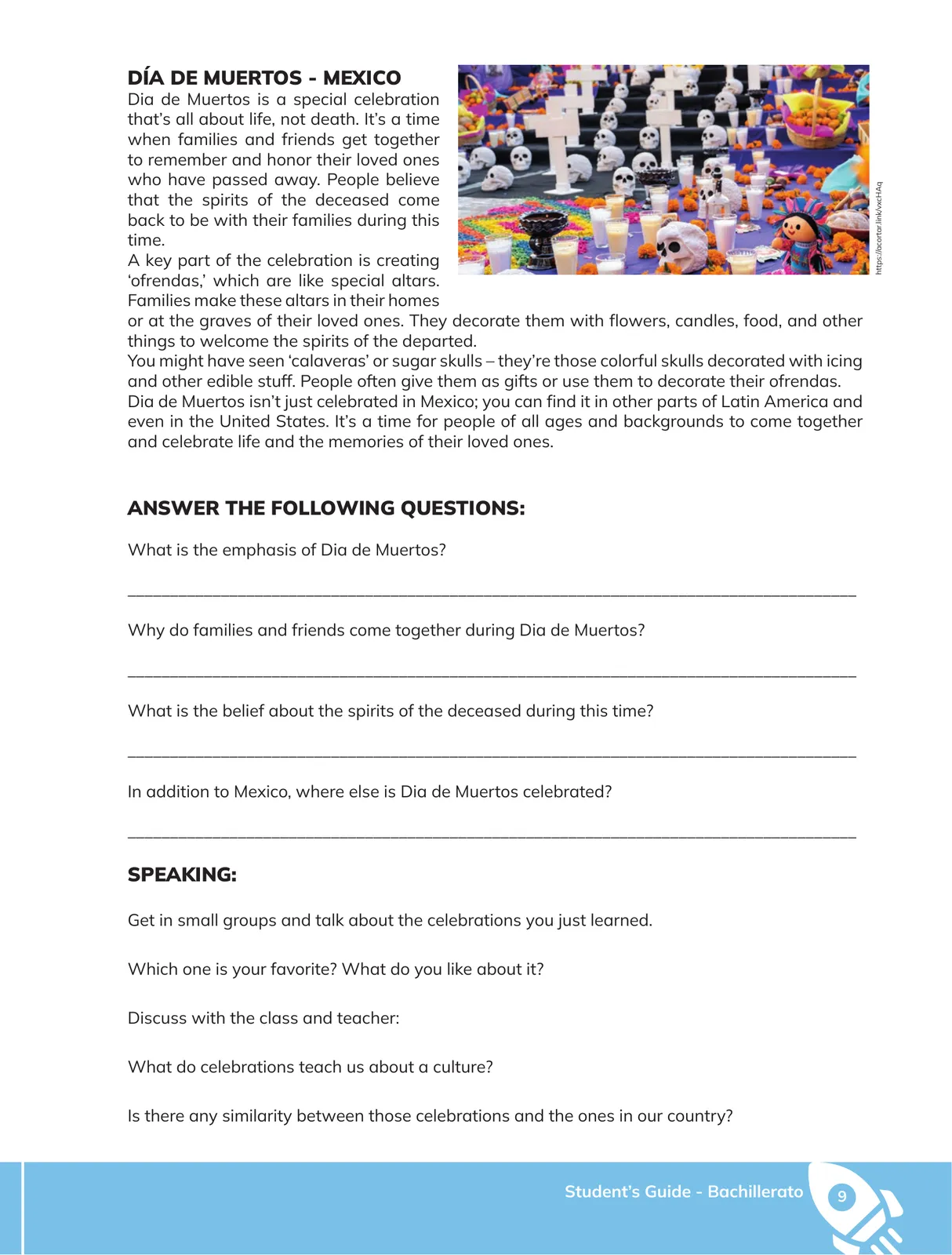
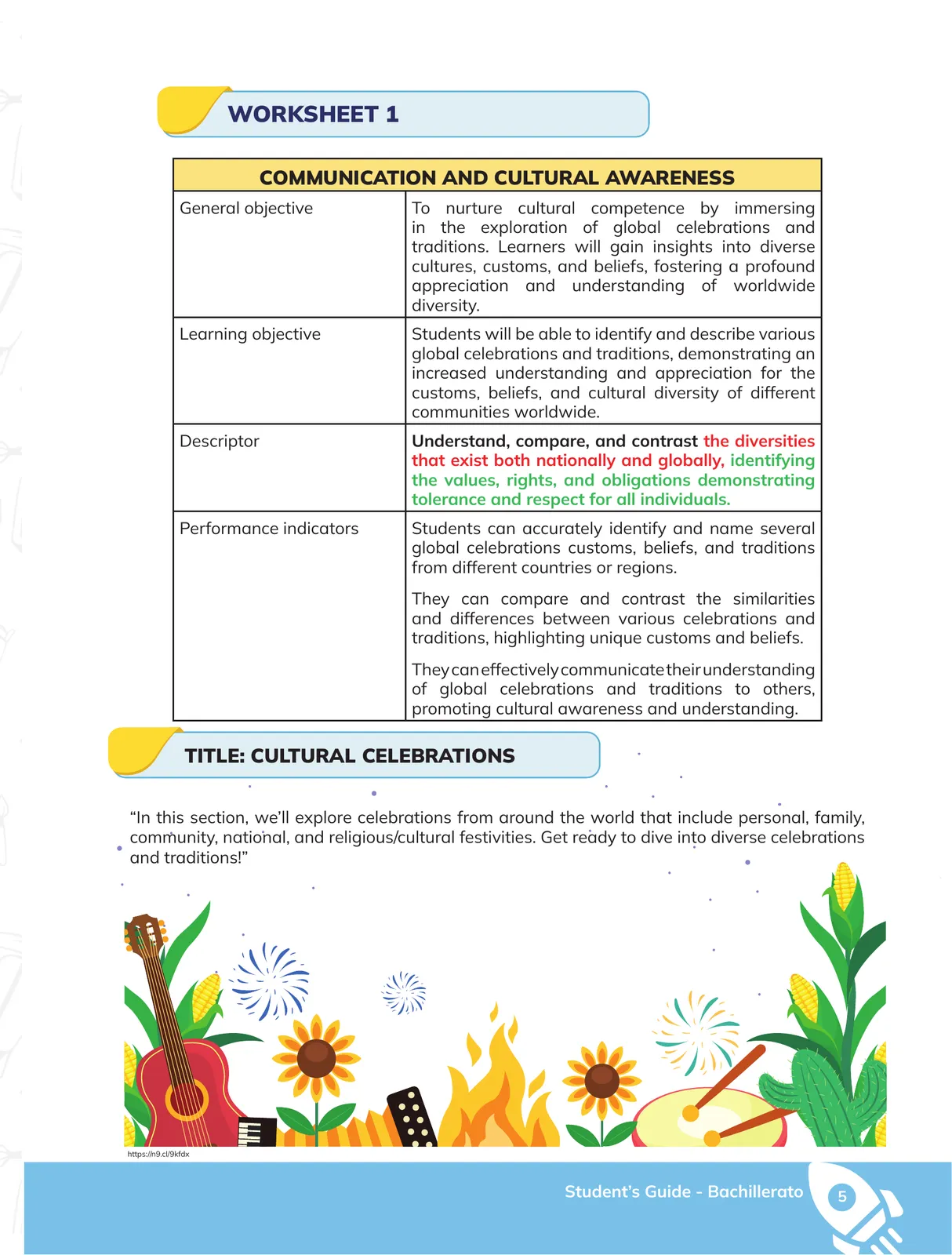
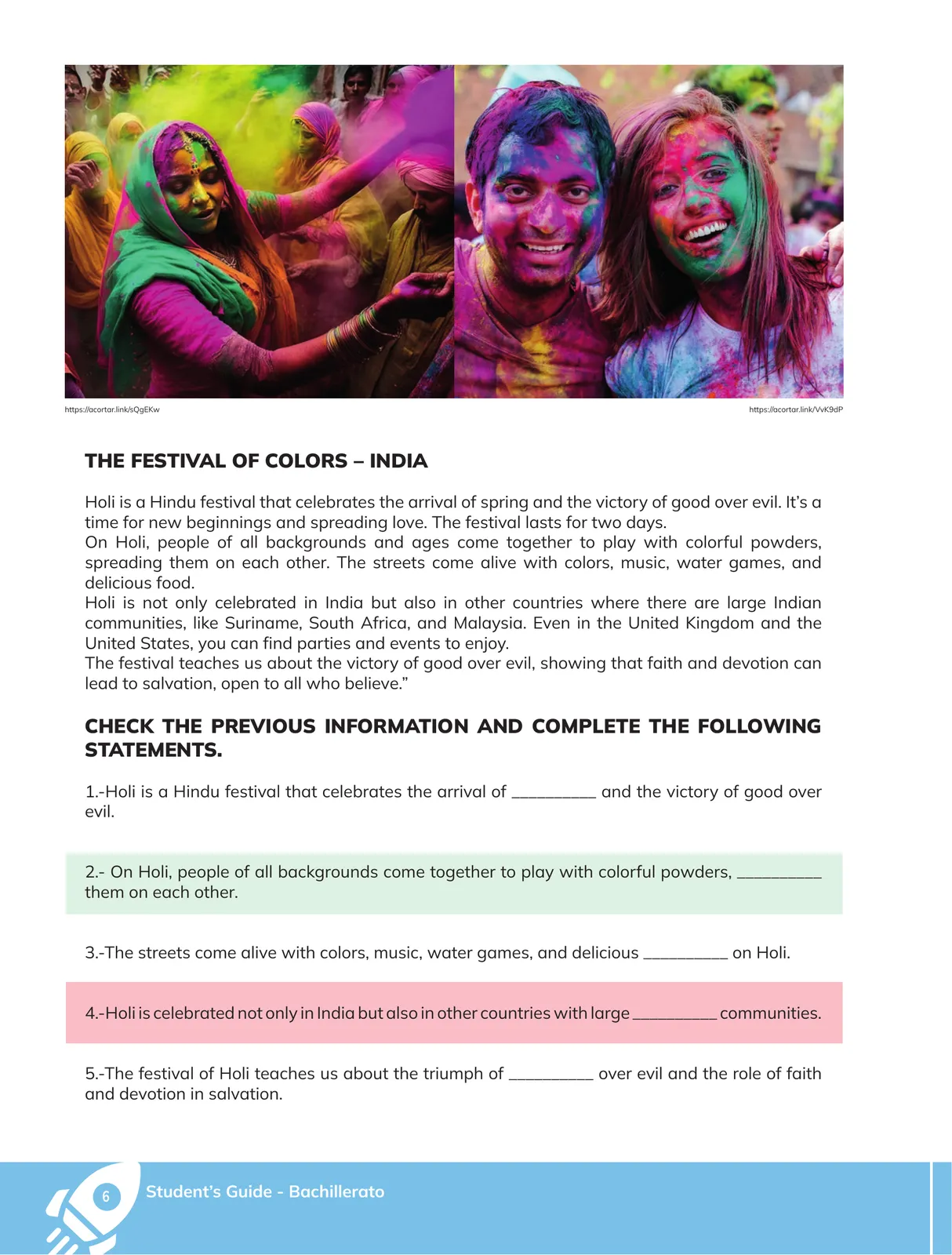
A key part of the celebration is creating 'ofrendas,' which are like special altars. Families make these altars in their homes or at the graves of their loved ones. They decorate them with flowers, candles, food, and other things to welcome the spirits of the departed.

You might have seen 'calaveras' or sugar skulls — they're those colorful skulls decorated with icing and other edible stuff. People often give them as gifts or use them to decorate their ofrendas.

Día de Muertos isn't just celebrated in Mexico; you can find it in other parts of Latin America and even in the United States. It's a time for people of all ages and backgrounds to come together and celebrate life and the memories of their loved ones.
1
Ejercicio 1

What is the emphasis of Día de Muertos?

  1. Buscar la frase 'all about life, not death' en el primer párrafo.
Respuesta

El texto lo afirma directamente.

2
Ejercicio 2

Why do families and friends come together during Día de Muertos?

  1. Identificar la razón mencionada en el primer párrafo.
Respuesta

El texto lo dice literalmente.

Ad
3
Ejercicio 3

What is the belief about the spirits of the deceased during this time?

  1. Localizar la creencia descrita en el texto.
Respuesta

Frase tomada directamente del texto.

4
Ejercicio 4

In addition to Mexico, where else is Día de Muertos celebrated?

  1. Buscar el último párrafo del texto.

Preguntas abiertas

Respuesta

Información directa del texto.

1
Ejercicio 1

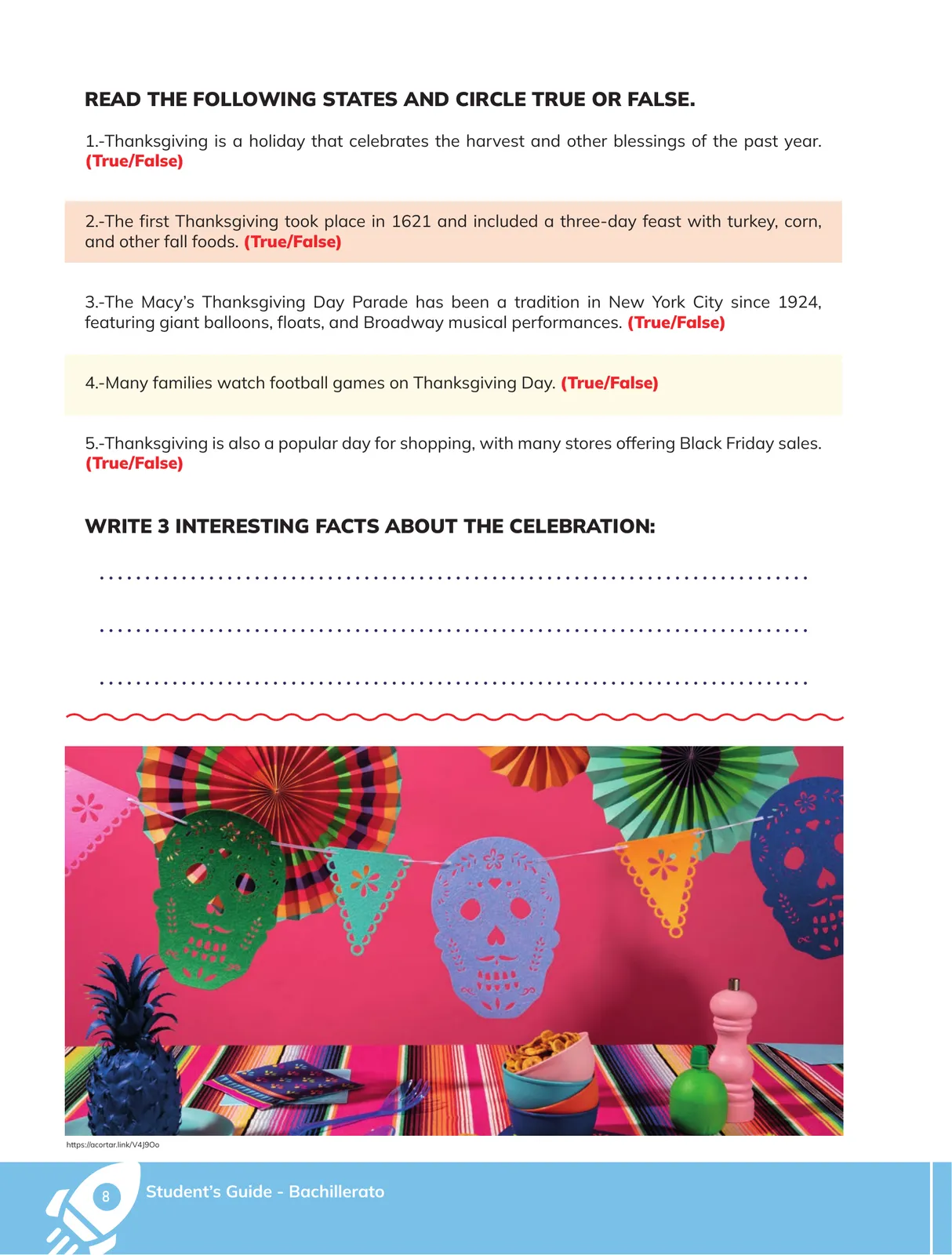
** Which celebration (Holi, Thanksgiving, Día de Muertos) is your favorite? What do you like about it?

Respuesta orientativa: Respuesta personal con justificación; cualquier festival puede ser elegido siempre que se argumente.

Ad
2
Ejercicio 2

** What do celebrations teach us about a culture?

Respuesta orientativa: Las celebraciones revelan valores, creencias, historia y formas de vincularse de un pueblo.

3
Ejercicio 3

** Is there any similarity between those celebrations and the ones in our country (Ecuador)?

Respuesta orientativa: El Día de los Difuntos en Ecuador (2 de noviembre) tiene similitudes con el Día de Muertos: colada morada, guaguas de pan, visita a tumbas.

Glosario

  • Día de Muertos: Day of the Dead; festividad mexicana en honor a los difuntos.
  • ofrenda: Altar especial con fotos, flores, comida y velas para los seres queridos fallecidos.
  • calavera: Calavera; en este contexto, dulce de azúcar decorado con forma de cráneo.
  • spirits: Espíritus; almas de los fallecidos.
  • deceased: Difuntos; personas fallecidas.
  • departed: Los que han partido; los muertos.

Fuentes

¿Te fue útil esta página?

Figuras de la página (1)

Figura 2 de Ingles · 3ro BGU · 2024
Figura 2 image

Preguntas que la gente también hace

Which celebration (Holi, Thanksgiving, Día de Muertos) is your favorite? What do you like about it?
Consulta la solución completa arriba o explora el libro entero para temas relacionados.
What do celebrations teach us about a culture?
Consulta la solución completa arriba o explora el libro entero para temas relacionados.
Is there any similarity between those celebrations and the ones in our country (Ecuador)?
Consulta la solución completa arriba o explora el libro entero para temas relacionados.
📌 Antes de leer esto
  • Ver pág. 9: Imagen previa del Día de Muertos.
Siguiente tema sugerido
Worksheet 2 - Oral Communication
📝 Transcripción de la página (texto seleccionable) 1673 caracteres

DÍA DE MUERTOS - MEXICO

Dia de Muertos is a special celebration that's all about life, not death. It's a time when families and friends get together to remember and honor their loved ones who have passed away. People believe that the spirits of the deceased come back to be with their families during this time.

A key part of the celebration is creating “ofrendas; which are like special altars. Families make these altars in their homes or at the graves of their loved ones. They decorate them with flowers, candles, food, and other things to welcome the spirits of the departed.

You might have seen ‘calaveras’ or sugar skulls — they're those colorful skulls decorated with icing and other edible stuff. People often give them as gifts or use them to decorate their ofrendas. Dia de Muertos isn’t just celebrated in Mexico; you can find it in other parts of Latin America and even in the United States. It’s a time for people of all ages and backgrounds to come together and celebrate life and the memories of their loved ones.
https:/facortar.link/vxcHAq

ANSWER THE FOLLOWING QUESTIONS:

What is the emphasis of Dia de Muertos?

Why do families and friends come together during Dia de Muertos?

What is the belief about the spirits of the deceased during this time?

In addition to Mexico, where else is Dia de Muertos celebrated?

SPEAKING:

Get in small groups and talk about the celebrations you just learned. Which one is your favorite? What do you like about it?

Discuss with the class and teacher:

What do celebrations teach us about a culture?

Is there any similarity between those celebrations and the ones in our country?

Student’s Guide - Bachillerato

Ad

Páginas cercanas

Otros libros recomendados

Ver todos →
Ad

Usamos cookies propias y de terceros para personalizar contenido, mostrar publicidad y analizar el tráfico. Las cookies necesarias siempre están activas.