
Saltar al contenido
MisLibrosTexto
Ad
Ingles · 10 EGB · 2024

Ministerio de Educación del Ecuador

13/50

Title: Unlocking Success - The Power of Following Instructions in Class (listening + completar)

📄 ejercicios ingles 🎓 EGB · 10° EGB Ecuador 🇪🇨 EC 🗣 Español
Página 13
13 de 50
Página 13 de Ingles · 10 EGB · 2024
Anterior Página 13 / 50 Siguiente
📚 exercise ingles ⭐⭐⭐ Dificultad 3/5 ⏱ 15 min lectura

Solución — Página 13

Ingles · 10 EGB · 2024

1
Ejercicio 1

Lectura

TITLE

UNLOCKING SUCCESS: THE POWER OF FOLLOWING INSTRUCTIONS IN CLASS

Listening to and doing what the teacher says is very important in class. When you understand and follow instructions, you can do your schoolwork well, which helps you get good grades. It also makes the class run smoothly. It's like following a recipe when you cook – if you don't follow the steps, the dish may not turn out right.

Following instructions helps you learn new things and gets you ready for future jobs where you need to do what your boss tells you. Plus, it's a way to be respectful and show you're responsible.

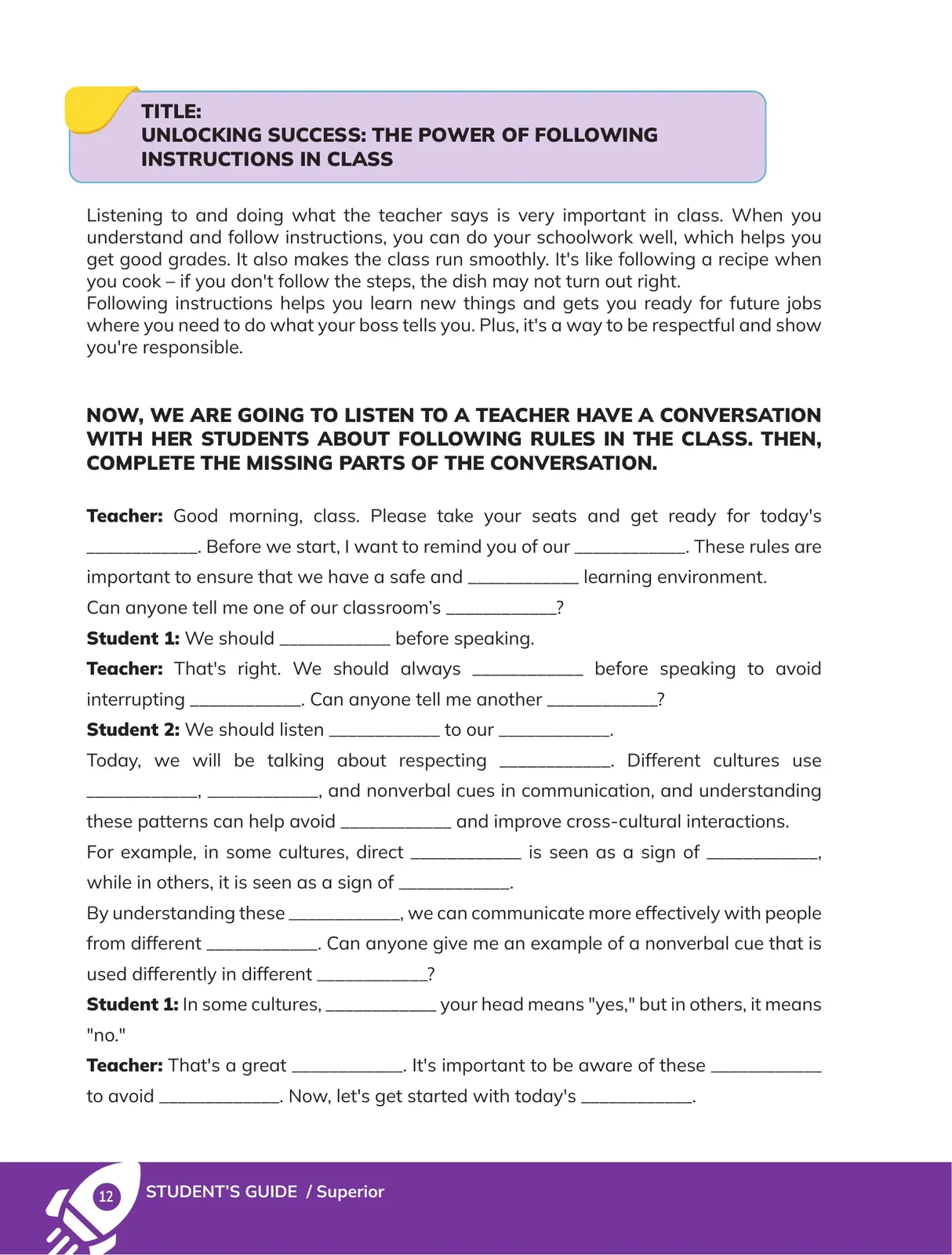
NOW, WE ARE GOING TO LISTEN TO A TEACHER HAVE A CONVERSATION WITH HER STUDENTS ABOUT FOLLOWING RULES IN THE CLASS. THEN, COMPLETE THE MISSING PARTS OF THE CONVERSATION.

Teacher: Good morning, class. Please take your seats and get ready for today's __________. Before we start, I want to remind you of our __________. These rules are important to ensure that we have a safe and __________ learning environment. Can anyone tell me one of our classroom's __________?

Student 1: We should __________ before speaking.

Teacher: That's right. We should always __________ before speaking to avoid interrupting __________. Can anyone tell me another __________?

Student 2: We should listen __________ to our __________.

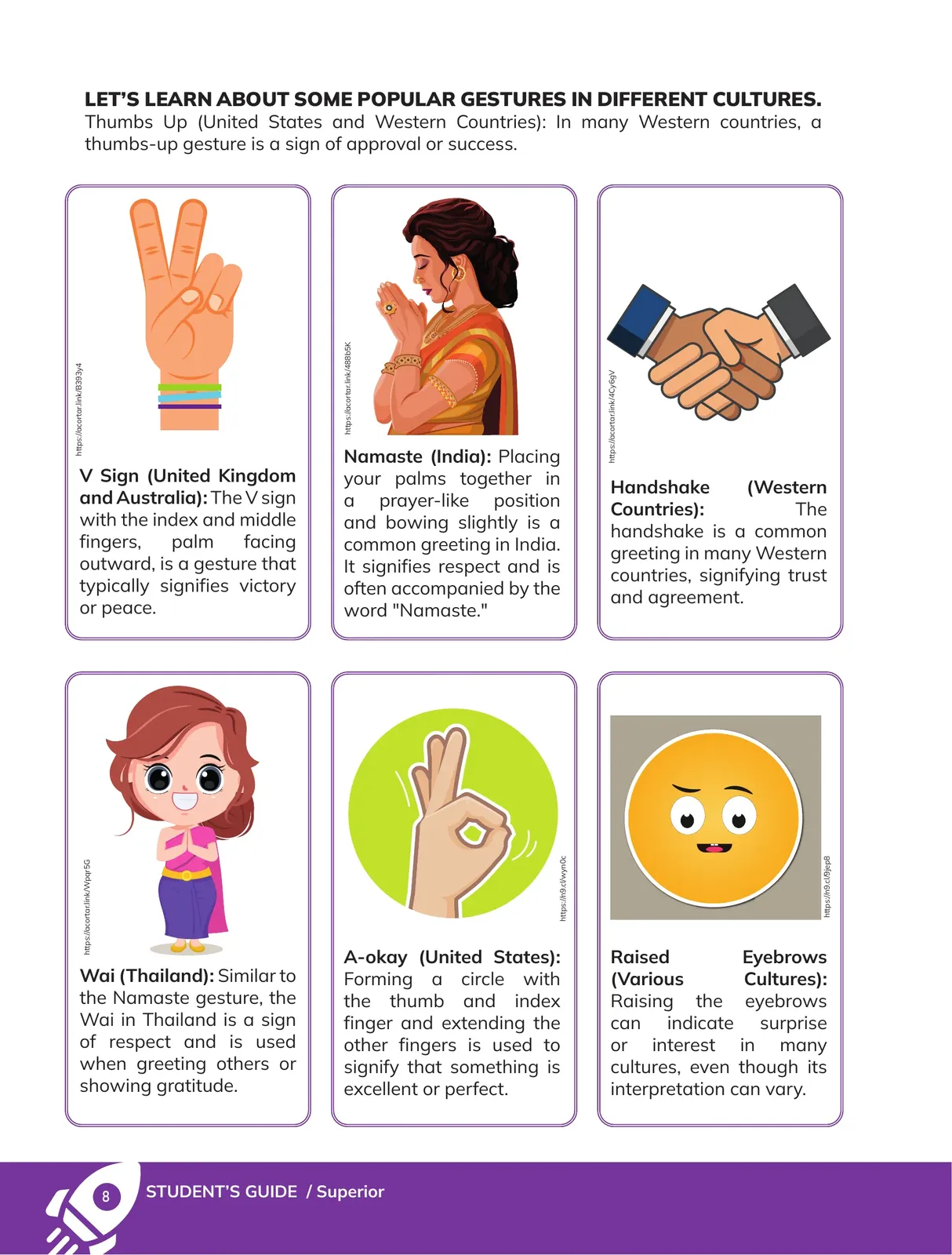
Today, we will be talking about respecting __________. Different cultures use __________, __________, and nonverbal cues in communication, and understanding these patterns can help avoid __________ and improve cross-cultural interactions. For example, in some cultures, direct __________ is seen as a sign of __________, while in others, it is seen as a sign of __________. By understanding these __________, we can communicate more effectively with people from different __________. Can anyone give me an example of a nonverbal cue that is used differently in different __________?

Student 1: In some cultures, __________ your head means "yes," but in others, it means "no."

Teacher: That's a great __________. It's important to be aware of these __________ to avoid __________. Now, let's get started with today's __________.
1
Ejercicio 1

Complete the missing parts of the conversation between the teacher and students about following classroom rules.

  1. Escucha atentamente el audio de la conversación.
  2. Identifica el contexto: una clase introduciendo reglas y comunicación intercultural.
  3. Completa con palabras coherentes con el contexto.

Preguntas abiertas

Respuesta

Posible solución (depende del audio): today's [lesson]; our [classroom rules]; safe and [respectful]; classroom's [rules]; should [raise our hand]; always [raise our hand]; interrupting [others]; another [rule]; listen [carefully] to our [teacher]; respecting [diversity / others]; cultures use [gestures], [body language]; help avoid [misunderstandings]; direct [eye contact]; sign of [respect / confidence]; sign of [disrespect / aggression]; understanding these [differences]; from different [cultures / backgrounds]; in different [cultures]; [nodding] your head; great [example]; aware of these [differences]; avoid [misunderstandings]; today's [lesson].

1
Ejercicio 1

** ¿Por qué seguir instrucciones en clase ayuda en el futuro laboral?

Respuesta orientativa: Porque desarrolla disciplina, atención y respeto a la autoridad, habilidades transferibles a cualquier trabajo.

Glosario

  • recipe: Receta de cocina.
  • smoothly: Suavemente, sin problemas.
  • boss: Jefe.
  • responsible: Responsable.
  • rules: Reglas, normas.
  • interrupting: Interrumpir.
¿Te fue útil esta página?

Preguntas que la gente también hace

¿Por qué seguir instrucciones en clase ayuda en el futuro laboral?
Consulta la solución completa arriba o explora el libro entero para temas relacionados.
📌 Antes de leer esto
  • Ver pág. 12: Apertura del Worksheet 2.
  • Ver pág. 14: Actividad de Speaking sobre el diálogo.
Siguiente tema sugerido
Speaking + True/False statements sobre normas sociales
📝 Transcripción de la página (texto seleccionable) 2030 caracteres

TITLE: UNLOCKING SUCCESS: THE POWER OF FOLLOWING INSTRUCTIONS IN CLASS

Listening to and doing what the teacher says is very important in class. When you understand and follow instructions, you can do your schoolwork well, which helps you get good grades. It also makes the class run smoothly. It's like following a recipe when you cook — if you don't follow the steps, the dish may not turn out right.

Following instructions helps you learn new things and gets you ready for future jobs where you need to do what your boss tells you. Plus, it's a way to be respectful and show you're responsible.

NOW, WE ARE GOING TO LISTEN TO A TEACHER HAVE A CONVERSATION WITH HER STUDENTS ABOUT FOLLOWING RULES IN THE CLASS. THEN, COMPLETE THE MISSING PARTS OF THE CONVERSATION.

Teacher: Good morning, class. Please take your seats and get ready for today's

. Before we start, | want to remind you of our __ . These rules are

important to ensure that we have a safe and _ learning environment.

Can anyone tell me one of our classroom’s _ ?

Student 1: We should __________ before speaking.

Teacher: That's right. We should always __ -—_ before speaking to avoid interrupting____________, Can anyone tell me another ______ ?

Student 2: We should listen ___ toour ,

Today, we will be talking about respecting ___________. Different cultures use

, , and nonverbal cues in communication, and understanding

these patterns can help avoid _ and improve cross-cultural interactions.

For example, in some cultures, direct __ is seen as a sign of

while in others, it is seen as a sign of __ .

By understanding these __ , we can communicate more effectively with people from different ___ ___. Can anyone give me an example of a nonverbal cue that is used differently in different __ ?

Student 1: In some cultures,

your head means "yes," but in others, it means

no."

Teacher: That's a great . It's important to be aware ofthese__________

to avoid . . Now, let's get started with today's__

(12) STUDENTS GUIDE / Superior

Ad

Otros libros recomendados

Ver todos →
Ad

Usamos cookies propias y de terceros para personalizar contenido, mostrar publicidad y analizar el tráfico. Las cookies necesarias siempre están activas.