Saltar al contenido
MisLibrosTexto
Ad
Ingles · 9 EGB · 2024

Ministerio de Educación del Ecuador

16/50

Imperativos y Modales para reglas y normas - Proyecto

📄 contenido ingles 🎓 EGB · 9° EGB Ecuador 🇪🇨 EC 🗣 Español
Página 16
16 de 50
Página 16 de Ingles · 9 EGB · 2024
Anterior Página 16 / 50 Siguiente

Respuesta rápida

Evaluación por rúbrica: relevancia, gramática (imperativos/modales), creatividad y presentación.

📚 theory ingles ⭐⭐⭐ Dificultad 3/5 ⏱ 45 min lectura

Solución — Página 16

Ingles · 9 EGB · 2024

1
Ejercicio 1

Lectura

FOR EXAMPLE (Imperativos)

  • Raise your hand before speaking.
  • Always listen respectfully to others.
  • Don't interrupt when someone else is talking.

Modal verbs, such as "should," "must," "have to," "need to," and "can," are used to express necessity, obligation, or permission. They are commonly used to transmit social norms or rules in a more polite or nuanced way.

FOR EXAMPLE (Modales)

  • You should always be respectful to your classmates.
  • Students must follow the classroom rules.
  • We ought to listen to the teacher's instructions.
  • You need to raise your hand before speaking.
  • You can't talk in class without permission.

Project

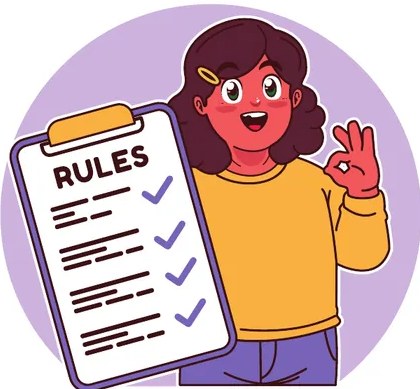
Create some rules or norms for the class or the school that can help have better relationships with others. Present it to the class and teacher and use your creativity to draw or write the new rules.

1
Ejercicio 1

Create some rules or norms for the class or the school that can help have better relationships with others. Present it to the class and teacher and use your creativity to draw or write the new rules.
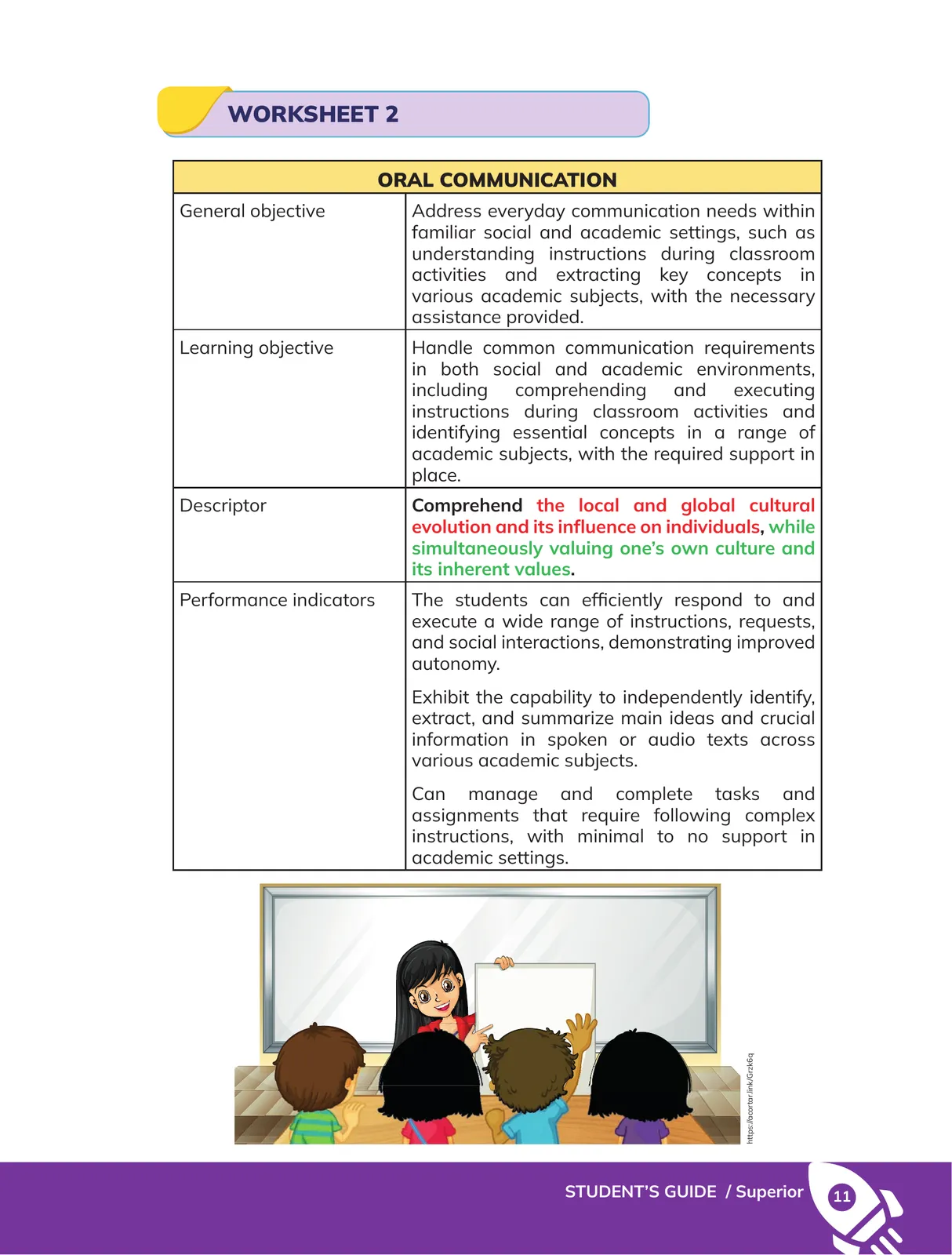
  1. Lluvia de ideas: identifica problemas comunes en el aula que requieren normas.
  2. Redacta 5-8 reglas usando imperativos y modales (should, must, can't).
  3. Diseña visualmente la lista de reglas (cartel, infografía, dibujo).
  4. Presenta el resultado a la clase y al docente.

Ejemplo 1

Convertir un imperativo en una norma con modal.

  1. Imperativo: 'Raise your hand before speaking.'
  2. Con modal: 'You need to raise your hand before speaking.'

Preguntas abiertas

Respuesta

Evaluación por rúbrica: relevancia, gramática (imperativos/modales), creatividad y presentación.

1
Ejercicio 1

** ¿Cuál es la diferencia entre 'should' y 'must' al expresar una regla?

Respuesta orientativa: 'Should' sugiere o recomienda; 'must' indica obligación fuerte o no negociable.

Diagrama 1

Clasificación de verbos modales según función comunicativa en reglas.

classDiagram
  class Modal
  Modal <|-- Obligation
  Modal <|-- Recommendation
  Modal <|-- Permission
  Obligation : must
  Obligation : have to
  Obligation : need to
  Recommendation : should
  Recommendation : ought to
  Permission : can
  Permission : can't

Tablas

Modal Función Ejemplo
should Recomendación You should be respectful.
must Obligación fuerte Students must follow the rules.
ought to Deber moral We ought to listen to the teacher.
need to Necesidad You need to raise your hand.
can't Prohibición You can't talk without permission.

Glosario

  • must: Modal de obligación fuerte ('debe').
  • have to: Indica obligación derivada de una circunstancia externa.
  • ought to: Modal que expresa deber moral, similar a 'should'.
  • can't: Forma negativa de 'can'; expresa prohibición o incapacidad.
  • nuanced: Matizado/a; con sutileza.

Fuentes

¿Te fue útil esta página?

Figuras de la página (2)

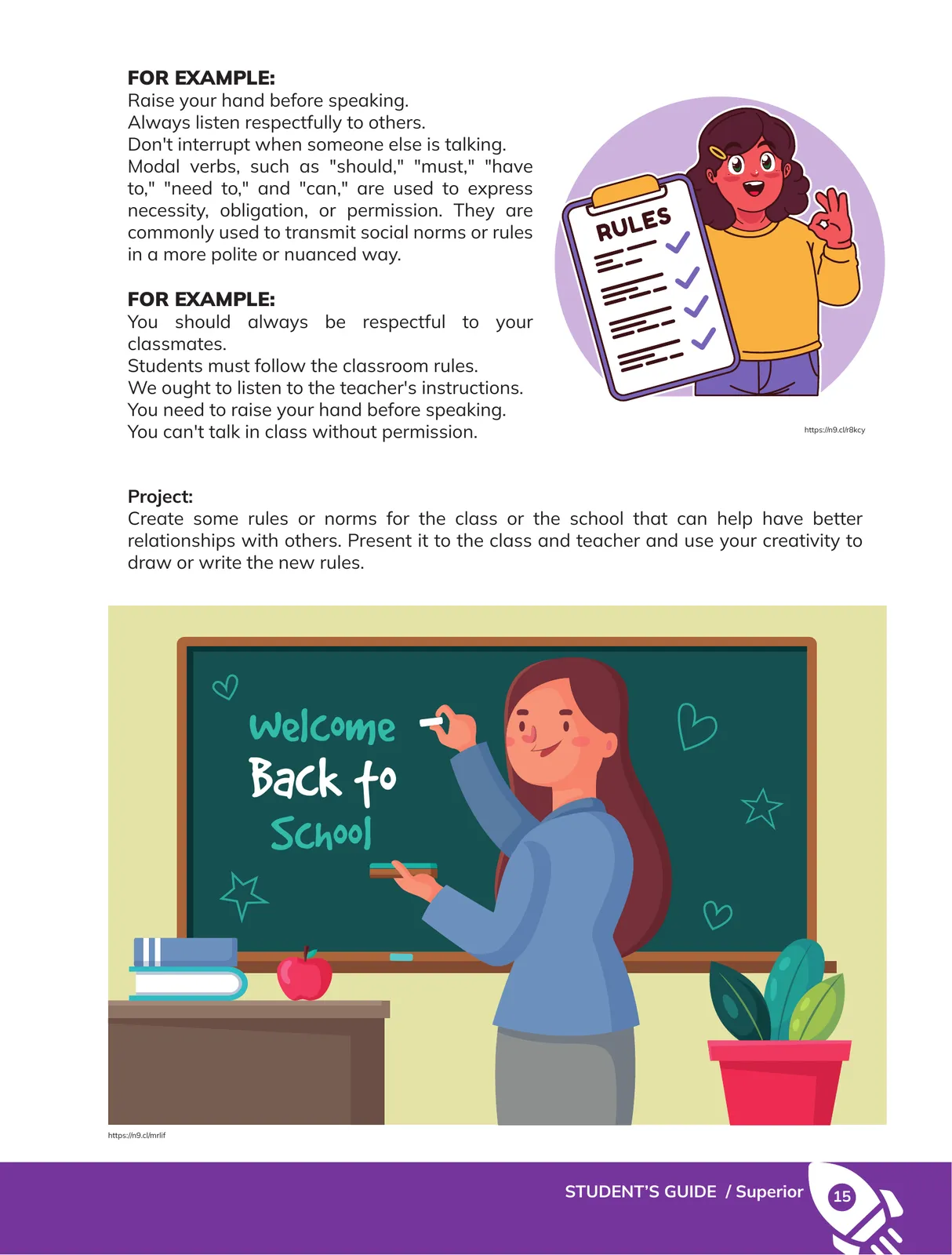
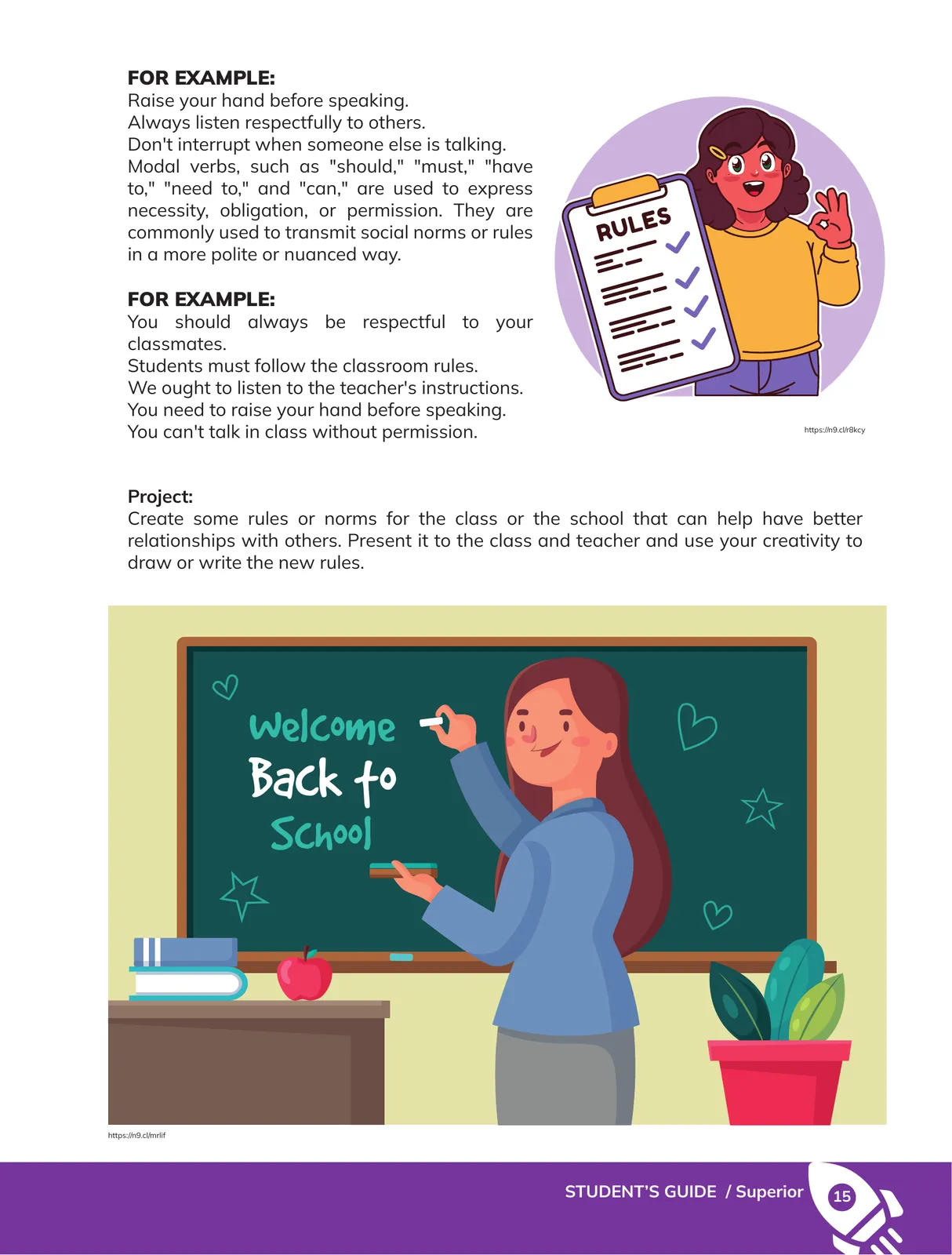
Ilustración de una docente escribiendo 'Welcome Back to School' en un pizarrón verde.
Figura 2 image
Figura 3 de Ingles · 9 EGB · 2024
Figura 3 image

Preguntas que la gente también hace

¿Cuál es la diferencia entre 'should' y 'must' al expresar una regla?
Consulta la solución completa arriba o explora el libro entero para temas relacionados.
📌 Antes de leer esto
  • Ver pág. 15: Introducción a imperativos y modales.
Siguiente tema sugerido
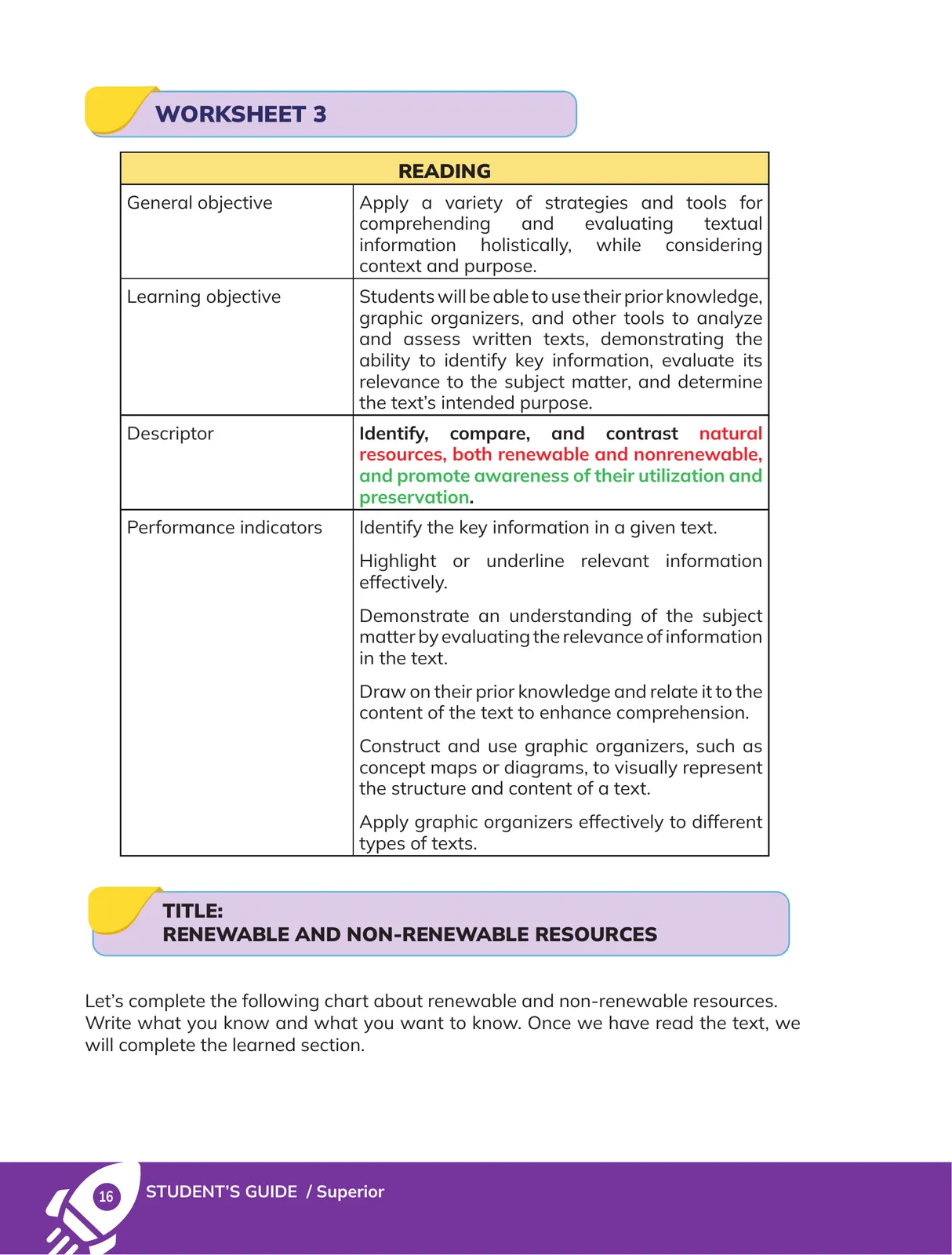
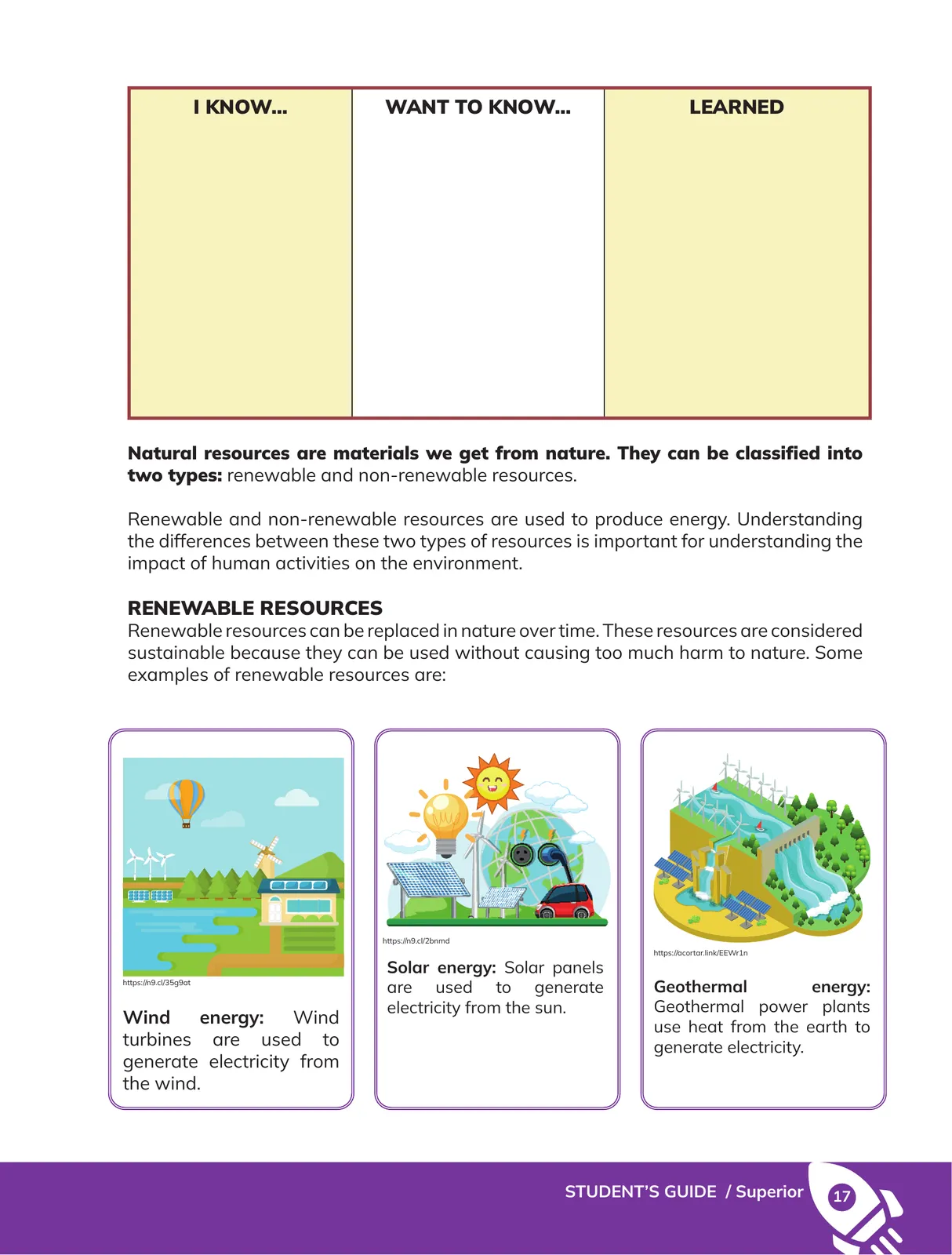
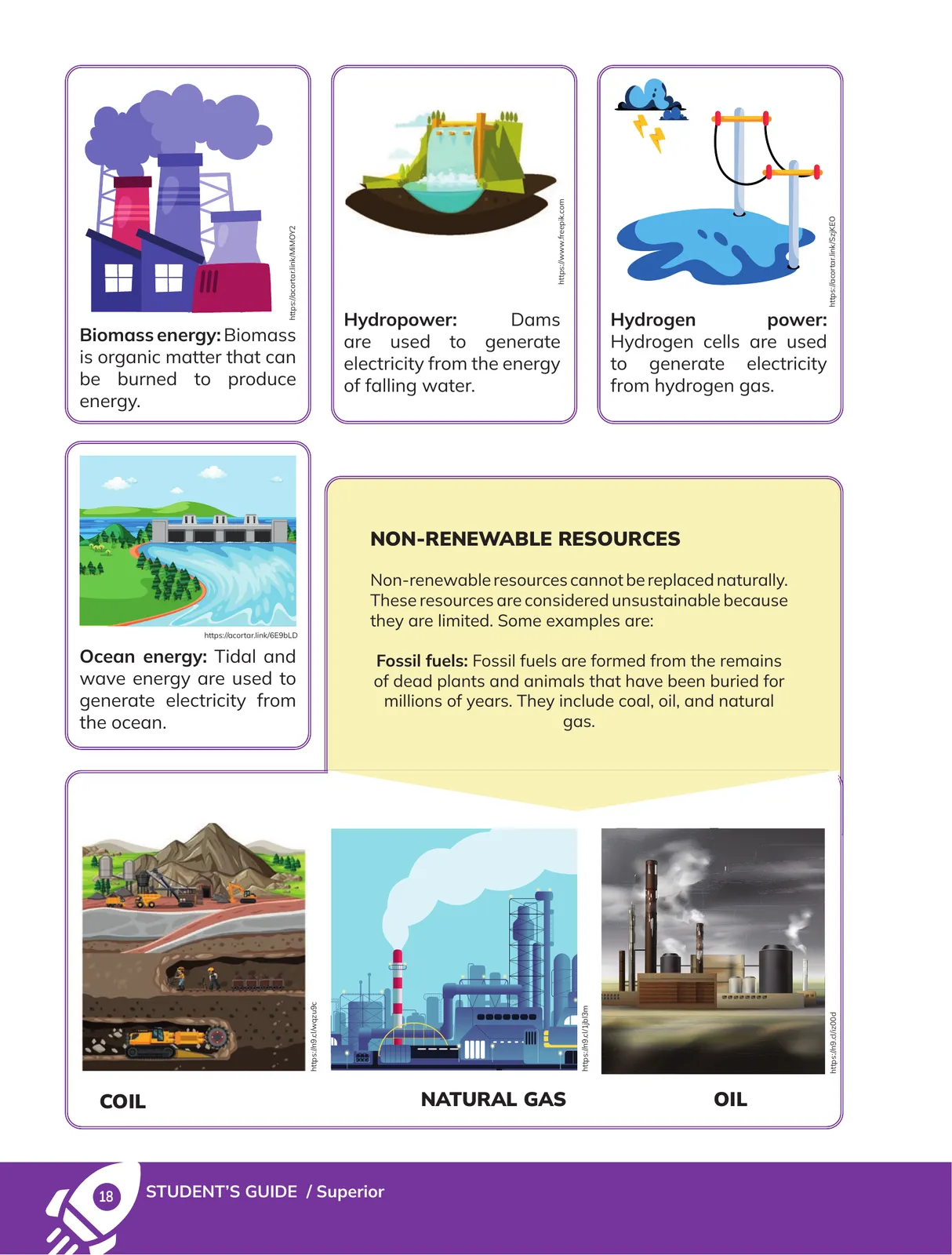
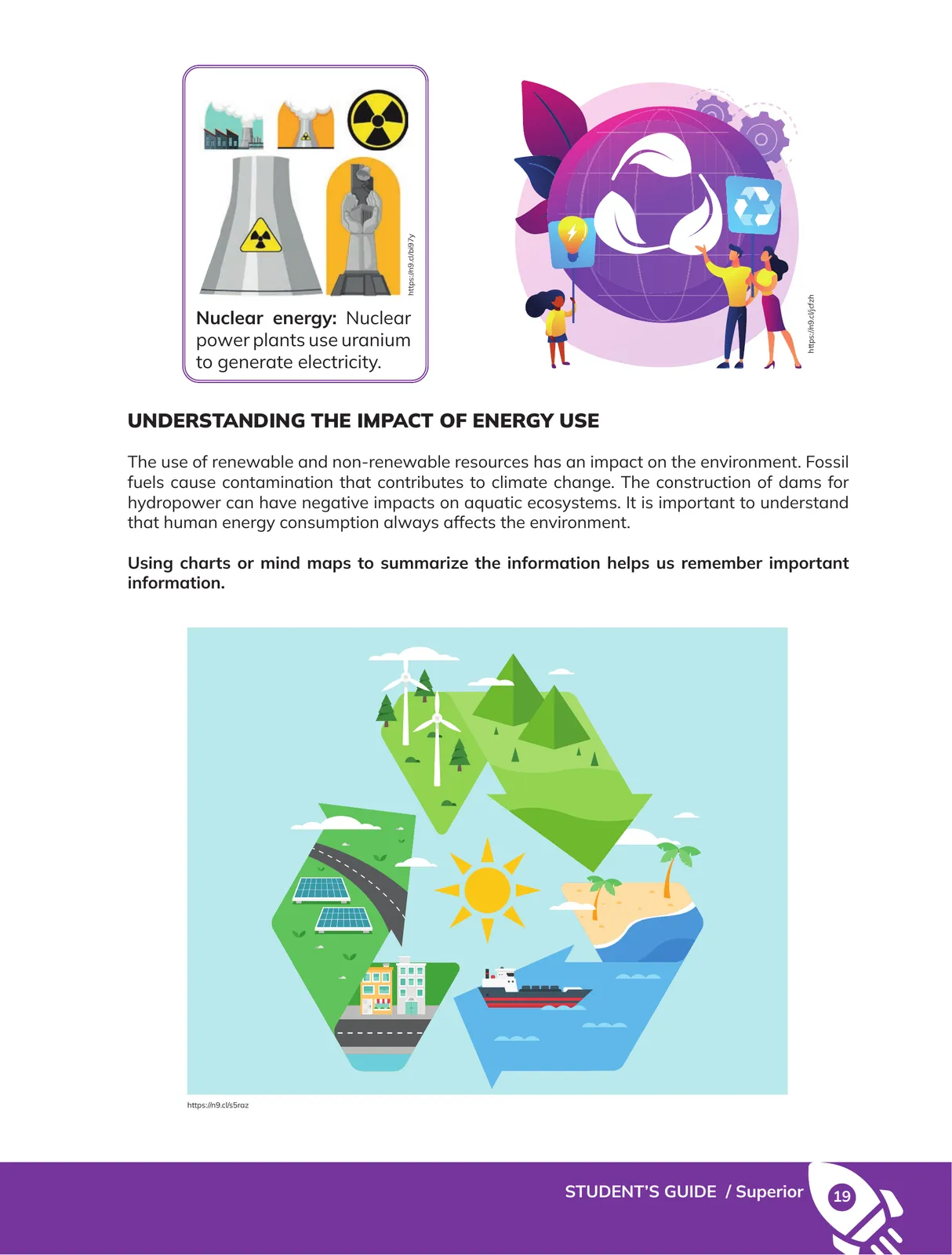
Worksheet 3 - Reading: Renewable and Non-Renewable Resources
📝 Transcripción de la página (texto seleccionable) 877 caracteres

FOR EXAMPLE:

Raise your hand before speaking.

Always listen respectfully to others.

Don't interrupt when someone else is talking. Modal verbs, such as "should," "must," "have to," "need to," and "can," are used to express necessity, obligation, or permission. They are commonly used to transmit social norms or rules in a more polite or nuanced way.

FOR EXAMPLE:

You should always be respectful to your classmates.

Students must follow the classroom rules.

We ought to listen to the teacher's instructions. You need to raise your hand before speaking. You can't talk in class without permission. petpsn9cirGkey

Project:

Create some rules or norms for the class or the school that can help have better relationships with others. Present it to the class and teacher and use your creativity to draw or write the new rules.
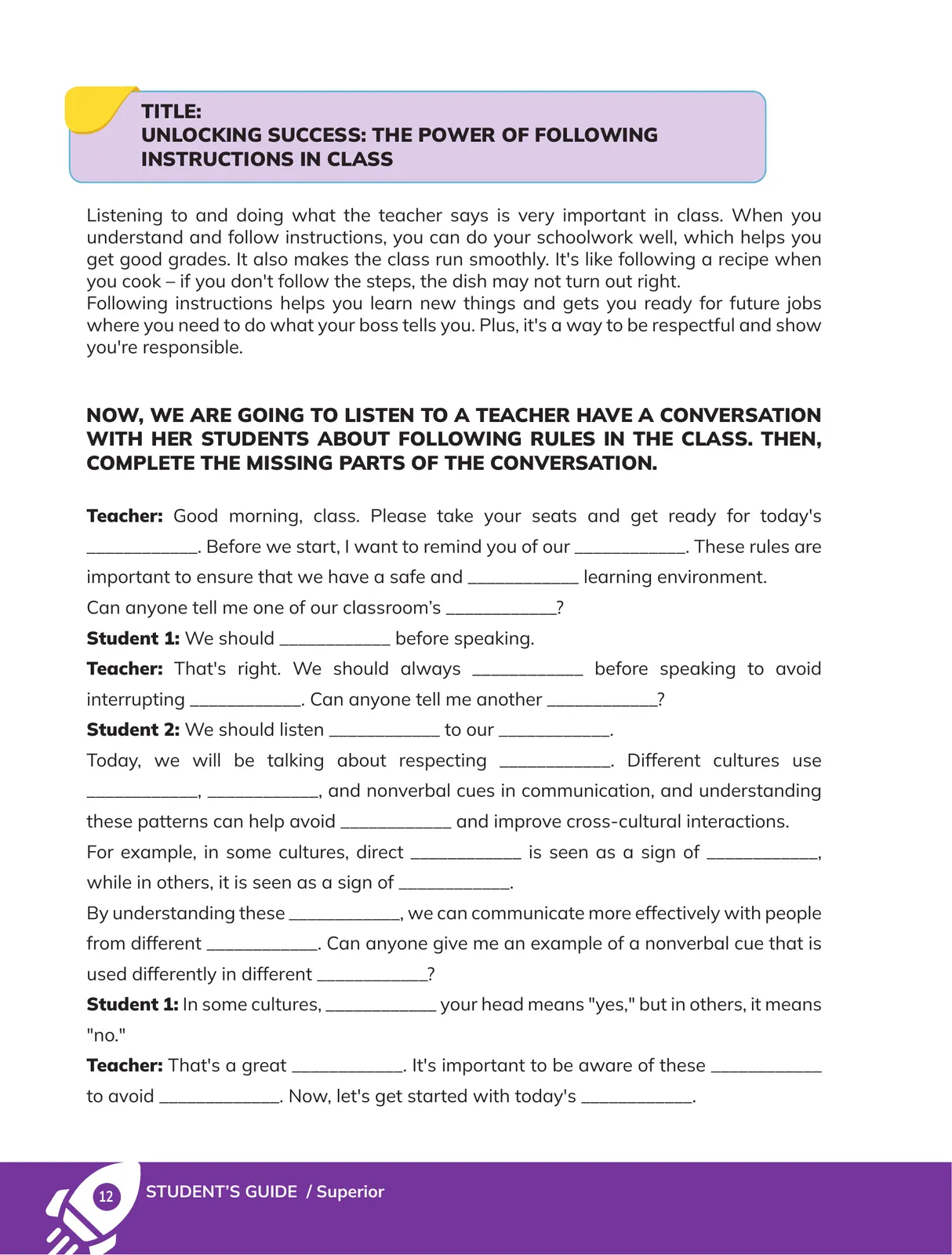
https://n9.cl/mrtif

STUDENT"S GUIDE / Superior

Ad

Otros libros recomendados

Ver todos →
Ad

Usamos cookies propias y de terceros para personalizar contenido, mostrar publicidad y analizar el tráfico. Las cookies necesarias siempre están activas.