Saltar al contenido
MisLibrosTexto
Ad
Ingles · 9 EGB · 2024

Ministerio de Educación del Ecuador

7/50

Unlocking the Power of Nonverbal Communication: A Cross-Cultural Guide

📄 contenido ingles 🎓 EGB · 9° EGB Ecuador 🇪🇨 EC 🗣 Español
Página 7
7 de 50
Página 7 de Ingles · 9 EGB · 2024
Anterior Página 7 / 50 Siguiente
📚 theory ingles ⭐⭐ Dificultad 2/5 ⏱ 1 min lectura

Solución — Página 7

Ingles · 9 EGB · 2024

1
Ejercicio 1

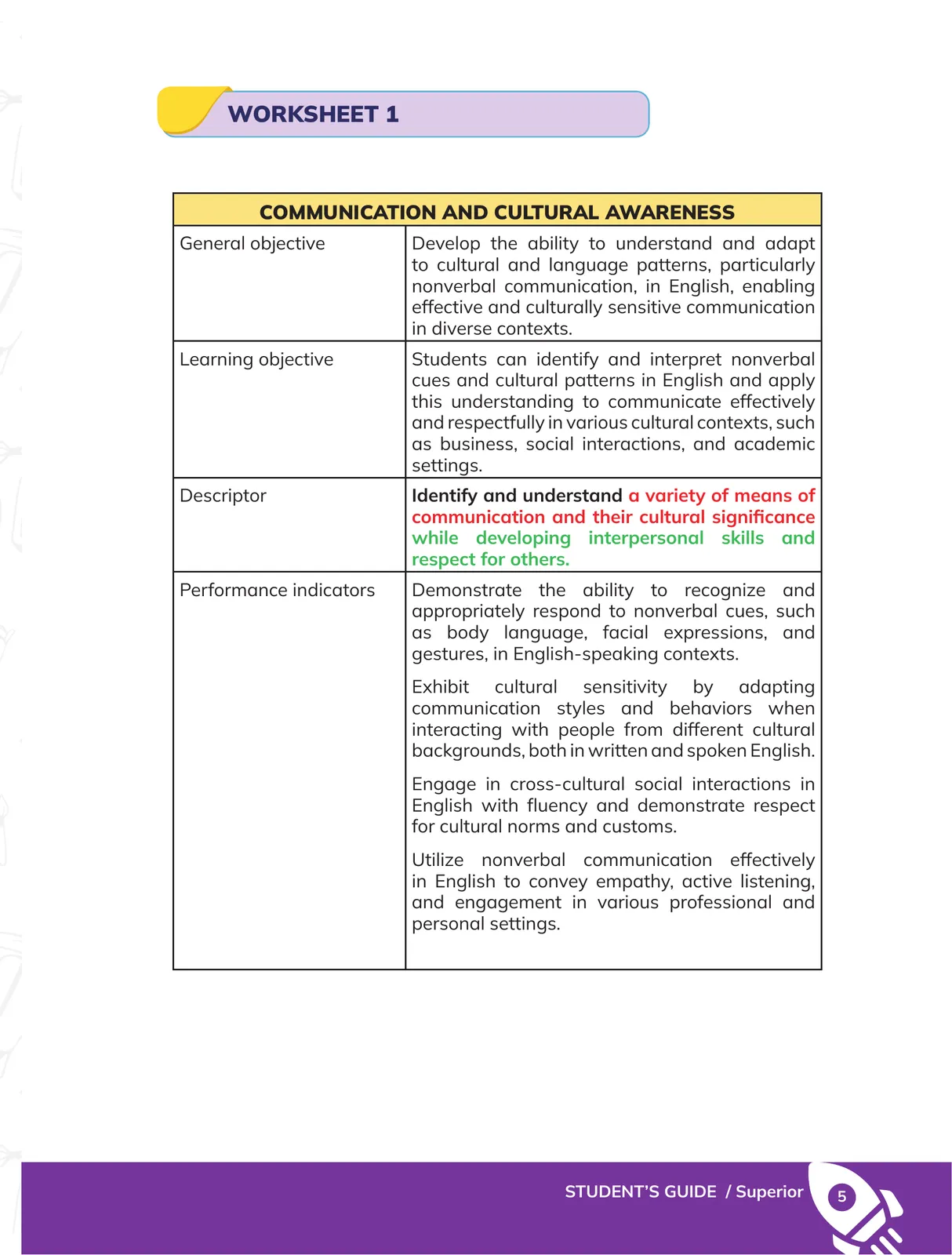
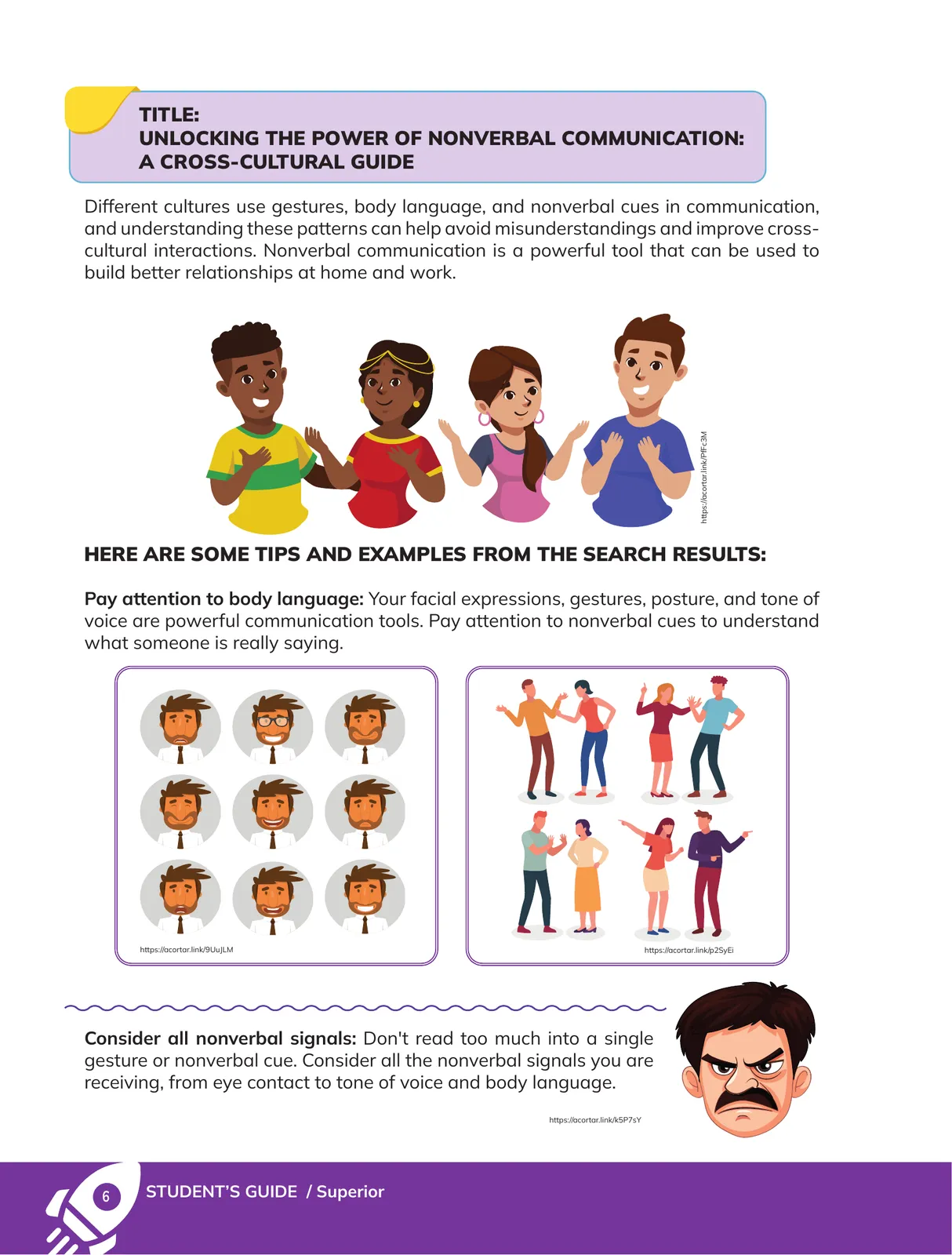
TITLE: UNLOCKING THE POWER OF NONVERBAL COMMUNICATION: A CROSS-CULTURAL GUIDE

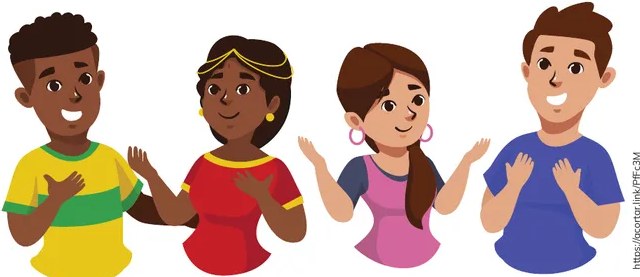
Different cultures use gestures, body language, and nonverbal cues in communication, and understanding these patterns can help avoid misunderstandings and improve cross-cultural interactions. Nonverbal communication is a powerful tool that can be used to build better relationships at home and work.

HERE ARE SOME TIPS AND EXAMPLES FROM THE SEARCH RESULTS:

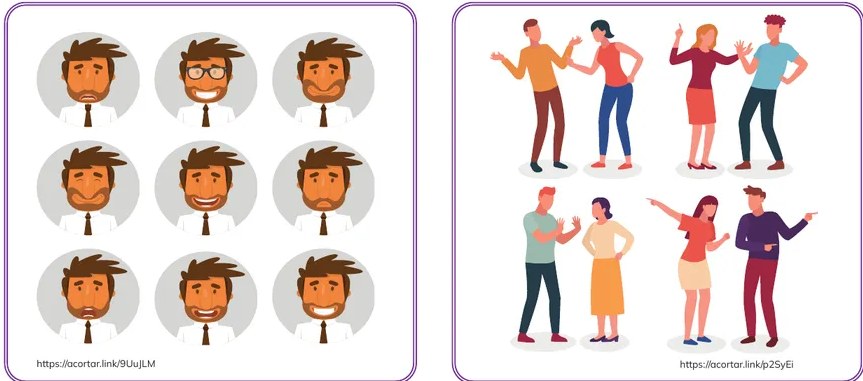
Pay attention to body language: Your facial expressions, gestures, posture, and tone of voice are powerful communication tools. Pay attention to nonverbal cues to understand what someone is really saying.

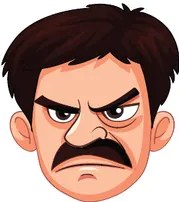
Consider all nonverbal signals: Don't read too much into a single gesture or nonverbal cue. Consider all the nonverbal signals you are receiving, from eye contact to tone of voice and body language.
Preguntas abiertas

1
Ejercicio 1

** ¿Por qué es importante observar todas las señales no verbales y no solo una?

Respuesta orientativa: Porque un gesto aislado puede interpretarse mal; el contexto global (mirada, postura, tono) da el verdadero significado.

Diagrama 1

Componentes de la comunicación no verbal según el texto.

mindmap
  root((Nonverbal Communication))
    Body[Body language]
    Face[Facial expressions]
    Gestures[Gestures]
    Tone[Tone of voice]
    Eye[Eye contact]
    Posture[Posture]

Glosario

  • body language: Lenguaje corporal: comunicación a través de la postura y los gestos.
  • facial expressions: Expresiones faciales: gestos del rostro que transmiten emociones.
  • tone of voice: Tono de voz: cualidad del habla que transmite intención y emoción.
  • eye contact: Contacto visual entre interlocutores.

Fuentes

¿Te fue útil esta página?

Figuras de la página (3)

Cuadrícula con nueve íconos de rostros mostrando distintas expresiones faciales.
Figura 2 image
Cuatro escenas de parejas o grupos hablando y gesticulando en distintas posturas.
Figura 3 image
Caricatura del rostro de un hombre con expresión de enojo, ejemplo de señal no verbal.
Figura 4 image

Preguntas que la gente también hace

¿Por qué es importante observar todas las señales no verbales y no solo una?
Consulta la solución completa arriba o explora el libro entero para temas relacionados.
📌 Antes de leer esto
  • Ver pág. 6: Página anterior con los objetivos del Worksheet 1.
  • Ver pág. 8: Continuación: contacto visual, sonrisa y gestos de manos.
Siguiente tema sugerido
Nonverbal Communication: Eye Contact, Smiling, Hand Gestures
📝 Transcripción de la página (texto seleccionable) 949 caracteres

TITLE: UNLOCKING THE POWER OF NONVERBAL COMMUNICATION: A CROSS-CULTURAL GUIDE

Different cultures use gestures, body language, and nonverbal cues in communication, and understanding these patterns can help avoid misunderstandings and improve cross- cultural interactions. Nonverbal communication is a powerful tool that can be used to build better relationships at home and work.

https://acortar link/PfFc3M

HERE ARE SOME TIPS AND EXAMPLES FROM THE SEARCH RESULTS:

Pay attention to body language: Your facial expressions, gestures, posture, and tone of voice are powerful communication tools. Pay attention to nonverbal cues to understand what someone is really saying.

EA o 6 6 eos Kilt

Consider all nonverbal signals: Don't read too much into a single gesture or nonverbal cue. Consider all the nonverbal signals you are receiving, from eye contact to tone of voice and body language.
https://acortar-link/k5P7sY

O STUDENTS GUIDE / Superior

Ad

Páginas cercanas

Otros libros recomendados

Ver todos →
Ad

Usamos cookies propias y de terceros para personalizar contenido, mostrar publicidad y analizar el tráfico. Las cookies necesarias siempre están activas.