Saltar al contenido
MisLibrosTexto
Ad
Ingles · 9 EGB · 2024

Ministerio de Educación del Ecuador

8/50

Nonverbal Communication: Eye Contact, Smiling, Hand Gestures

📄 contenido ingles 🎓 EGB · 9° EGB Ecuador 🇪🇨 EC 🗣 Español
Página 8
8 de 50
Página 8 de Ingles · 9 EGB · 2024
Anterior Página 8 / 50 Siguiente
📚 theory ingles ⭐⭐ Dificultad 2/5 ⏱ 1 min lectura

Solución — Página 8

Ingles · 9 EGB · 2024

1
Ejercicio 1

Eye contact

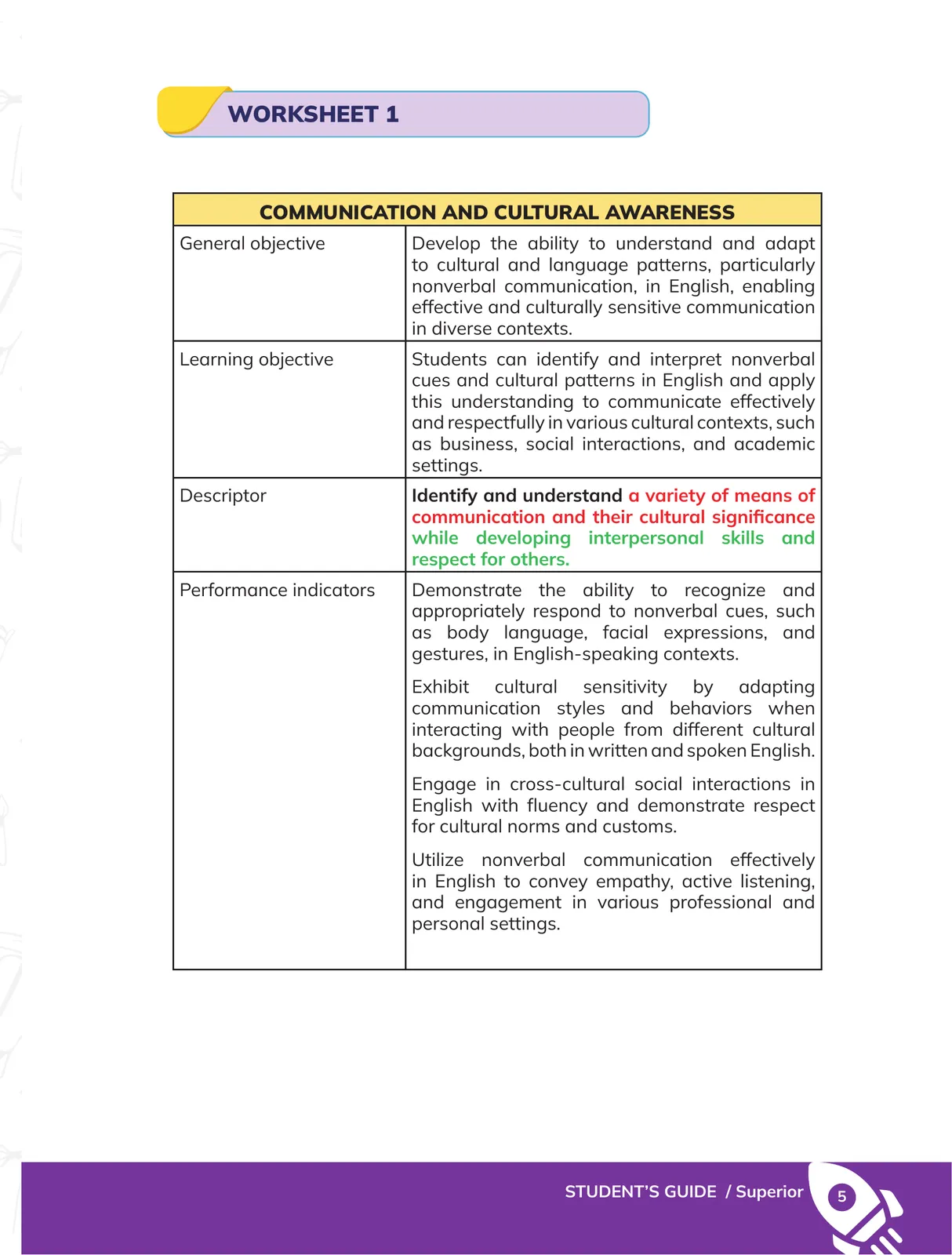
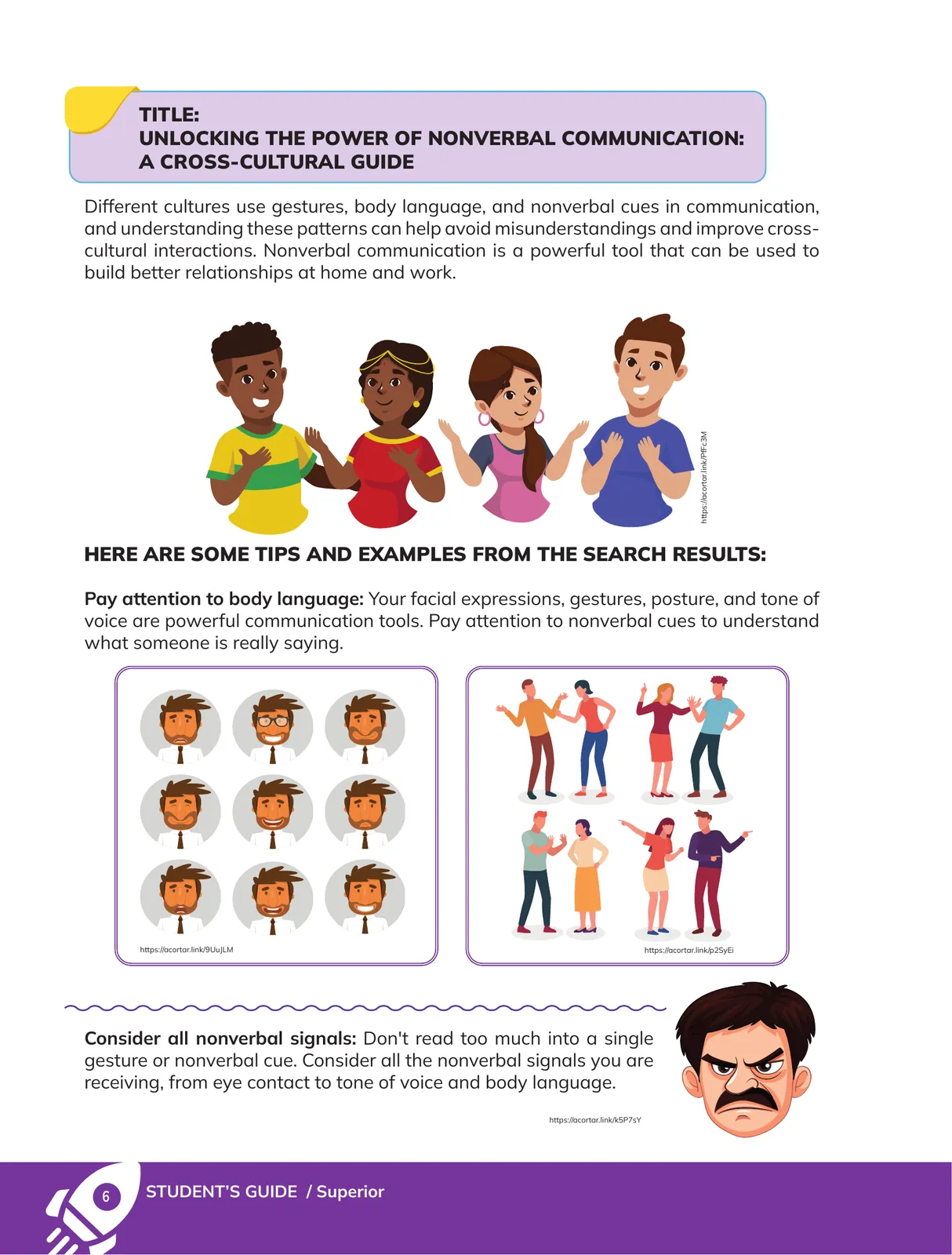
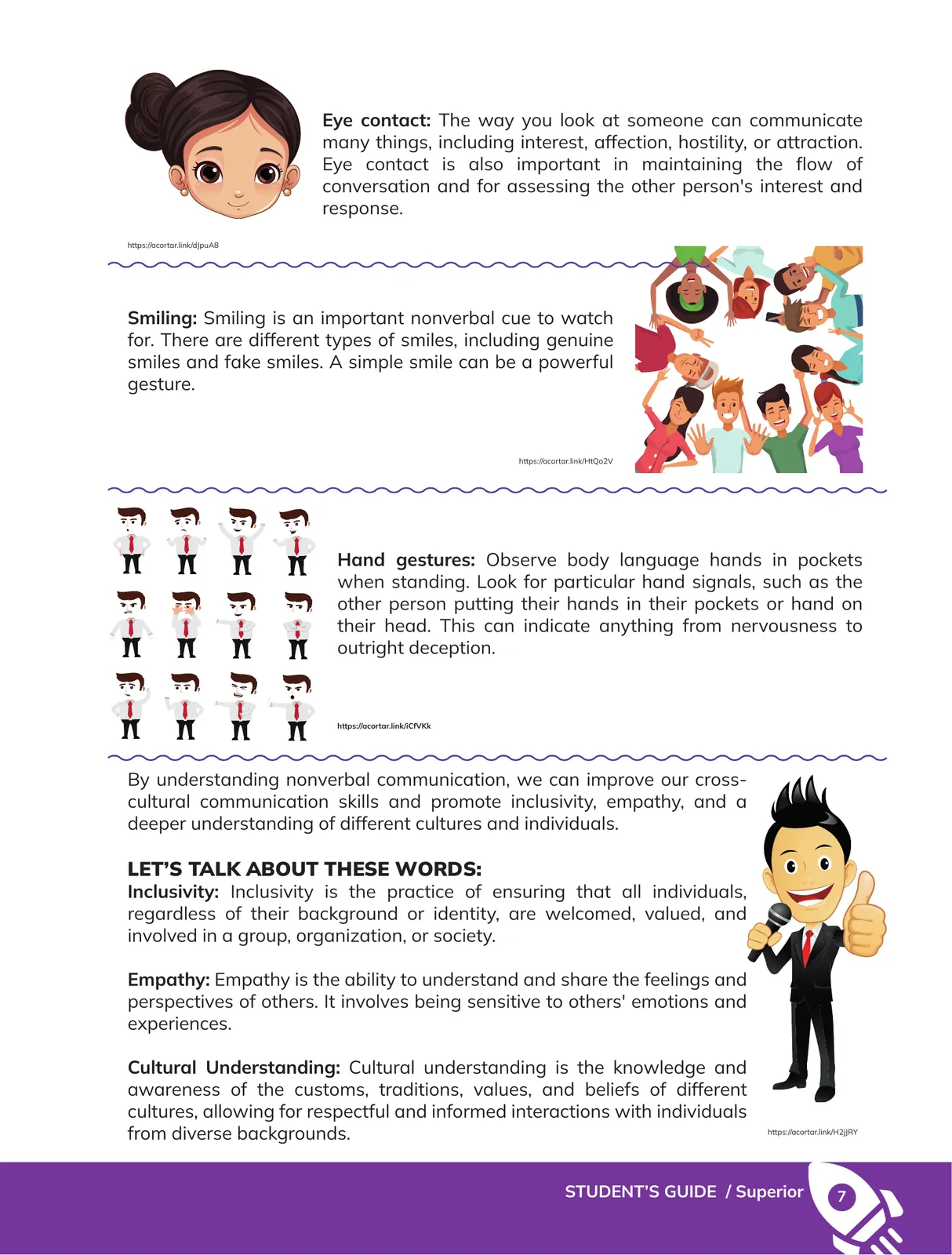
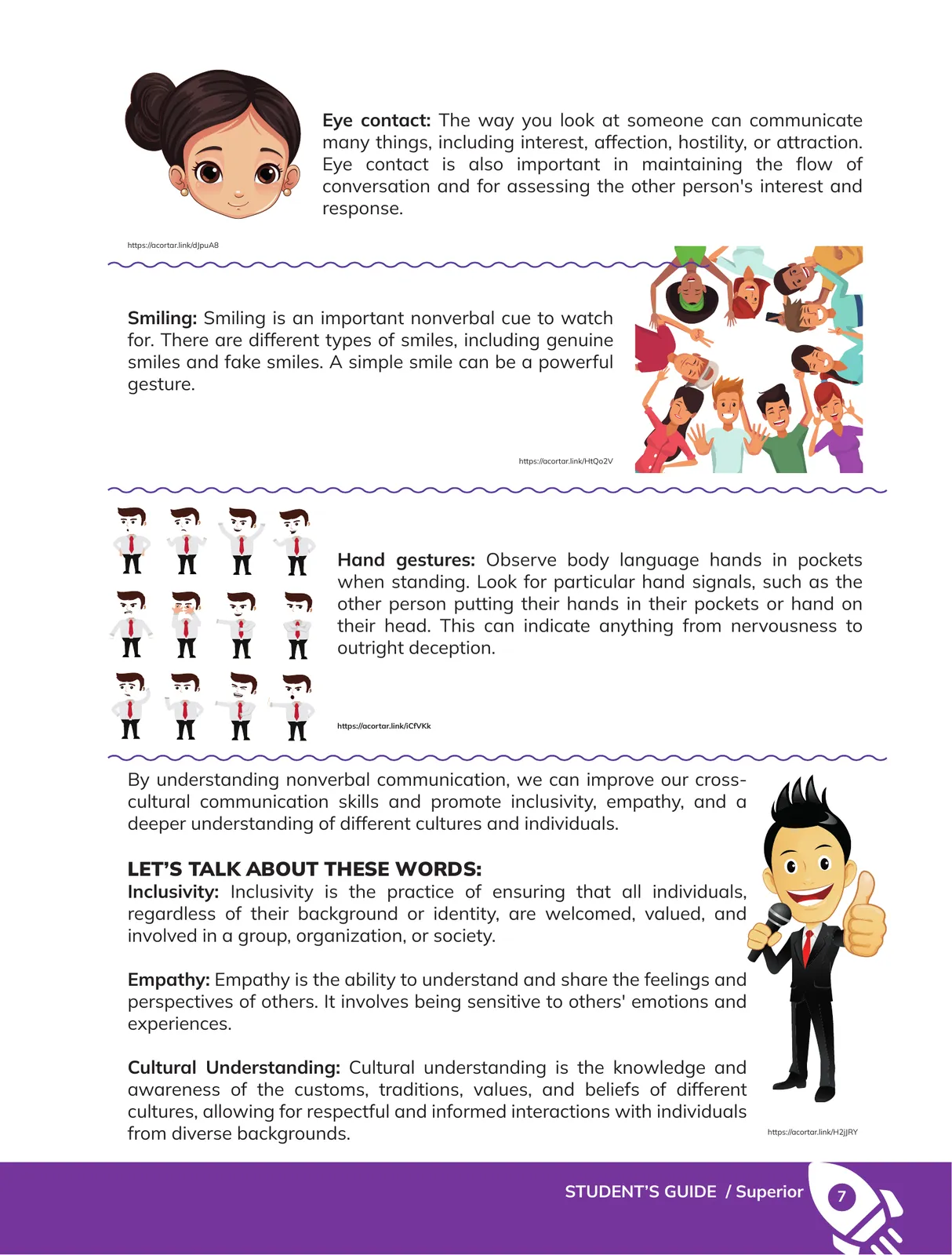
The way you look at someone can communicate many things, including interest, affection, hostility, or attraction. Eye contact is also important in maintaining the flow of conversation and for assessing the other person's interest and response.

Smiling

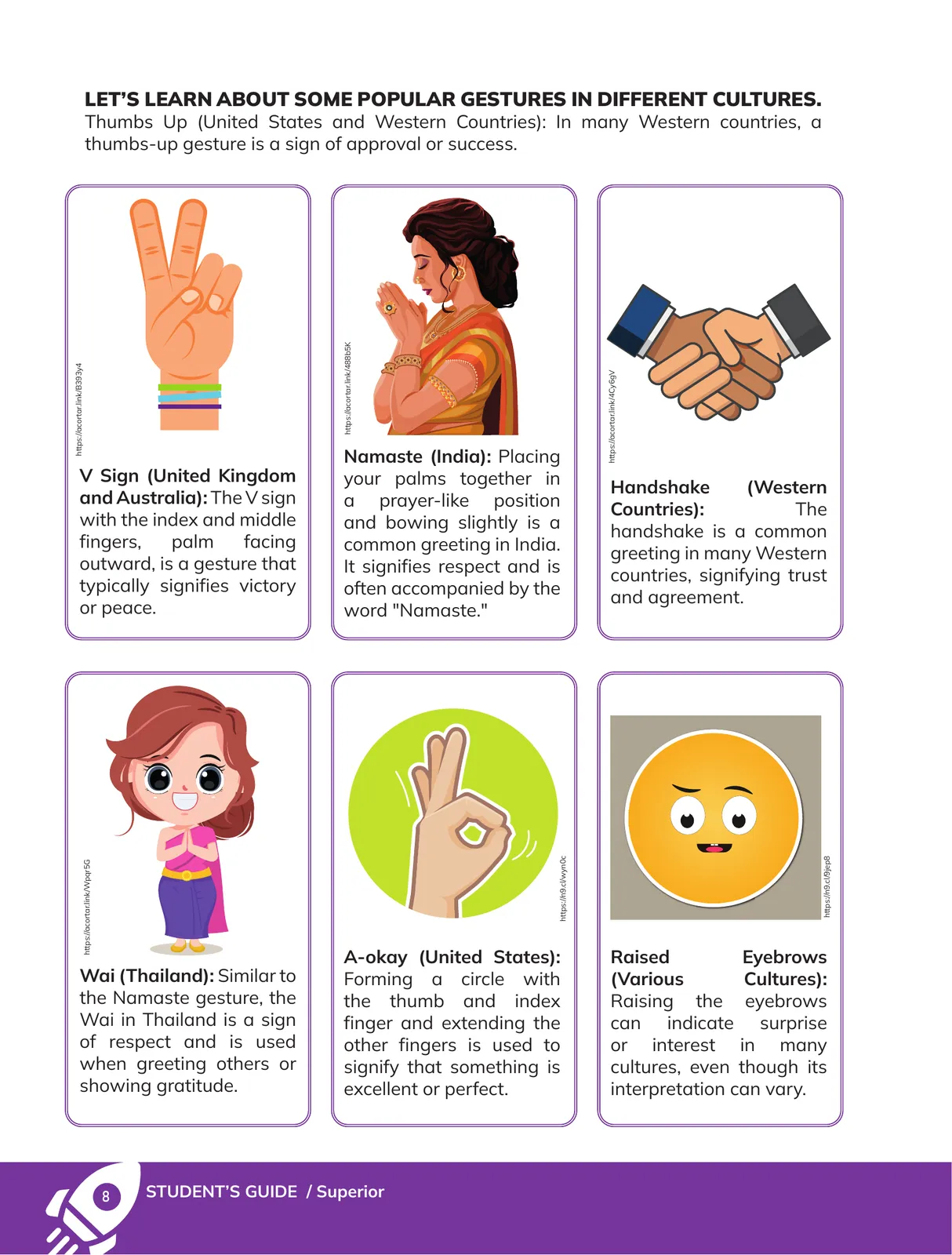
Smiling is an important nonverbal cue to watch for. There are different types of smiles, including genuine smiles and fake smiles. A simple smile can be a powerful gesture.

Hand gestures

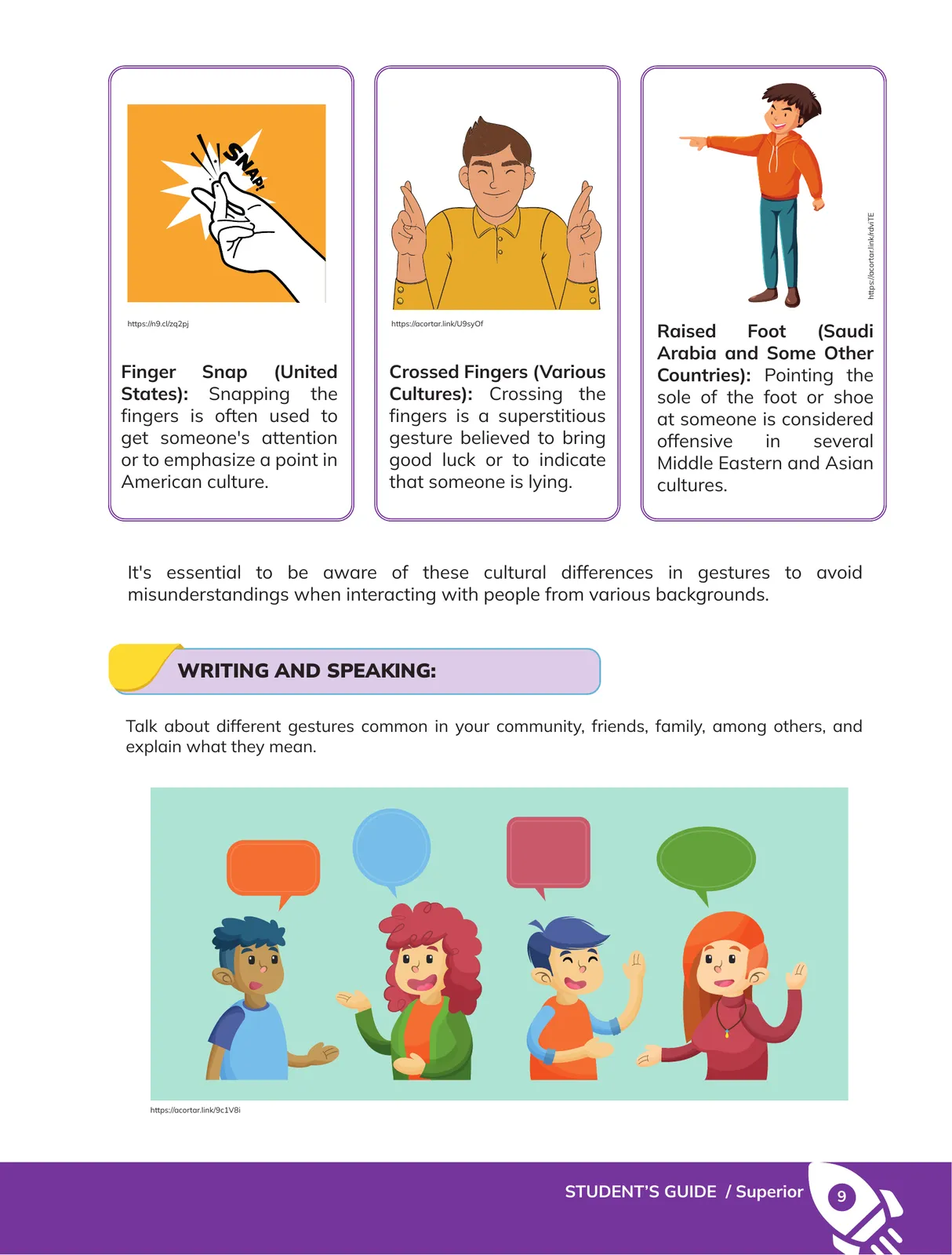
Observe body language; hands in pockets when standing. Look for particular hand signals, such as the other person putting their hands in their pockets or hand on their head. This can indicate anything from nervousness to outright deception.


By understanding nonverbal communication, we can improve our cross-cultural communication skills and promote inclusivity, empathy, and a deeper understanding of different cultures and individuals.

LET'S TALK ABOUT THESE WORDS:

  • Inclusivity: Inclusivity is the practice of ensuring that all individuals, regardless of their background or identity, are welcomed, valued, and involved in a group, organization, or society.
  • Empathy: Empathy is the ability to understand and share the feelings and perspectives of others. It involves being sensitive to others' emotions and experiences.
  • Cultural Understanding: Cultural understanding is the knowledge and awareness of the customs, traditions, values, and beliefs of different cultures, allowing for respectful and informed interactions with individuals from diverse backgrounds.


Preguntas abiertas

1
Ejercicio 1

** ¿Por qué la sonrisa puede ser una poderosa herramienta comunicativa?

Respuesta orientativa: Porque transmite emociones positivas, genera confianza y facilita la apertura del otro a la conversación.

2
Ejercicio 2

** ¿Qué actitud refleja una persona con las manos en los bolsillos al hablar?

Respuesta orientativa: Puede reflejar nerviosismo, inseguridad o, en algunos casos, intento de ocultar algo (decepción).

Diagrama 1

Tipos de comunicación no verbal abordados en la página.

mindmap
  root((Nonverbal cues))
    Eye[Eye contact]
      EI[Interest]
      EA[Affection]
      EH[Hostility]
    Smile[Smiling]
      SG[Genuine]
      SF[Fake]
    Hands[Hand gestures]
      HP[Hands in pockets]
      HH[Hand on head]

Glosario

  • eye contact: Contacto visual: mirada directa entre interlocutores.
  • smiling: Sonreír; señal no verbal de afabilidad o emoción.
  • hand gestures: Gestos hechos con las manos para reforzar o sustituir el mensaje verbal.
  • inclusivity: Inclusividad: práctica de asegurar que todas las personas sean bienvenidas y valoradas independientemente de su origen o identidad.
  • empathy: Empatía: capacidad de comprender y compartir los sentimientos y perspectivas de otros.
  • cultural understanding: Conocimiento y conciencia de costumbres, tradiciones, valores y creencias de distintas culturas.
  • genuine smile: Sonrisa genuina, real o auténtica.
  • fake smile: Sonrisa fingida o falsa.
  • deception: Engaño o intento de ocultar la verdad.

Fuentes

¿Te fue útil esta página?

Figuras de la página (4)

Ilustración de una persona sonriendo, ejemplifica smiling.
Figura 2 image
Cuadrícula con seis siluetas masculinas mostrando distintas posturas de manos.
Figura 3 image
Personaje animado en pose triunfante con pulgar arriba.
Figura 4 image
Figura 5 de Ingles · 9 EGB · 2024
Figura 5 image

Preguntas que la gente también hace

¿Por qué la sonrisa puede ser una poderosa herramienta comunicativa?
Consulta la solución completa arriba o explora el libro entero para temas relacionados.
¿Qué actitud refleja una persona con las manos en los bolsillos al hablar?
Consulta la solución completa arriba o explora el libro entero para temas relacionados.
📌 Antes de leer esto
  • Ver pág. 7: Introducción a la comunicación no verbal.
  • Ver pág. 9: Continuación: gestos populares en distintas culturas.
Siguiente tema sugerido
Popular Gestures in Different Cultures (parte 1)
📝 Transcripción de la página (texto seleccionable) 1724 caracteres

Eye contact: The way you look at someone can communicate many things, including interest, affection, hostility, or attraction. Eye contact is also important in maintaining the flow of conversation and for assessing the other person's interest and response.

https:/facortarlink/d]puA8

Smiling: Smiling is an important nonverbal cue to watch for. There are different types of smiles, including genuine smiles and fake smiles. A simple smile can be a powerful

gesture. https://acortar.link/HtQo2V_ Y r nN nt Hand gestures: Observe body language hands in pockets when standing. Look for particular hand signals, such as the

  1. =) bra) > other person putting their hands in their pockets or hand on ] { E : their head. This can indicate anything from nervousness to NM M MN. outright deception.

Loto ft 4

It Yí Tí Tí https://acortar.link/iCAVKk

By understanding nonverbal communication, we can improve our cross- cultural communication skills and promote inclusivity, empathy, and a deeper understanding of different cultures and individuals.

LET’S TALK ABOUT THESE WORDS:

Inclusivity: Inclusivity is the practice of ensuring that all individuals, regardless of their background or identity, are welcomed, valued, and involved in a group, organization, or society.

Empathy: Empathy is the ability to understand and share the feelings and perspectives of others. It involves being sensitive to others' emotions and experiences.

Cultural Understanding: Cultural understanding is the knowledge and awareness of the customs, traditions, values, and beliefs of different cultures, allowing for respectful and informed interactions with individuals from diverse backgrounds. heepsiecortarinlH2)RY

STUDENT’S GUIDE / Superior

Ad

Páginas cercanas

Otros libros recomendados

Ver todos →
Ad

Usamos cookies propias y de terceros para personalizar contenido, mostrar publicidad y analizar el tráfico. Las cookies necesarias siempre están activas.