Grammar
The Verb To Be in the Past Tense: Talking About Emotions
Now you will go over a verb that helps us talk about how we felt in the past:the verb to be in the past tense.
Imagine you're describing a fun day you had at the park with your friends.
•You say,"I was happy with my friends."(We use was because the pronoun I is singular.)
0Then your friend says, "We were excited, and we had a great time!"'(We use were because the pronoun we is plural.)
Consider that the pronoun you can be either singular or plural, depending on the number of people you are referring to; however, this pronoun almost always takes a verb conjugated in plural, as it happens with the verb to be.
The verb to be changes depending on who felt the emotion:
I (singular) was happy.
You (singular/plural) were happy.
He/she/it (singular) was happy.
We (plural) werehappy.
They (plural) were happy.
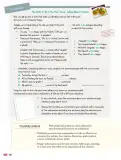
1.Individually, considering what you read, complete the sentences below with the correct past tense form of to be.
a) Yesterday, during the test, I nervous.
b) After finishing the test, my friends relieved.
c) When I saw my grade,I surprised!
d) My parents proud of my hard work.auam (p"sem(aam (g'sem (e:axJamsuy
Using the verb to be in the past tense allows us to share our experiences with emotions and create a more vivid picture of how we felt in different situations.
In your notebook, write five sentences about your emotions in past situations using was or were.
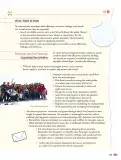
Discuss the emotions you mentioned in your notebook with a community of five classmates and add a new sentence using the emotions your classmates wrote about if you have not included them already.
Creativity at Work
With all the information you have collected for your Emotional Dictionary, do as indicated:
Distribute yourselves into communities to work on affections or emotions (joy, sadness, fear, surprise, frustration, guilt, jealousy,anxiety, melancholy, shame, pride).
Prepare information cards for each emotion. Add images, drawings,or a short story that refers to the importance of that emotion.


福
A
126