


















Ejercicio 1
Ad
Lectura: mujeres que hicieron historia y la Convención CEDAW
📄 teoria ingles 🎓 secundaria · 1° Secundaria México 🇲🇽 MX 🗣 Español
Respuesta rápida
Lectura sobre Hypatia, Theano, Sojourner Truth y Lorena Cabnal; explica la invisibilización de las luchas femeninas, los problemas actuales y la Convención CEDAW (1979) por la igualdad de género.
📚 theory ingles ⭐⭐ Dificultad 2/5 ⏱ 8 min lectura
Solución — Página 130
Uérakua anapu uantakua. Projects and Readings Libro de Educación Secundaria Grado 1° Ciclo Escolar 2025 - 2026
Ejercicio 1
Filósofas de la Antigüedad:
- Hipatia de Alejandría se dice que superó a los filósofos de su tiempo (García, 2023).
- Teano, autora de varios textos filosóficos, de los que solo queda un fragmento: Sobre la piedad (Ferrer, 2017).
Ejercicio 2
Siglo XIX — Feminismo negro:** En **1851**, cuando la esclavitud todavía se practicaba en Estados Unidos, la valiente oradora **Sojourner Truth** compartió en sus discursos sus experiencias como mujer negra y esclavizada (Jabardo, 2012), sentando así las bases del feminismo negro.
Ad
Ejercicio 3
Actualidad — Feminismo comunitario:** Hoy, **Lorena Cabnal**, feminista comunitaria maya-xinka, lucha contra el racismo —herencia de la colonización— y por la defensa del territorio de las mujeres y los niños en Guatemala (Cabnal, 2010).
Ejercicio 4
Idea central:** Estos son solo algunos ejemplos de la participación de las mujeres en distintos momentos de la historia y regiones del mundo. Algunas aportaron al conocimiento, otras lucharon por sus derechos y otras vieron reconocidas sus experiencias como necesarias. Sin embargo, muchas batallas de las mujeres han permanecido **invisibles**, no porque no ocurrieran, sino porque sus historias y experiencias no se consideraron lo bastante valiosas.
Ejercicio 5
Problemas actuales de las mujeres:
- Luchar por la tierra para sembrarla o contra empresas transnacionales.
- Enfrentar la violencia de hombres e instituciones.
- Enfrentar conceptos erróneos, prejuicios, roles sexistas y estereotipos de género que aún prevalecen.
- Combatir la discriminación basada en la falsa idea de que las mujeres son inferiores a los hombres, mentalidad que genera discriminación y oportunidades desiguales.
Ad
Ejercicio 6
La CEDAW:** Existen tratados internacionales como la **Convención sobre la Eliminación de Todas las Formas de Discriminación contra la Mujer (CEDAW)**, creada en **1979**, que establece la necesidad de garantizar la igualdad de condiciones y oportunidades entre mujeres y hombres para asegurar su bienestar, desarrollo y paz (Oficina del Alto Comisionado para los Derechos Humanos, s.f.). La Convención también enfatiza cambiar la legislación para garantizar los derechos y libertades de las mujeres.
Ejercicio 7
Conclusión:** Aunque existen mecanismos para erradicar la violencia y la discriminación, es necesario reconocer que las mujeres y sus luchas son diversas. Hay muchas maneras de ser mujer; un primer paso para ese reconocimiento es **recuperar sus historias y contribuciones**.
La página no contiene ejercicios numerados: es una lectura de análisis, por lo que se explica su contenido y se deja ejercicios vacío.
Contenido de la página
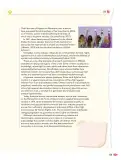
That's the case of Hypatia of Alexandria, who is said to have surpassed the philosophers of her time (García, 2023), or of Theano, author of several philosophical texts, of which only a fragment remains: On piety (Ferrer, 2017).
In 1851, when slavery was still practiced in the United States, the brave speaker Sojourner Truth shared in her discourses her experiences as a black and enslaved woman (Jabardo, 2012) and thus laid the foundations of black feminism.
Nowadays, Lorena Cabnal, a Maya-Xinka communitarian feminist, fights against racism, a stance inherited from colonization, and for the defense of women and children's territory in Guatemala (Cabnal, 2010).
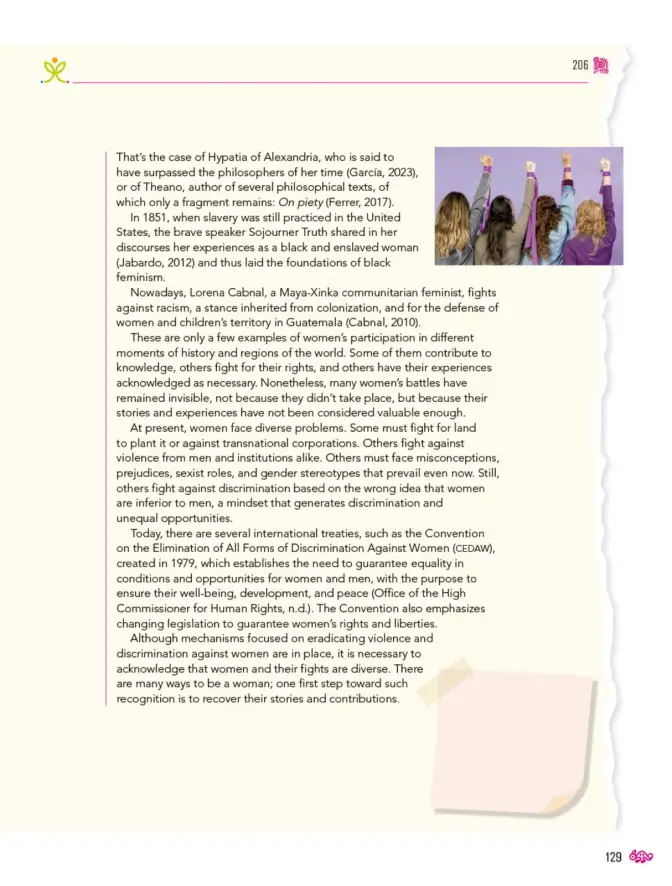
These are only a few examples of women's participation in different moments of history and regions of the world. Some of them contribute to knowledge, others fight for their rights, and others have their experiences acknowledged as necessary. Nonetheless, many women's battles have remained invisible, not because they didn't take place, but because their stories and experiences have not been considered valuable enough.
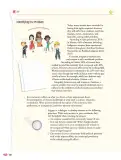
At present, women face diverse problems. Some must fight for land to plant it or against transnational corporations. Others fight against violence from men and institutions alike. Others must face misconceptions, prejudices, sexist roles, and gender stereotypes that prevail even now. Still, others fight against discrimination based on the wrong idea that women are inferior to men, a mindset that generates discrimination and unequal opportunities.
Today, there are several international treaties, such as the Convention on the Elimination of All Forms of Discrimination Against Women (CEDAW), created in 1979, which establishes the need to guarantee equality in conditions and opportunities for women and men, with the purpose to ensure their well-being, development, and peace (Office of the High Commissioner for Human Rights, n.d.). The Convention also emphasizes changing legislation to guarantee women's rights and liberties.
Although mechanisms focused on eradicating violence and discrimination against women are in place, it is necessary to acknowledge that women and their fights are diverse. There are many ways to be a woman; one first step toward such recognition is to recover their stories and contributions.
Numeración del libro: 206 (encabezado) / 129 (pie).
Tabla
| Mujer o hito | Época | Aportación |
|---|---|---|
| Teano | Antigüedad | Textos filosóficos; fragmento Sobre la piedad |
| Hipatia de Alejandría | Antigüedad | Superó a los filósofos de su tiempo |
| Sojourner Truth | 1851 | Discursos desde la experiencia esclavizada; feminismo negro |
| Lorena Cabnal | Actualidad | Lucha contra el racismo y por el territorio (Guatemala) |
| CEDAW | 1979 | Igualdad de condiciones y oportunidades entre mujeres y hombres |
Diagrama
timeline
    title Mujeres que hicieron historia
    Antiguedad : Teano escribe textos filosoficos : Hipatia de Alejandria supera a los filosofos de su tiempo
    Siglo XIX : 1851 Sojourner Truth sienta las bases del feminismo negro
    Actualidad : Lorena Cabnal lucha contra el racismo y por el territorio en Guatemala : 1979 Se crea la Convencion CEDAW
Glosario (5)
- Surpassed
- Superó: fue mejor o más avanzada que algo o alguien.
- Black feminism
- Feminismo negro: corriente que denuncia la doble discriminación por género y raza, iniciada con Sojourner Truth.
- Communitarian feminist
- Feminista comunitaria: quien lucha desde su comunidad indígena por el territorio y contra el racismo.
- Gender stereotypes
- Estereotipos de género: ideas preconcebidas sobre lo que deben hacer hombres y mujeres.
- CEDAW
- Convención sobre la Eliminación de Todas las Formas de Discriminación contra la Mujer, tratado internacional de 1979.
Preguntas para practicar
¿Por qué muchas batallas de las mujeres han permanecido invisibles?
No porque no ocurrieran, sino porque sus historias y experiencias no se consideraron lo bastante valiosas para registrarlas; la historia tradicional privilegió los hechos de los hombres.
¿Para qué sirve la Convención CEDAW?
Para garantizar la igualdad de condiciones y oportunidades entre mujeres y hombres, asegurar su bienestar, desarrollo y paz, e impulsar cambios legislativos que protejan los derechos y libertades de las mujeres.
Temas y conceptos clave
Mujeres en la historiaFeminismo negro y comunitarioDiscriminación de géneroConvención CEDAWHipatia de AlejandríaTeanoSojourner TruthLorena CabnalCEDAWInvisibilización históricaEstereotipos de género
Fuentes y referencias
- García, 2023
- Ferrer, 2017
- Jabardo, 2012
- Cabnal, 2010
- Office of the High Commissioner for Human Rights, n.d.
¿Te fue útil esta página?
Figuras de la página (1)
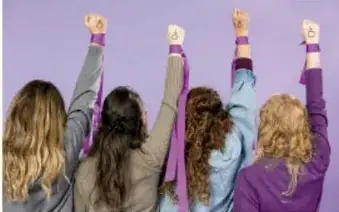
Figura 1 image
Preguntas que la gente también hace
¿Quién fue Hipatia de Alejandría?
Consulta la solución completa arriba o explora el libro entero para temas relacionados.
¿Qué establece la Convención CEDAW?
Consulta la solución completa arriba o explora el libro entero para temas relacionados.
¿Quién fue Sojourner Truth y por qué es importante?
Consulta la solución completa arriba o explora el libro entero para temas relacionados.
📌 Antes de leer esto
- • Haber leído la apertura del proyecto sobre el pasado de las mujeres
- • Nociones básicas de derechos humanos
Siguiente tema sugerido
Selección de una mujer destacada para la infografía del proyecto
📝 Transcripción de la página (texto seleccionable) 2374 caracteres
That's the case of Hypatia of Alexandria, who is said to have surpassed the philosophers of her time (Garcia, 2023),or of Theano, author of several philosophical texts, of which only a fragment remains: On piety (Ferrer, 2017).
In 1851, when slavery was still practiced in the United States, the brave speaker Sojourner Truth shared in her discourses her experiences as a black and enslaved woman (Jabardo, 2012) and thus laid the foundations of black feminism.
Nowadays, Lorena Cabnal, a Maya-Xinka communitarian feminist, fights against racism, a stance inherited from colonization, and for the defense of women and children's territory in Guatemala (Cabnal, 2010).
These are only a few examples of women's participation in different moments of history and regions of the world. Some of them contribute to knowledge, others fight for their rights, and others have their experiences acknowledged as necessary. Nonetheless, many women's battles have remained invisible, not because they didn't take place, but because their stories and experiences have not been considered valuable enough.
At present, women face diverse problems. Some must fight for land to plant it or against transnational corporations. Others fight against violence from men and institutions alike. Others must face misconceptions,prejudices, sexist roles, and gender stereotypes that prevail even now. Still,others fight against discrimination based on the wrong idea that women are inferior to men, a mindset that generates discrimination and unequal opportunities.
Today, there are several international treaties, such as the Convention on the Elimination of All Forms of Discrimination Against Women (CEDAW),created in 1979, which establishes the need to guarantee equality in conditions and opportunities for women and men, with the purpose to ensure their well-being, development, and peace (Office of the High Commissioner for Human Rights, n.d.). The Convention also emphasizes changing legislation to guarantee women's rights and liberties.
Although mechanisms focused on eradicating violence and discrimination against women are in place, it is necessary to acknowledge that women and their fights are diverse. There are many ways to be a woman; one first step toward such recognition is to recover their stories and contributions.
p
206

129
8
Ad



Otros libros recomendados

Colección Ximhai. Ética, naturaleza y sociedades. Libro de Educación Secundaria Grado 1° Ciclo Escolar 2025 - 2026
SEP/CONALITEG
355 págs.

Historia del pueblo mexicano. Libro de Educación Secundaria Grado 1° Ciclo Escolar 2025 - 2026
SEP/CONALITEG
331 págs.
Colección Ximhai. Lenguajes. Libro de Educación Secundaria Grado 1° Ciclo Escolar 2025 - 2026
SEP/CONALITEG
323 págs.
Fichas de Matemática 1 · 2024
MINEDU
100 págs.
Cuaderno de fichas Personal Social 1. Primer grado de secundaria · 2016
MINEDU
19 págs.
Comprensión lectora : manual para el docente de primer grado de Secundaria 2018 · 2018
MINEDU
194 págs.
Comprensión lectora 1 : manual para el docente de primer grado de Secundaria · 2017
MINEDU
130 págs.
Fichas de aprendizaje de Comunicación 1 · 2024
Julia Liliana Quiroz Espinoza y equipo
100 págs.
Ad