
















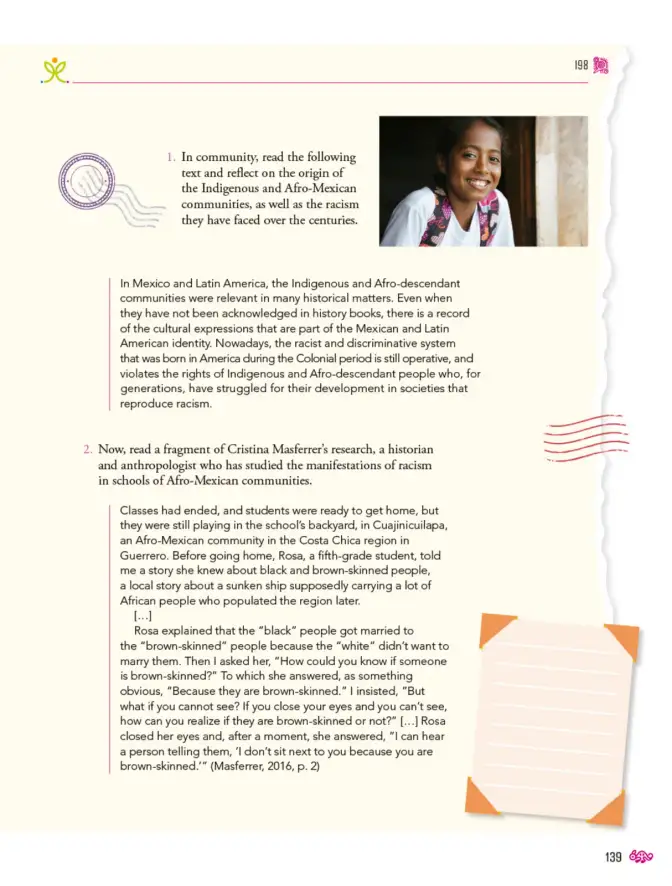
Enunciado (traducido): En comunidad, lean el siguiente texto y reflexionen sobre el origen de las comunidades indígenas y afromexicanas, así como sobre el racismo que han enfrentado a lo largo de los siglos.
Texto (traducido): En México y Latinoamérica, las comunidades indígenas y afrodescendientes fueron relevantes en muchos asuntos históricos. Aunque no han sido reconocidas en los libros de historia, hay registro de las expresiones culturales que son parte de la identidad mexicana y latinoamericana. Hoy en día, el sistema racista y discriminatorio nacido en América durante el periodo colonial sigue operando y viola los derechos de las personas indígenas y afrodescendientes que, por generaciones, han luchado por su desarrollo en sociedades que reproducen el racismo.
- Origen: las comunidades indígenas descienden de los pueblos que habitaban América antes de la llegada europea en 1492; las comunidades afromexicanas descienden de personas africanas traídas por la esclavitud durante la colonia, principalmente en la Costa Chica de Guerrero y Oaxaca y en Veracruz.
- Racismo histórico: la colonia impuso una jerarquía de castas que ubicaba a indígenas y africanos en situación de explotación.
- Vigencia: ese sistema discriminatorio persiste en desigualdades actuales, aunque estas comunidades han luchado por su reconocimiento (la población afromexicana fue reconocida en el Censo 2020 y su cultura es patrimonio nacional).
Respuesta orientativa: Ambas comunidades son fundadoras de la nación: la indígena por sus pueblos originarios y la afromexicana por la diáspora africana de la Colonia; el racismo colonial sobrevive en la inequidad actual y debe confrontarse desde la escuela.