

















Grammar: pasado simple (Simple Past Tense) con verbos irregulares
Respuesta rápida
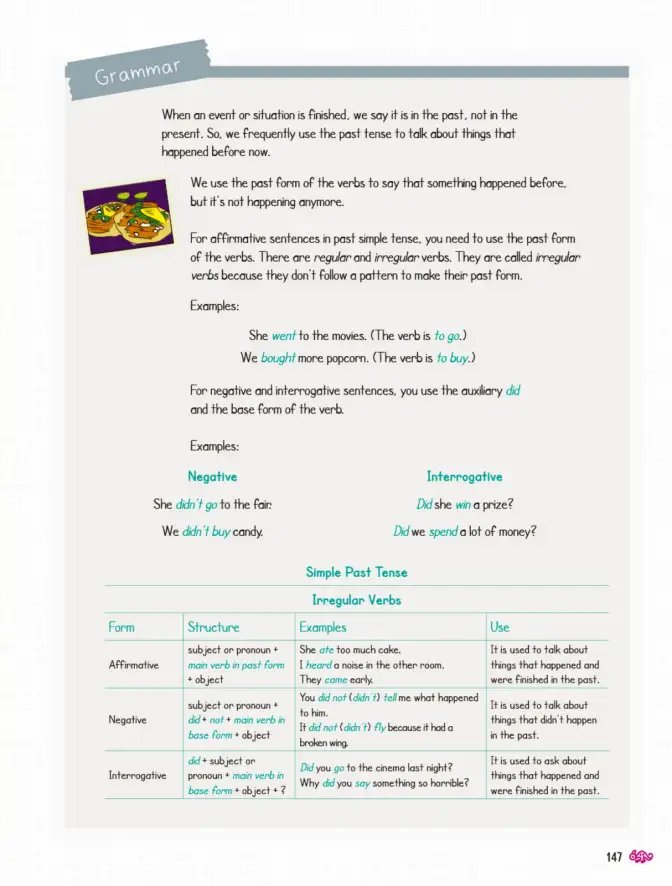
Pasado simple: afirmativa = verbo en pasado (went, bought); negativa = did not/didn't + verbo base; interrogativa = did + sujeto + verbo base. Los irregulares no siguen patrón.
Solución — Página 148
Uérakua anapu uantakua. Projects and Readings Libro de Educación Secundaria Grado 1° Ciclo Escolar 2025 - 2026
Explicación del contenido (teoría)
Idea central traducida: cuando un evento o situación ya terminó, decimos que está en el pasado, no en el presente; por eso usamos el tiempo pasado para hablar de cosas que ocurrieron antes de ahora.
- Uso del pasado: usamos la forma pasada de los verbos para decir que algo sucedió antes, pero ya no está sucediendo. En español equivale al pretérito perfecto simple ("fui", "compré") y al pretérito imperfecto ("iba", "compraba") según el contexto.
- Verbos regulares e irregulares: para oraciones afirmativas en pasado simple se usa la forma pasada del verbo. Los verbos regulares forman el pasado con la terminación -ed (work → worked); los verbos irregulares no siguen un patrón para formar el pasado (go → went, buy → bought).
- Ejemplos del libro: She went to the movies. (El verbo es to go / Ella fue al cine.) — We bought more popcorn. (El verbo es to buy / Compramos más palomitas.)
- Negativo e interrogativo: para las oraciones negativas e interrogativas se usa el auxiliar did con el verbo en su forma base (sin pasado), porque el tiempo pasado lo marca el auxiliar.
- Negativas: She didn't go to the fair. (Ella no fue a la feria.) — We didn't buy candy. (No compramos dulces.)
- Interrogativas: Did she win a prize? (¿Ella ganó un premio?) — Did we spend a lot of money? (¿Gastamos mucho dinero?)
Tabla: Simple Past Tense — Irregular Verbs (Pasado simple — verbos irregulares)
| Forma | Estructura | Ejemplos | Uso |
|---|---|---|---|
| Afirmativa | sujeto o pronombre + verbo principal en pasado + objeto | She ate too much cake. (Ella comió demasiado pastel.) / I heard a noise in the other room. (Oí un ruido en el otro cuarto.) / They came early. (Ellos llegaron temprano.) | Para hablar de cosas que sucedieron y terminaron en el pasado. |
| Negativa | sujeto o pronombre + did + not + verbo principal en forma base + objeto | You did not (didn't) tell me what happened to him. (No me dijiste qué le pasó.) / It did not (didn't) fly because it had a broken wing. (No voló porque tenía un ala rota.) | Para hablar de cosas que no sucedieron en el pasado. |
| Interrogativa | did + sujeto o pronombre + verbo principal en forma base + objeto + ? | Did you go to the cinema last night? (¿Fuiste al cine anoche?) / Why did you say something so horrible? (¿Por qué dijiste algo tan horrible?) | Para preguntar por cosas que sucedieron y terminaron en el pasado. |
Observación clave: el error más común es dejar el verbo en pasado junto con did (ej. Did she went?), lo cual es incorrecto: con did el verbo va siempre en forma base (Did she go?).
Respuesta: la página enseña las tres formas del pasado simple con verbos irregulares; no contiene ejercicios.
Contenido de la página
Página 147 del libro (página 148 del PDF).
Grammar (Gramática)
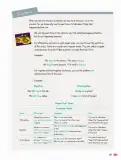
When an event or situation is finished, we say it is in the past, not in the present. So, we frequently use the past tense to talk about things that happened before now. (Cuando un evento o situación ha terminado, decimos que está en el pasado, no en el presente; por eso usamos frecuentemente el tiempo pasado para hablar de cosas que ocurrieron antes de ahora.)
We use the past form of the verbs to say that something happened before, but it's not happening anymore. (Usamos la forma pasada de los verbos para decir que algo sucedió antes, pero ya no está sucediendo.)
For affirmative sentences in past simple tense, you need to use the past form of the verbs. There are regular and irregular verbs. They are called irregular verbs because they don't follow a pattern to make their past form. (Para oraciones afirmativas en pasado simple debes usar la forma pasada de los verbos. Hay verbos regulares e irregulares. Se llaman irregulares porque no siguen un patrón para formar su pasado.)
Examples: She went to the movies. (The verb is to go.) / We bought more popcorn. (The verb is to buy.)
For negative and interrogative sentences, you use the auxiliary did and the base form of the verb. (Para oraciones negativas e interrogativas usas el auxiliar did y la forma base del verbo.)
Negative: She didn't go to the fair. / We didn't buy candy. — Interrogative: Did she win a prize? / Did we spend a lot of money?
Simple Past Tense — Irregular Verbs
| Form (Forma) | Structure (Estructura) | Examples (Ejemplos) | Use (Uso) |
|---|---|---|---|
| Affirmative (Afirmativa) | subject or pronoun + main verb in past form + object | She ate too much cake. / I heard a noise in the other room. / They came early. | It is used to talk about things that happened and were finished in the past. |
| Negative (Negativa) | subject or pronoun + did + not + main verb in base form + object | You did not (didn't) tell me what happened to him. / It did not (didn't) fly because it had a broken wing. | It is used to talk about things that didn't happen in the past. |
| Interrogative (Interrogativa) | did + subject or pronoun + main verb in base form + object + ? | Did you go to the cinema last night? / Why did you say something so horrible? | It is used to ask about things that happened and were finished in the past. |
Ejemplos resueltos
She went to the movies. (The verb is to go.)
Ejemplo de afirmativa con verbo irregular: el verbo to go cambia a went en pasado. Traducción: Ella fue al cine.
Did she win a prize?
Ejemplo de interrogativa: el auxiliar did inicia la pregunta y el verbo win permanece en forma base. Traducción: ¿Ella ganó un premio?
Tabla
Tabla Simple Past Tense — Irregular Verbs con formas afirmativa, negativa e interrogativa, estructuras, ejemplos y usos (transcrita y traducida en contenido_estructurado_md y solution_md).
Fórmulas y ecuaciones
Afirmativa: sujeto + verbo en pasado + objeto
Negativa: sujeto + did not (didn't) + verbo en forma base + objeto
Interrogativa: Did + sujeto + verbo en forma base + objeto + ?
Glosario (4)
- Past form (forma pasada)
- Forma que toma el verbo para expresar que la acción ya ocurrió: go → went.
- Base form (forma base)
- Forma del verbo sin conjugar, la que aparece en el diccionario: go, buy, eat.
- Auxiliary did (auxiliar did)
- Forma pasada de *do*; marca el tiempo pasado en negaciones e interrogaciones.
- Irregular verbs (verbos irregulares)
- Verbos cuyo pasado no se forma con -ed sino que cambia de manera especial: go → went, buy → bought, eat → ate.
Temas y conceptos clave
Figuras de la página (1)

Preguntas que la gente también hace
¿Cómo se forma el pasado simple en inglés?
¿Qué son los verbos irregulares en inglés?
¿Cuándo se usa did en preguntas y negaciones?
- • Pronombres personales en inglés
- • Estructura básica sujeto + verbo + objeto
- • Forma base de los verbos comunes
📝 Transcripción de la página (texto seleccionable) 1825 caracteres
When an event or situation is finished, we say it is in the past, not in the present. So, we frequently use the past tense to talk about things that happened before now.
We use the past form of the verbs to say that something happened before,but it's not happening anymore.
For affirmative sentences in past simple tense, you need to use the past form of the verbs. There are regular and irregular verbs. They are called inregular verbs because they don't follow a pattern to make their past form.
Examples:
She went to the movies.(The verb is to go.)We boughtmore popcorn. (The verb is to buy.)
For negative and interrogative sentences, you use the auxiliary did and the base form of the verb.
Examples:
Negative She didn't go to the fair.We didn't buy candy.
Interrogative Did she win a prize?Did we spend a lot of money?
Grammar

Simple Past Tense
| Form | Structure | Examples | Use |
| Affirmative | subject or pronoun + main verb in past form + object | She ate too much cake. I hearda noise in the other room. They came early. | It is used to talk about things that happened and wene finished in the past. |
| Negative | subject or pronoun + did+not+ main verb in base form + object | You did not (didn't) tell me what happened to him. It did not (didn't) fly becauseit had a broken wing. | It is used to talk about things that didn't happen in the past. |
| Interrogative | did+ subject on pronoun + main verb in base form + object+? | Did you go to the cinema last night? Why did you say something so hornible? | It is used to ask about things that happened and were finished in the past. |
147
乐
Otros libros recomendados
Colección Ximhai. Ética, naturaleza y sociedades. Libro de Educación Secundaria Grado 1° Ciclo Escolar 2025 - 2026
SEP/CONALITEG
355 págs.

Historia del pueblo mexicano. Libro de Educación Secundaria Grado 1° Ciclo Escolar 2025 - 2026
SEP/CONALITEG
331 págs.

Colección Ximhai. Lenguajes. Libro de Educación Secundaria Grado 1° Ciclo Escolar 2025 - 2026
SEP/CONALITEG
323 págs.
Fichas de Matemática 1 · 2024
MINEDU
100 págs.
Cuaderno de fichas Personal Social 1. Primer grado de secundaria · 2016
MINEDU
19 págs.
Comprensión lectora : manual para el docente de primer grado de Secundaria 2018 · 2018
MINEDU
194 págs.
Comprensión lectora 1 : manual para el docente de primer grado de Secundaria · 2017
MINEDU
130 págs.
Fichas de aprendizaje de Comunicación 1 · 2024
Julia Liliana Quiroz Espinoza y equipo
100 págs.