
















Saltar al contenido
MisLibrosTexto
Ad

Will vs Going to: diferencias, estructura y usos

📄 teoria ingles 🎓 secundaria · 2° Secundaria México 🇲🇽 MX 🗣 Español
Página 142
142 de 171
Página 142 de Uérakua anapu uantakua. Projects and Readings.  Libro de Educación Secundaria Grado 2°  Ciclo Escolar 2025 - 2026
Anterior Página 142 / 171 Siguiente

Respuesta rápida

Will: decisiones inmediatas, predicciones sin evidencia, hechos futuros. Going to: planes previos, predicciones con evidencia, acciones inminentes. Estructuras: will + verbo; is/are + going to + verbo.

📚 theory ingles ⭐⭐ Dificultad 2/5 ⏱ 6 min lectura

Solución — Página 142

Uérakua anapu uantakua. Projects and Readings. Libro de Educación Secundaria Grado 2° Ciclo Escolar 2025 - 2026

1
Ejercicio 1

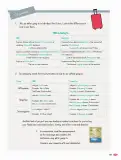
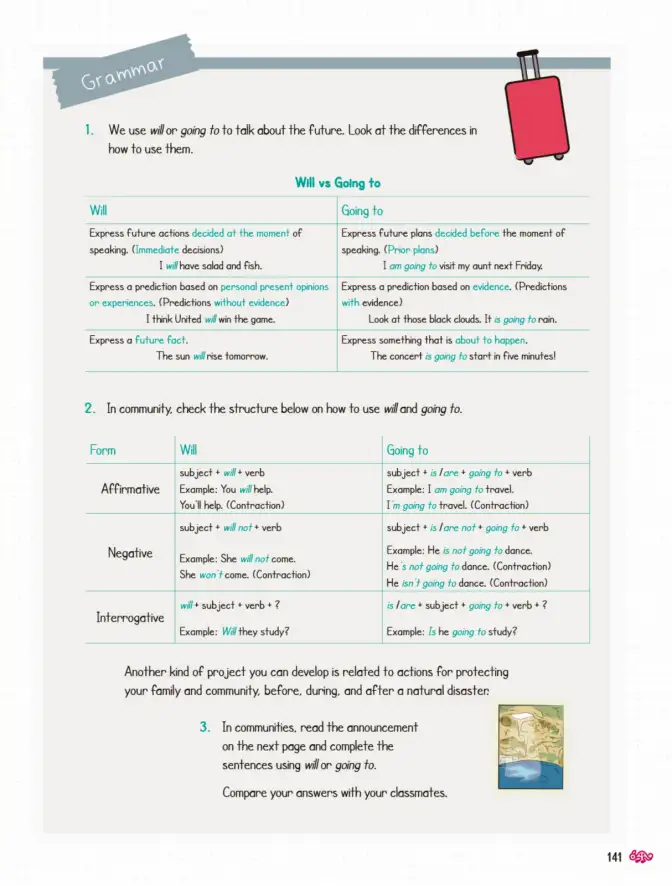
We use will or going to to talk about the future. Look at the differences in how to use them.

  1. Decisiones inmediatas vs. planes previos. Will expresa acciones decididas en el momento de hablar; going to expresa planes decididos antes del momento de hablar.
    • I will have salad and fish. (decido ahora)
    • I am going to visit my aunt next Friday. (ya lo tenía planeado)
  2. Predicciones sin evidencia vs. con evidencia. Will se usa para predicciones basadas en opiniones o experiencias personales; going to para predicciones basadas en evidencia visible.
    • I think United will win the game. (opinión)
    • Look at those black clouds. It is going to rain. (evidencia)
  3. Hechos futuros vs. algo inminente. Will expresa un hecho futuro objetivo; going to expresa algo que está a punto de suceder.
    • The sun will rise tomorrow. (hecho)
    • The concert is going to start in five minutes! (inminente)
Respuesta

Will* = decisiones inmediatas, predicciones sin evidencia y hechos futuros. Going to = planes previos, predicciones con evidencia y acciones inminentes.


2
Ejercicio 2

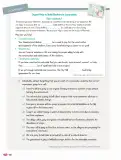
In community, check the structure below on how to use will and going to.

a
Parte 2.a

Afirmativa

  1. Will: sujeto + will + verbo. Ejemplo: You will help. Contracción: You**'ll** help.
  2. Going to: sujeto + is/are + going to + verbo. Ejemplo: I am going to travel. Contracción: I**'m going to** travel.
Respuesta

You will help / You'll help; I am going to travel / I'm going to travel.

b
Parte 2.b

Negativa

  1. Will: sujeto + will not + verbo. Ejemplo: She will not come. Contracción: She won't come.
  2. Going to: sujeto + is/are not + going to + verbo. Ejemplo: He is not going to dance. Contracciones: He**'s not going to** dance / He isn't going to dance.
Respuesta

She won't come; He isn't going to dance.

c
Parte 2.c

Interrogativa

  1. Will: will + sujeto + verbo + ?. Ejemplo: Will they study?
  2. Going to: is/are + sujeto + going to + verbo + ?. Ejemplo: Is he going to study?
Respuesta

Will they study? / Is he going to study?

3
Ejercicio 3

In communities, read the announcement on the next page and complete the sentences using will or going to. Compare your answers with your classmates.

  1. La actividad remite a la página siguiente (142), que no está disponible en esta imagen; no es posible completar las oraciones sin ese texto.
  2. Criterio para resolverla: usar will si la decisión se toma al momento de hablar, si es predicción sin evidencia o hecho futuro; usar going to si hay plan previo, evidencia visible o acción inminente.
  3. Al comparar con los compañeros, justifica cada elección con la regla correspondiente.

Respuesta orientativa: No resoluble con esta página; se requiere el anuncio de la página 142. Aplica el criterio will (decisión inmediata / predicción sin evidencia / hecho) vs. going to (plan previo / evidencia / inminente).

Contenido de la página

Grammar

1. We use will or going to to talk about the future. Look at the differences in how to use them.

Will vs Going to

Will Going to
Express future actions decided at the moment of speaking. (Immediate decisions) I will have salad and fish. Express future plans decided before the moment of speaking. (Prior plans) I am going to visit my aunt next Friday.
Express a prediction based on personal present opinions or experiences. (Predictions without evidence) I think United will win the game. Express a prediction based on evidence. (Predictions with evidence) Look at those black clouds. It is going to rain.
Express a future fact. The sun will rise tomorrow. Express something that is about to happen. The concert is going to start in five minutes!

2. In community, check the structure below on how to use will and going to.

Form Will Going to
Affirmative subject + will + verb. Example: You will help. You'll help. (Contraction) subject + is/are + going to + verb. Example: I am going to travel. I'm going to travel. (Contraction)
Negative subject + will not + verb. Example: She will not come. She won't come. (Contraction) subject + is/are not + going to + verb. Example: He is not going to dance. He's not going to dance. (Contraction) He isn't going to dance. (Contraction)
Interrogative will + subject + verb + ? Example: Will they study? is/are + subject + going to + verb + ? Example: Is he going to study?

Another kind of project you can develop is related to actions for protecting your family and community, before, during, and after a natural disaster.

3. In communities, read the announcement on the next page and complete the sentences using will or going to. Compare your answers with your classmates.

Ejemplos resueltos

I ___ have salad and fish. (decisión inmediata)

Se decide en el momento de hablar, por lo que se usa will: I will have salad and fish.

I ___ visit my aunt next Friday. (plan previo)

Es un plan decidido antes: I am going to visit my aunt next Friday.

Look at those black clouds. It ___ rain. (evidencia)

Hay evidencia visible (nubes negras): It is going to rain.

The sun ___ rise tomorrow. (hecho futuro)

Es un hecho objetivo: The sun will rise tomorrow.

Tablas (2)

Will Going to
Express future actions decided at the moment of speaking. (Immediate decisions) I will have salad and fish. Express future plans decided before the moment of speaking. (Prior plans) I am going to visit my aunt next Friday.
Express a prediction based on personal present opinions or experiences. (Predictions without evidence) I think United will win the game. Express a prediction based on evidence. (Predictions with evidence) Look at those black clouds. It is going to rain.
Express a future fact. The sun will rise tomorrow. Express something that is about to happen. The concert is going to start in five minutes!
Form Will Going to
Affirmative subject + will + verb. Example: You will help. You'll help. (Contraction) subject + is/are + going to + verb. Example: I am going to travel. I'm going to travel. (Contraction)
Negative subject + will not + verb. Example: She will not come. She won't come. (Contraction) subject + is/are not + going to + verb. Example: He is not going to dance. He's not going to dance. (Contraction) He isn't going to dance. (Contraction)
Interrogative will + subject + verb + ? Example: Will they study? is/are + subject + going to + verb + ? Example: Is he going to study?

Diagrama

mindmap
  root((Future: will vs going to))
    Will
      Decisiones inmediatas
      Predicciones sin evidencia
      Hechos futuros
    Going to
      Planes previos
      Predicciones con evidencia
      Acciones inminentes
    Estructuras
      Afirmativa
      Negativa
      Interrogativa

Fórmulas y ecuaciones

subject + will + verb

subject + is/are + going to + verb

subject + will not + verb

subject + is/are not + going to + verb

will + subject + verb + ?

is/are + subject + going to + verb + ?

Glosario (8)

will
Verbo modal usado para expresar decisiones inmediatas, predicciones sin evidencia y hechos futuros.
going to
Estructura usada para expresar planes previos, predicciones con evidencia y acciones inminentes.
immediate decision
Decisión que se toma en el momento de hablar.
prior plan
Plan decidido antes del momento de hablar.
prediction
Predicción o suposición sobre el futuro.
evidence
Evidencia o señal visible que permite predecir algo.
contraction
Forma contraída de dos palabras, como won't o I'm.
announcement
Anuncio o aviso público.

Preguntas para practicar

¿Cuál es la diferencia principal entre will y going to?

Will se usa para decisiones tomadas en el momento de hablar, predicciones sin evidencia y hechos futuros. Going to se usa para planes decididos antes, predicciones basadas en evidencia y acciones que están a punto de ocurrir.

¿Por qué decimos 'Look at those black clouds. It is going to rain' y no 'It will rain'?

Porque hay evidencia visible (las nubes negras) que respalda la predicción; con evidencia se usa going to, mientras que will se reserva para predicciones basadas solo en opiniones o experiencias.

Temas y conceptos clave

Gramática del futuro en inglésWill vs going toEstructuras afirmativa, negativa e interrogativaDecisiones inmediatasPlanes previosPredicciones con y sin evidenciaHechos futurosAcciones inminentesContracciones
¿Te fue útil esta página?

Figuras de la página (2)

Ilustración de una maleta roja con asa, relacionada con viajes y planes futuros.
Figura 1 image
Ilustración de un paisaje con una cascada y agua, asociada al tema de desastres naturales y comunidad.
Figura 2 image

Preguntas que la gente también hace

¿Cuándo se usa will y cuándo going to?
Consulta la solución completa arriba o explora el libro entero para temas relacionados.
¿Cómo se forma la negativa de will y going to?
Consulta la solución completa arriba o explora el libro entero para temas relacionados.
¿Cuál es la diferencia entre predicción con y sin evidencia?
Consulta la solución completa arriba o explora el libro entero para temas relacionados.
📌 Antes de leer esto
  • • Presente simple
  • • Verbo to be (am/is/are)
  • • Pronombres personales en inglés
  • • Formación de oraciones afirmativas, negativas e interrogativas
Siguiente tema sugerido
Uso de will y going to en anuncios comunitarios sobre desastres naturales
📝 Transcripción de la página (texto seleccionable) 2188 caracteres

Grammar

  1. We use willor going to to talk about the future. Look at the differences in how to use them.

  2. In community, check the structure below on how to use will and going to.

Another kind of project you can develop is related to actions for protecting your family and community, before, during, and after a natural disaster

  1. In communities, read the announcement on the next page and complete the sentences using willor going to.

Compare your answers with your classmates.

![](page=0,bbox=[909, 85, 1032, 296])

Will vs Going to

WillGoing to
Express future actions decided at the moment of speaking.(Immediate decisions) I will have salad and fish.Express future plans decided before the moment of speaking.(Prior plans) I am going to visit my aunt next Friday.
Express a prediction based on personal present opinions or experiences.(Predictions without evidence) I think United willwin the game.Express a prediction based on evidence.(Predictions with evidence) Look at those black clouds. It is going to rain.
Express a futune fact. The sun willrise tomorrow.Expness something that is about to happen. The concent is going to start in five minutes!
FormWillGoing to
Affirmativesubject + will+ venb Example:You will help.subject + is /are + going to + verb Example: I am going to travel.
You'l help. (Contraction)I'm going to travel.(Contraction)
Negativesubject + willnot+ verbsubject + is /are not+ going to + venb Example: He is not going to dance.
Example: She will nof come. She won't come.(Contraction)He's not going to dance. (Contraction) He isn't going to dance.(Contraction)
Interrogativewill+subject + verb + ? Example: Will they study?is /ane + subject+ going to + venb +? Example: Is he going to study?

![](page=0,bbox=[899, 1271, 1016, 1423])

141

乐

Ad

Otros libros recomendados

Ver todos →
Ad

Usamos cookies propias y de terceros para personalizar contenido, mostrar publicidad y analizar el tráfico. Las cookies necesarias siempre están activas.