















Ejercicio 1
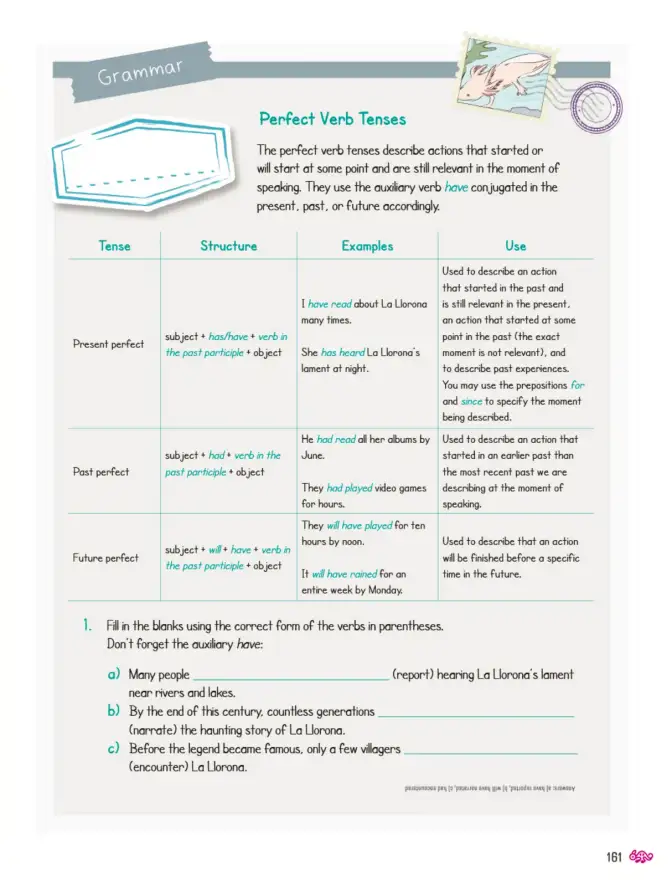
Fill in the blanks using the correct form of the verbs in parentheses. Don't forget the auxiliary have.
Parte 1.a
Many people ______ (report) hearing La Llorona's lament near rivers and lakes.
- El marcador temporal es near rivers and lakes y el contexto es una experiencia repetida que sigue siendo relevante en el presente.
- Corresponde el present perfect: sujeto + have/has + participio pasado.
- Sujeto plural Many people → auxiliar have.
- Participio pasado de report → reported.
Respuesta
Many people have reported hearing La Llorona's lament near rivers and lakes.
Parte 1.b
By the end of this century, countless generations ______ (narrate) the haunting story of La Llorona.
- La expresión By the end of this century indica un momento futuro antes del cual la acción estará terminada.
- Corresponde el future perfect: sujeto + will have + participio pasado.
- Sujeto plural countless generations → will have.
- Participio pasado de narrate → narrated.
Respuesta
By the end of this century, countless generations will have narrated the haunting story of La Llorona.
Parte 1.c
Before the legend became famous, only a few villagers ______ (encounter) La Llorona.
- Before the legend became famous sitúa la acción en un pasado anterior a otro pasado.
- Corresponde el past perfect: sujeto + had + participio pasado.
- Sujeto plural only a few villagers → had.
- Participio pasado de encounter → encountered.
Respuesta
Before the legend became famous, only a few villagers had encountered La Llorona.