Saltar al contenido
MisLibrosTexto
Ad

Recording the Experience & Appreciating My Path: Reflexión sobre el proyecto ambiental

📄 ejercicios ingles 🎓 secundaria · 2° Secundaria México 🇲🇽 MX 🗣 Español
Página 96
96 de 171
Página 96 de Uérakua anapu uantakua. Projects and Readings.  Libro de Educación Secundaria Grado 2°  Ciclo Escolar 2025 - 2026
Anterior Página 96 / 171 Siguiente

Respuesta rápida

Manifiesto en condicionales, reflexión sobre causas y soluciones ambientales, autoevaluación del proyecto y acuerdos de asamblea sobre recursos naturales.

📚 exercise ingles ⭐⭐ Dificultad 2/5 ⏱ 8 min lectura

Solución — Página 96

Uérakua anapu uantakua. Projects and Readings. Libro de Educación Secundaria Grado 2° Ciclo Escolar 2025 - 2026

5
Ejercicio 5

Take pictures and videos. Write down what you're doing. This will help you see how well you are doing and share your success with others.

  1. Durante el proyecto, documenta con fotos y videos cada actividad (limpieza, siembra, campaña).
  2. Anota en tu cuaderno qué hiciste, con quién y qué resultado obtuviste.
  3. Comparte el material con tu comunidad escolar para mostrar el avance.

Respuesta orientativa: Un registro visual y escrito permite evaluar el propio desempeño y motivar a otros a participar en el cuidado del ambiente.

6
Ejercicio 6

In assembly, create a manifesto. Use conditionals to enumerate the things you care about and how you and your community will protect them.

a
Parte 6.a

Design a poster with your community manifesto and place it where everyone can see it and be reminded of the ethical practices you will enact.

  1. Redacta el manifiesto usando condicionales (If we..., we will...).
  2. Diseña el cartel con imágenes y frases breves.
  3. Colócalo en un lugar visible de la escuela.

Respuesta orientativa (manifiesto modelo):

  • If we recycle paper and plastic, we will reduce waste in our school.
  • If we plant trees, we will give more oxygen to our community.
  • If we save water, we will protect life on Earth.
  • If we respect animals and plants, we will keep biodiversity alive.

Recording the Experience

Respuesta

Cartel con manifiesto en condicionales colocado en un lugar visible.

1
Ejercicio 1

As a community, make a visual aid to share with your school community. Include your manifesto. Ask others to join and promise to care for the planet too.

Respuesta orientativa: Elaborar una cartulina o presentación digital con el manifiesto, fotos del proyecto y una invitación a sumarse al compromiso ambiental.

Ad
2
Ejercicio 2

On your own, write in your notebook about:

2
Ejercicio 2

a) What makes the environment get worse?

La contaminación del aire y del agua, la deforestación, el uso excesivo de plásticos, los incendios y la quema de combustibles fósiles deterioran el ambiente.

2
Ejercicio 2

b) What things around you help keep Earth's resources?

El reciclaje, el ahorro de agua y energía, la reforestación, el transporte público y el consumo responsable ayudan a conservar los recursos.

Ad
2
Ejercicio 2

c) Why is it important to do things to help the environment?

Porque garantiza recursos para las generaciones futuras, protege la salud y mantiene el equilibrio de los ecosistemas.

3
Ejercicio 3

Then, share what you wrote with your class community.

Respuesta orientativa: Compartir en asamblea las respuestas y escuchar las de los compañeros para enriquecer las ideas.

Appreciating My Path

1
Ejercicio 1

Think about:

a) How did you do during the project? Me desempeñé con responsabilidad y colaboré en las tareas asignadas.

b) What new things did you learn? Aprendí a trabajar en equipo, a clasificar residuos y a redactar condicionales en inglés.

c) How did you agree with your classmates? Llegamos a acuerdos mediante el diálogo y la votación en asamblea.

d) Did you use the right tools for the project? Sí, usamos guantes, bolsas, cartulinas y material reciclado.

e) What problems did you have? Falta de tiempo, desacuerdos iniciales y escasez de materiales.

f) What do you think about the project now? Que fue útil para concientizar y mejorar el entorno escolar.

Ad
2
Ejercicio 2

Talk about your answers with your classmates in assembly.

Respuesta orientativa: Compartir en asamblea las respuestas y escuchar las de los compañeros para enriquecer las ideas.

3
Ejercicio 3

Decide together what you want to do next to help the environment.

Respuesta orientativa: Organizar una campaña permanente de reciclaje y una jornada mensual de limpieza.

4
Ejercicio 4

Finally, write in your notebooks the assembly agreements reached by the community regarding the use of natural resources.

Respuesta orientativa: Acuerdos: reducir plásticos de un solo uso, apagar luces innecesarias, cerrar bien las llaves de agua y sembrar árboles cada semestre.

Contenido de la página

Recording the Experience

Now is a time to learn from what you did, and help others understand why it's important to care for the Earth.

  1. As a community, make a visual aid to share with your school community. Include your manifesto. Ask others to join and promise to care for the planet too.
  2. On your own, without forgetting your experience as part of a collective, write in your notebook about: a) What makes the environment get worse? b) What things around you help keep Earth's resources? c) Why is it important to do things to help the environment?
  3. Then, share what you wrote with your class community. Your teacher can help you share your ideas with everyone during a school meeting.

Appreciating My Path

  1. On your own, without forgetting your experience as part of a collective, think about: a) How did you do during the project? b) What new things did you learn? c) How did you agree with your classmates? d) Did you use the right tools for the project? e) What problems did you have? f) What do you think about the project now?
  2. Then, talk about your answers with your classmates in assembly.
  3. Decide together what you want to do next to help the environment.
  4. Finally, write in your notebooks the assembly agreements reached by the community regarding the use of natural resources.

Ejemplos resueltos

Write a conditional sentence about protecting the environment.

If we recycle plastic bottles, we will reduce pollution in our community.

Glosario (5)

manifesto
Declaración pública de principios y compromisos.
visual aid
Material gráfico que apoya una presentación.
assembly
Reunión de la comunidad escolar para tomar acuerdos.
resources
Bienes naturales aprovechables por el ser humano.
ethical practices
Acciones correctas y responsables con el entorno.

Preguntas para practicar

What makes the environment get worse?

La contaminación, la deforestación y el uso excesivo de plásticos deterioran el ambiente.

Why is it important to do things to help the environment?

Porque asegura recursos para el futuro y protege la salud de todos.

Temas y conceptos clave

Registro de la experienciaManifiesto comunitario con condicionalesReflexión ambientalAutoevaluación del proyectoCondicionales (if + present, will + verb)ManifiestoRecursos naturalesAsambleaPrácticas éticas ambientales
¿Te fue útil esta página?

Figuras de la página (2)

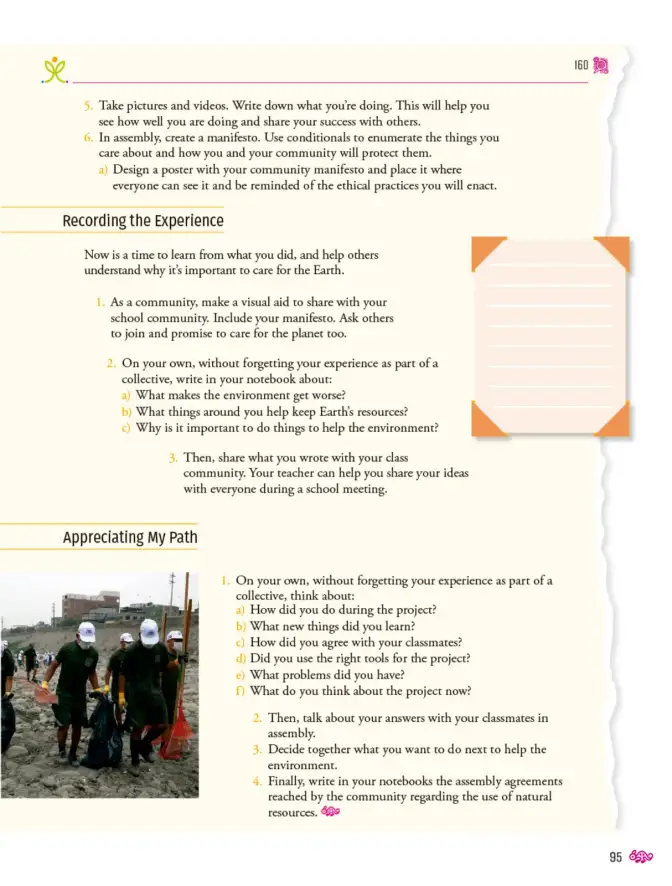
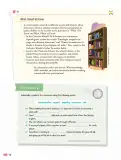
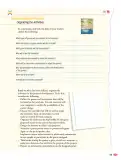
Hoja de papel con líneas para escribir, enmarcada con esquinas naranjas.
Figura 1 image
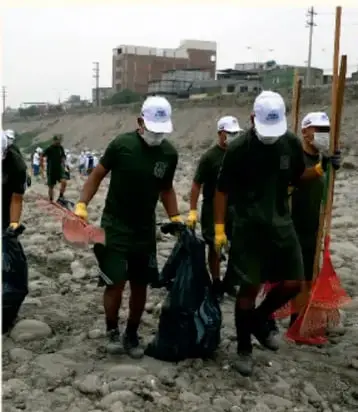
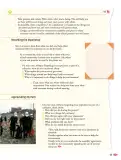
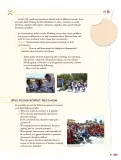
Fotografía de estudiantes con uniforme verde, guantes y bolsas, recogiendo basura en un terreno.
Figura 2 image

Preguntas que la gente también hace

¿Cómo se escribe un manifiesto en inglés usando condicionales?
Consulta la solución completa arriba o explora el libro entero para temas relacionados.
¿Qué acciones ayudan a conservar los recursos naturales?
Consulta la solución completa arriba o explora el libro entero para temas relacionados.
¿Cómo se evalúa un proyecto comunitario en la escuela?
Consulta la solución completa arriba o explora el libro entero para temas relacionados.
📌 Antes de leer esto
  • • Uso básico de condicionales en inglés (if + presente, will + verbo)
  • • Vocabulario sobre medio ambiente y recursos naturales
  • • Experiencia previa en trabajo por proyectos
Siguiente tema sugerido
Presentación de resultados del proyecto y evaluación final del ciclo
📝 Transcripción de la página (texto seleccionable) 1839 caracteres

災

  1. Take pictures and videos. Write down what you're doing. This will help you see how well you are doing and share your success with others.6. In assembly, create a manifesto. Use conditionals to enumerate the things you care about and how you and your community will protect them.a))Design a poster with your community manifesto and place it where everyone can see it and be reminded of the ethical practices you will enact.

Recording the Experience

Now is a time to learn from what you did, and help others understand why it's important to care for the Earth.

  1. As a community, make a visual aid to share with your school community. Include your manifesto. Ask others to join and promise to care for the planet too.

  2. On your own, without forgetting your experience as part of a collective, write in your notebook about:a) What makes the environment get worse? b) What things around you help keep Earth's resources? c)Why is it important to do things to help the environment?

  3. Then, share what you wrote with your class community. Your teacher can help you share your ideas with everyone during a school meeting.

Appreciating My Path

  1. On your own, without forgetting your experience as part of a collective, think about: a) How did you do during the project?

b) What new things did you learn?

c)How did you agree with your classmates? d) Did you use the right tools for the project? What problems did you have?

f) What do you think about the project now?

  1. Then, talk about your answers with your classmates in assembly.

  2. Decide together what you want to do next to help the environment.

4.Finally, write in your notebooks the assembly agreements reached by the community regarding the use of natural resources.

![](page=0,bbox=[848, 421, 1139, 794])

![](page=0,bbox=[0, 1027, 358, 1439])

160

95

乐
Ad

Otros libros recomendados

Ver todos →
Ad

Usamos cookies propias y de terceros para personalizar contenido, mostrar publicidad y analizar el tráfico. Las cookies necesarias siempre están activas.