Saltar al contenido
MisLibrosTexto
Ad
Ingles · 3ro BGU · 2024

Ministerio de Educación del Ecuador

21/34

Simple Past tense - Estructura, uso y ejercicios sobre civilizaciones antiguas

📄 contenido ingles 🎓 BGU · 3° BGU Ecuador 🇪🇨 EC 🗣 Español
Página 21
21 de 34
Página 21 de Ingles · 3ro BGU · 2024
Anterior Página 21 / 34 Siguiente

Respuesta rápida

  1. Coincide con la página 20.
  2. Coincide con la página 20.
  3. Coincide con la página 20.
📚 theory ingles ⭐⭐ Dificultad 2/5 ⏱ 3 min lectura

Solución — Página 21

Ingles · 3ro BGU · 2024

1
Ejercicio 1

Lectura

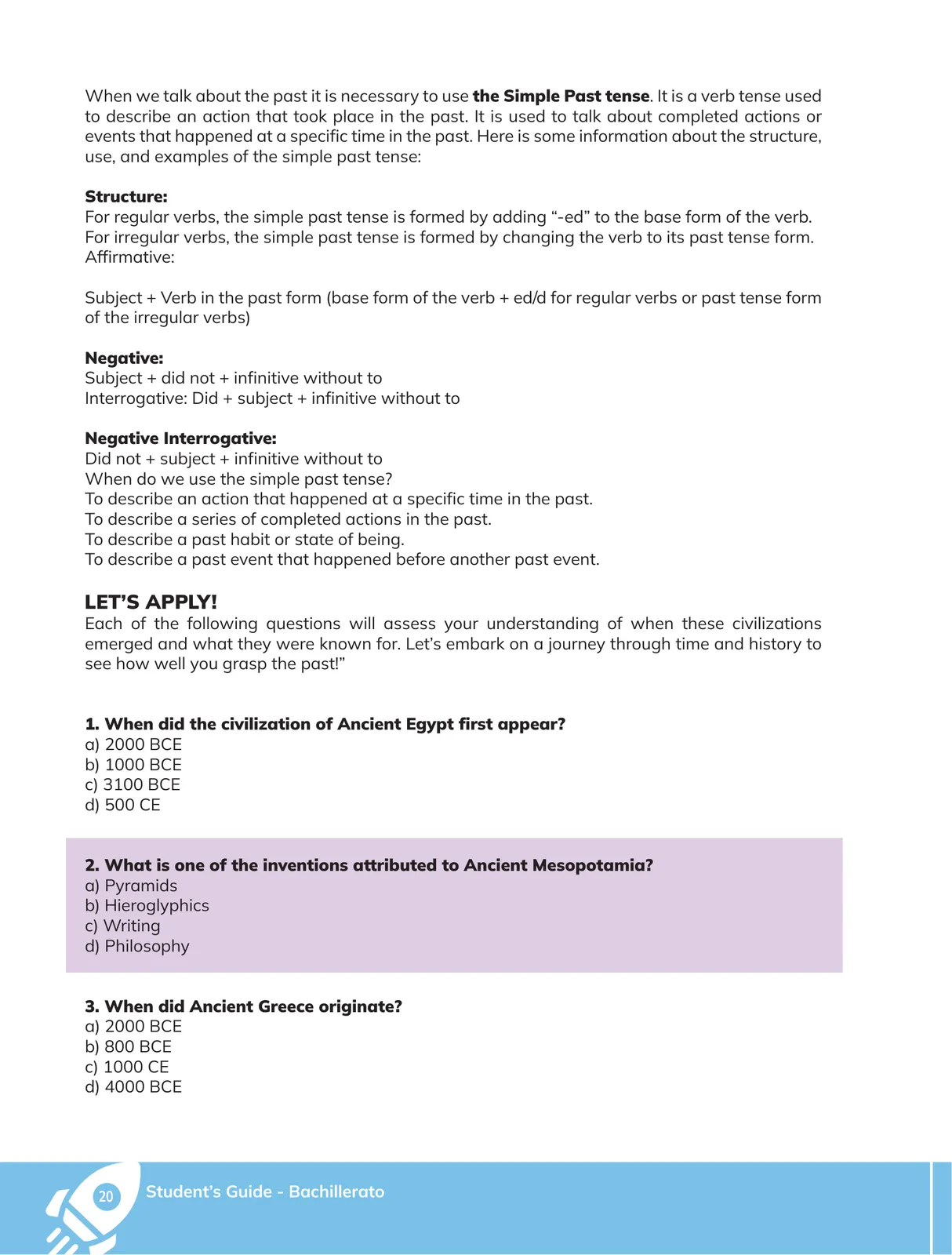
When we talk about the past it is necessary to use the Simple Past tense. It is a verb tense used to describe an action that took place in the past. It is used to talk about completed actions or events that happened at a specific time in the past. Here is some information about the structure, use, and examples of the simple past tense:

Structure:

For regular verbs, the simple past tense is formed by adding "-ed" to the base form of the verb. For irregular verbs, the simple past tense is formed by changing the verb to its past tense form.

Affirmative: Subject + Verb in the past form (base form of the verb + ed/d for regular verbs or past tense form of the irregular verbs)

Negative: Subject + did not + infinitive without to

Interrogative: Did + subject + infinitive without to

Negative Interrogative: Did not + subject + infinitive without to

When do we use the simple past tense?

  • To describe an action that happened at a specific time in the past.
  • To describe a series of completed actions in the past.
  • To describe a past habit or state of being.
  • To describe a past event that happened before another past event.

LET'S APPLY!

Each of the following questions will assess your understanding of when these civilizations emerged and what they were known for. Let's embark on a journey through time and history to see how well you grasp the past!

w
Parte 1.w

hen did the civilization of Ancient Egypt first appear?

  • a) 2000 BCE
  • b) 1000 BCE
  • c) 3100 BCE
  • d) 500 CE
w
Parte 1.w

hat is one of the inventions attributed to Ancient Mesopotamia?

  • a) Pyramids
  • b) Hieroglyphics
  • c) Writing
  • d) Philosophy
w
Parte 1.w

hen did Ancient Greece originate?

  • a) 2000 BCE
  • b) 800 BCE
  • c) 1000 CE
  • d) 4000 BCE
1
Ejercicio 1

When did the civilization of Ancient Egypt first appear? a) 2000 BCE b) 1000 BCE c) 3100 BCE d) 500 CE

  1. Recuperar la fecha del Antiguo Egipto de la lectura previa (p. 20).
Respuesta

Coincide con la página 20.

2
Ejercicio 2

What is one of the inventions attributed to Ancient Mesopotamia? a) Pyramids b) Hieroglyphics c) Writing d) Philosophy

  1. Las pirámides y los jeroglíficos son de Egipto; la filosofía de Grecia.
  2. Mesopotamia inventó la escritura, la rueda y el arado.
Respuesta

Coincide con la página 20.

Ad
3
Ejercicio 3

When did Ancient Greece originate? a) 2000 BCE b) 800 BCE c) 1000 CE d) 4000 BCE

  1. Recuperar la fecha de Grecia de la lectura previa.

Ejemplo 1

Forma el pasado simple del verbo regular 'work' en oración afirmativa: 'They _______ yesterday.'

  1. Identificar la base del verbo: 'work'.

    \text{base} = \text{work}

  2. Añadir -ed.

    \text{work} + \text{ed} = \text{worked}

  3. Construir oración.

    \text{They worked yesterday.}

Ejemplo 2

Forma el pasado simple del verbo irregular 'go' en oración afirmativa: 'She _______ to Paris last year.'

  1. Identificar el verbo irregular: go → went.

    \text{go} \to \text{went}

  2. Construir oración.

    \text{She went to Paris last year.}

Tablas

Forma Estructura
Affirmative Subject + Verb (past form)
Negative Subject + did not + base verb
Interrogative Did + Subject + base verb?
Negative Interrogative Did not + Subject + base verb?

Glosario

  • Simple Past tense: Pasado simple: tiempo verbal para acciones completadas en el pasado.
  • regular verb: Verbo regular: forma su pasado añadiendo -ed.
  • irregular verb: Verbo irregular: forma su pasado cambiando la raíz (e.g., go→went).
  • affirmative: Forma afirmativa.
  • negative: Forma negativa.
  • interrogative: Forma interrogativa.
Respuesta

Coincide con la página 20.

¿Te fue útil esta página?
📌 Antes de leer esto
  • Ver pág. 20: Fuente de información sobre las civilizaciones para las preguntas.
  • Ver pág. 22: Continuación de los ejercicios y/o nueva sección.
Siguiente tema sugerido
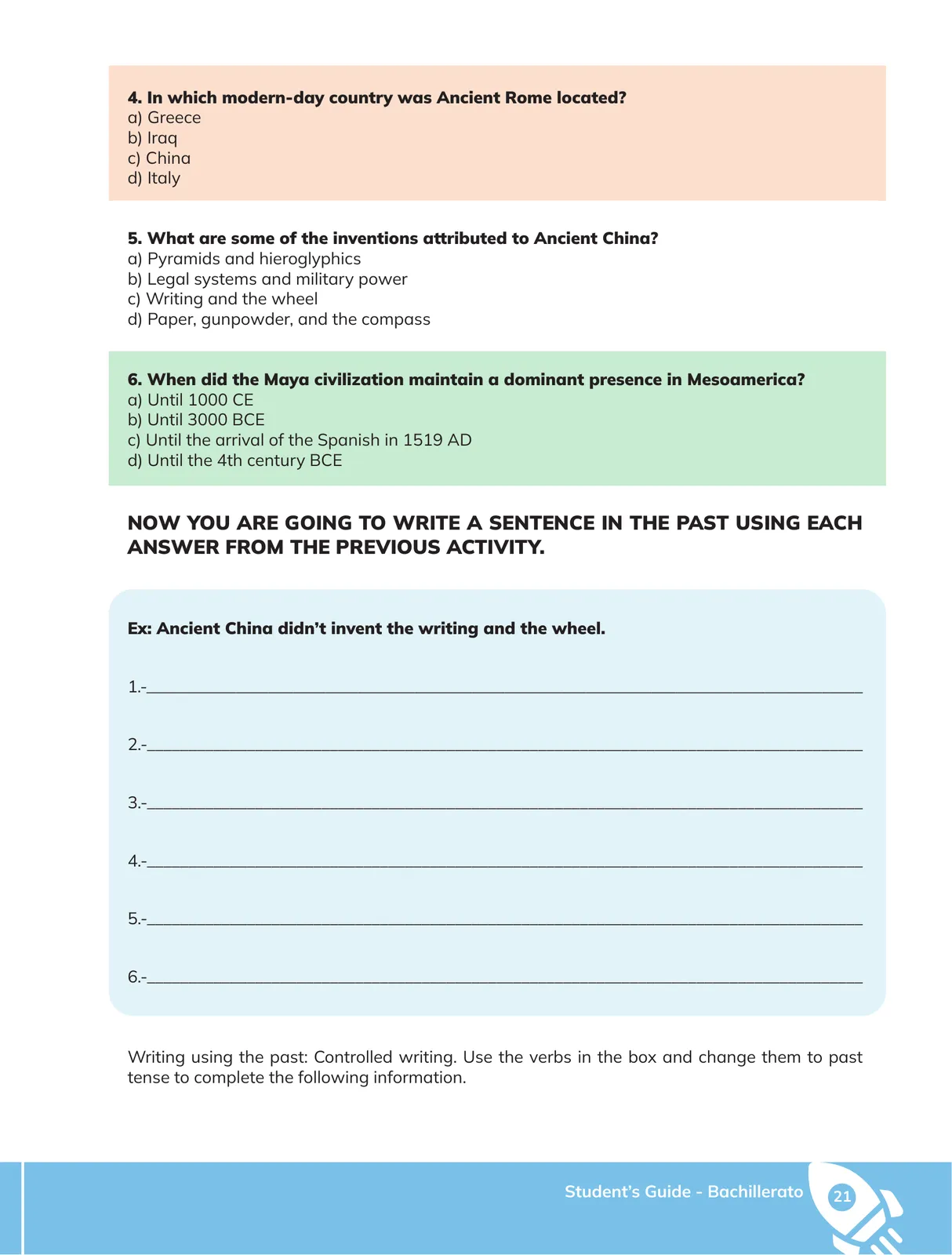
Preguntas 4-6 sobre civilizaciones antiguas y producción escrita en pasado
📝 Transcripción de la página (texto seleccionable) 1725 caracteres

When we talk about the past it is necessary to use the Simple Past tense. It is a verb tense used to describe an action that took place in the past. It is used to talk about completed actions or events that happened at a specific time in the past. Here is some information about the structure, use, and examples of the simple past tense:

Structure:

For regular verbs, the simple past tense is formed by adding “-ed” to the base form of the verb. For irregular verbs, the simple past tense is formed by changing the verb to its past tense form. Affirmative:

Subject + Verb in the past form (base form of the verb + ed/d for regular verbs or past tense form of the irregular verbs)

Negative: Subject + did not + infinitive without to Interrogative: Did + subject + infinitive without to

Negative Interrogative:

Did not + subject + infinitive without to

When do we use the simple past tense?

To describe an action that happened at a specific time in the past. To describe a series of completed actions in the past.

To describe a past habit or state of being.

To describe a past event that happened before another past event.

LET’S APPLY!

Each of the following questions will assess your understanding of when these civilizations emerged and what they were known for. Let’s embark on a journey through time and history to see how well you grasp the past!”

  1. When did the civilization of Ancient Egypt first appear? a) 2000 BCE

b) 1000 BCE

c) 3100 BCE

d) 500 CE

  1. What is one of the inventions attributed to Ancient Mesopotamia? a) Pyramids

b) Hieroglyphics

c) Writing

d) Philosophy

  1. When did Ancient Greece originate? a) 2000 BCE

b) 800 BCE

c) 1000 CE

d) 4000 BCE

(20 } Student's Guide - Bachillerato

Ad

Otros libros recomendados

Ver todos →
Ad

Usamos cookies propias y de terceros para personalizar contenido, mostrar publicidad y analizar el tráfico. Las cookies necesarias siempre están activas.