
Saltar al contenido
MisLibrosTexto
Ad
Ingles · 10 EGB · 2024

Ministerio de Educación del Ecuador

18/50

Natural resources & Renewable Resources

📄 contenido ingles 🎓 EGB · 10° EGB Ecuador 🇪🇨 EC 🗣 Español
Página 18
18 de 50
Página 18 de Ingles · 10 EGB · 2024
Anterior Página 18 / 50 Siguiente
📚 theory ingles ⭐⭐ Dificultad 2/5 ⏱ 1 min lectura

Solución — Página 18

Ingles · 10 EGB · 2024

1
Ejercicio 1

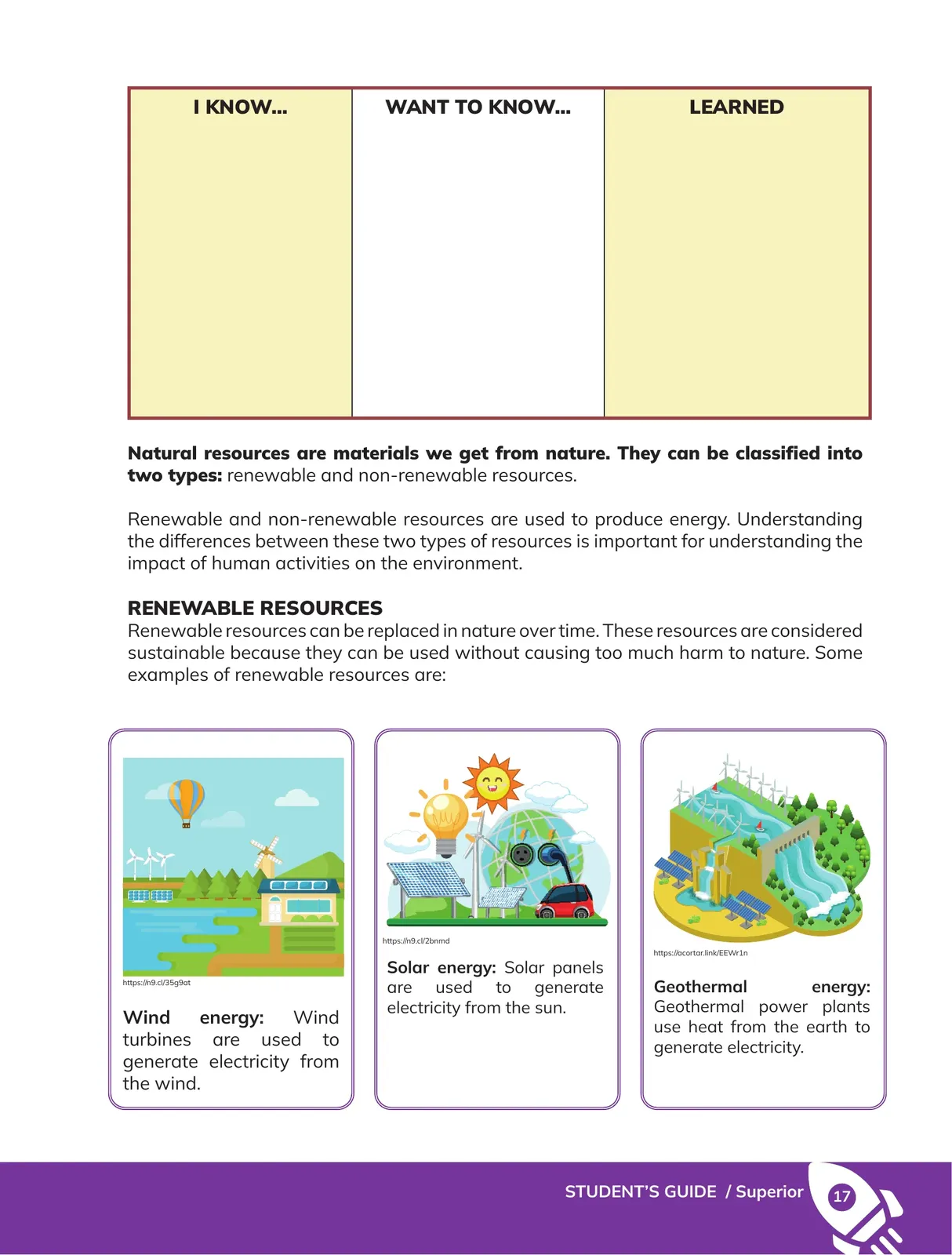
Cuadro KWL: I KNOW... / WANT TO KNOW... / LEARNED

(espacios en blanco para que el estudiante complete)

Texto principal

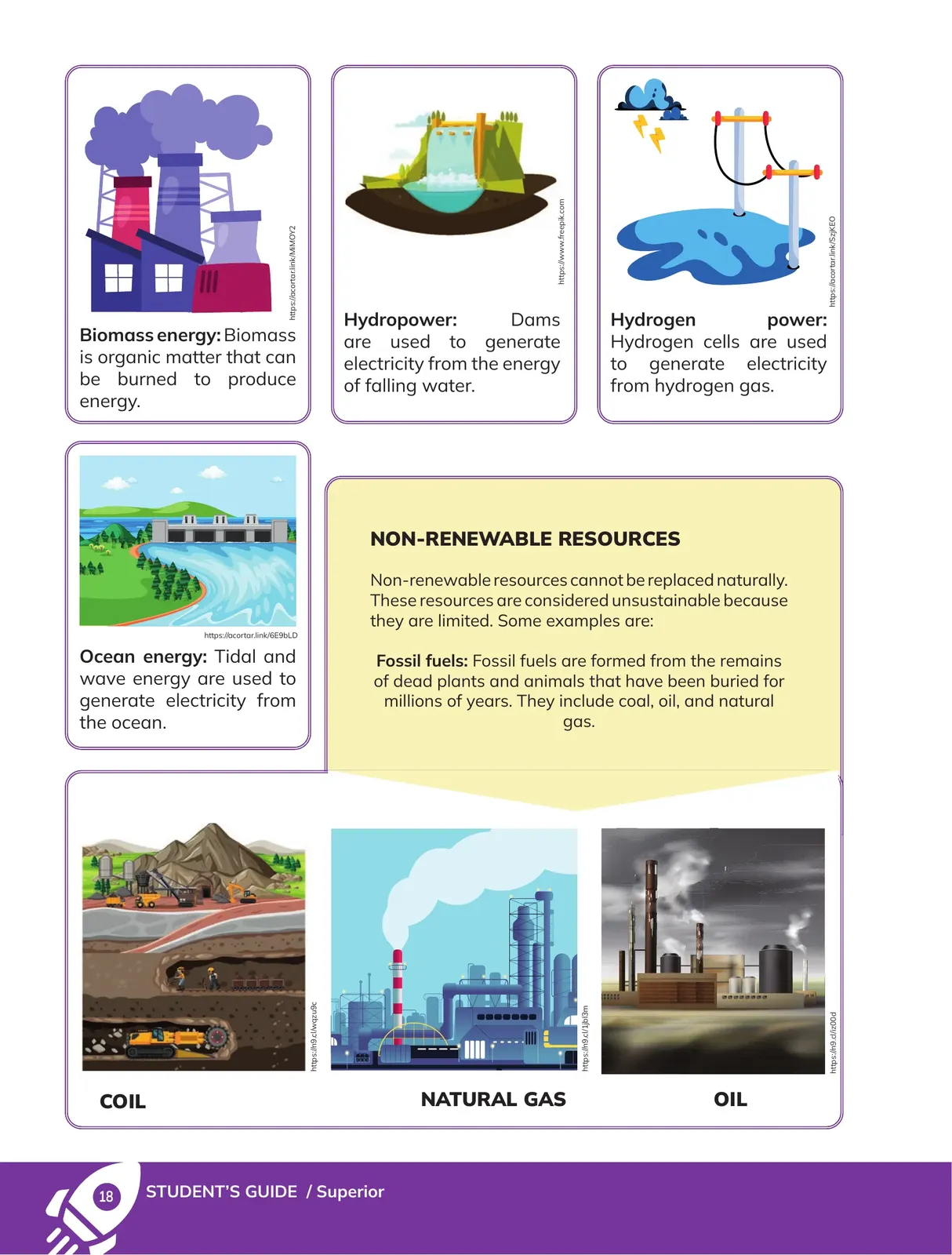
Natural resources are materials we get from nature. They can be classified into two types: renewable and non-renewable resources.

Renewable and non-renewable resources are used to produce energy. Understanding the differences between these two types of resources is important for understanding the impact of human activities on the environment.

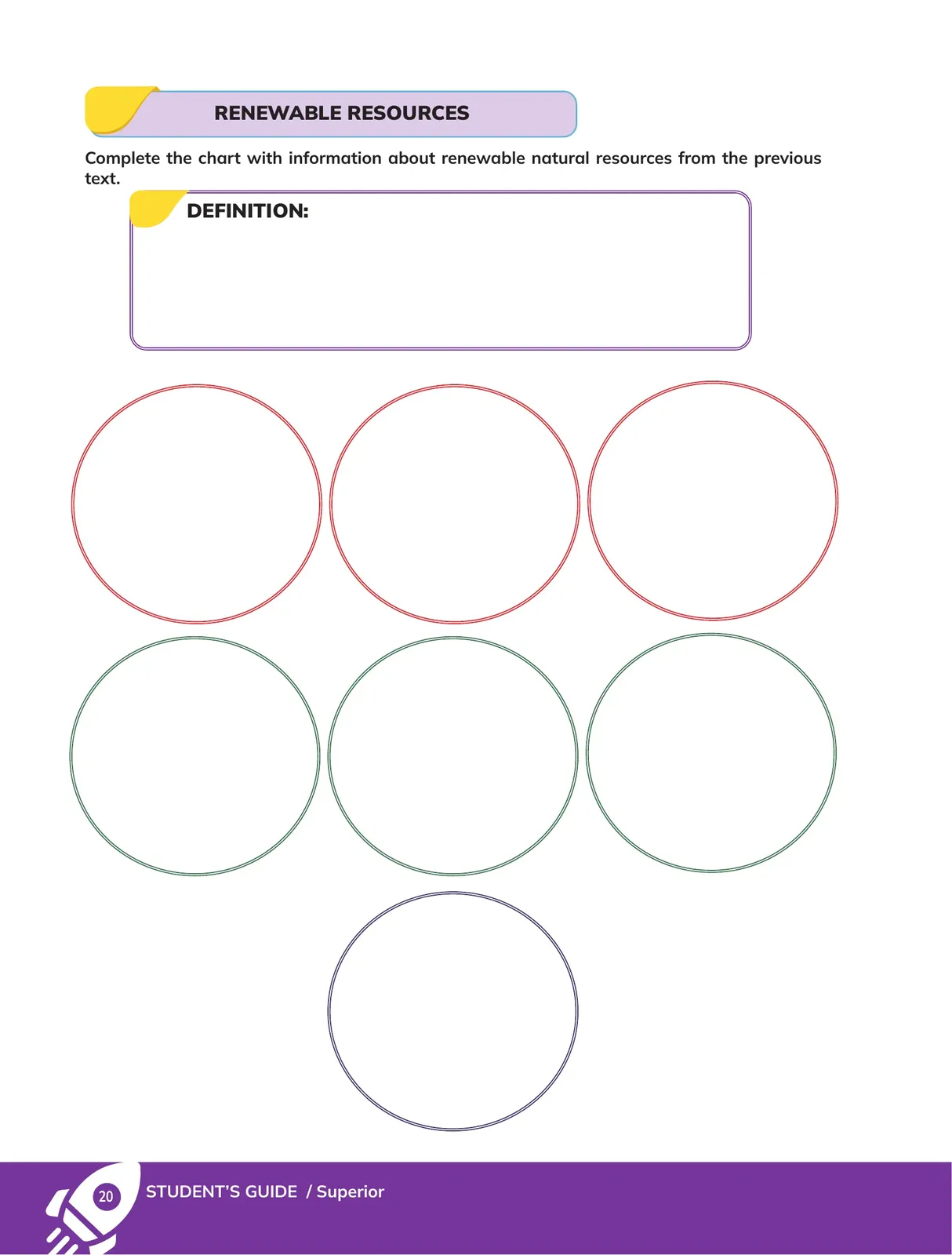
RENEWABLE RESOURCES

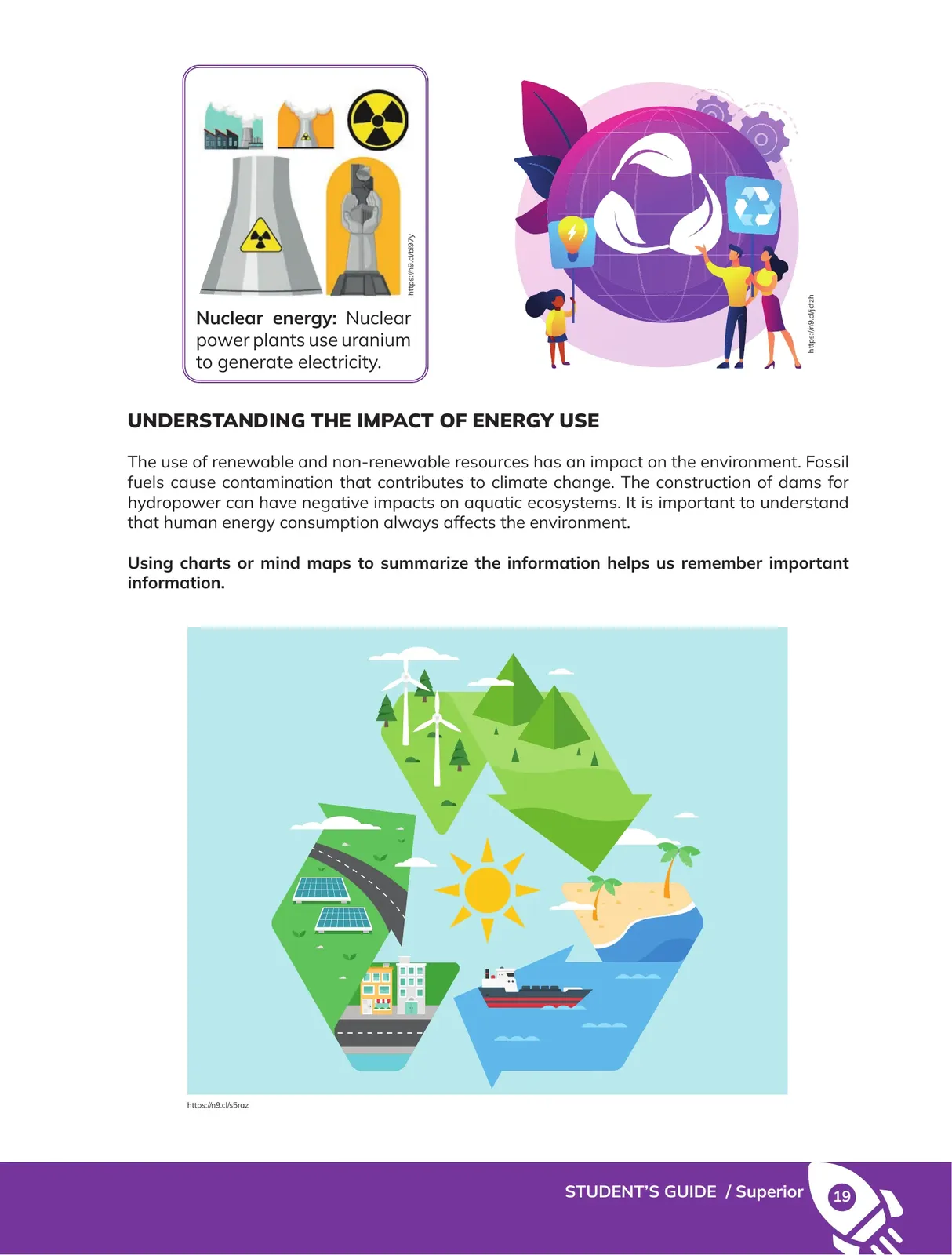
Renewable resources can be replaced in nature over time. These resources are considered sustainable because they can be used without causing too much harm to nature. Some examples of renewable resources are:

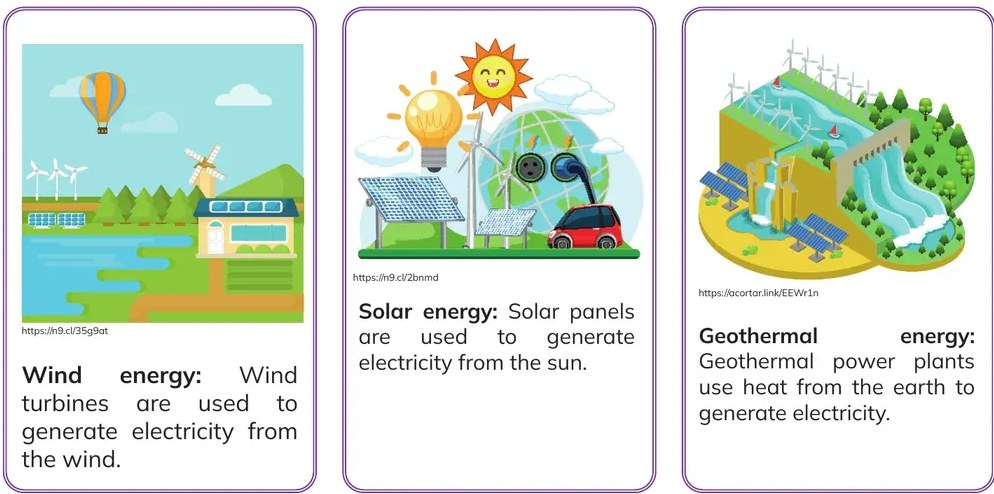
Wind energy

Wind turbines are used to generate electricity from the wind.

Solar energy

Solar panels are used to generate electricity from the sun.

Geothermal energy

Geothermal power plants use heat from the earth to generate electricity.
Preguntas abiertas

1
Ejercicio 1

** ¿Qué fuente de energía renovable es más común en Ecuador y por qué?

Respuesta orientativa: La hidroeléctrica (no mencionada explícitamente pero muy relevante en Ecuador, ej. Coca Codo Sinclair) debido a la abundancia de ríos y la geografía andina.

Diagrama 1

Clasificación de recursos naturales

flowchart TD
  NR[Natural Resources] --> R[Renewable]
  NR --> NRN[Non-renewable]
  R --> R1[Wind energy]
  R --> R2[Solar energy]
  R --> R3[Geothermal energy]
  R --> R4[Hydroelectric energy]

Glosario

  • natural resources: Recursos naturales: materiales obtenidos de la naturaleza.
  • renewable: Renovable, que se regenera con el tiempo.
  • non-renewable: No renovable, finito.
  • sustainable: Sostenible: que se puede mantener sin agotar.
  • wind turbine: Turbina eólica que aprovecha el viento.
  • solar panel: Panel solar que convierte luz en electricidad.
  • geothermal: Geotérmico: relativo al calor interno de la Tierra.
  • harm: Daño.

Fuentes

¿Te fue útil esta página?

Figuras de la página (1)

Sol antropomorfo iluminando un bombillo y un coche eléctrico conectado a panel solar.
Figura 2 image

Preguntas que la gente también hace

¿Qué fuente de energía renovable es más común en Ecuador y por qué?
Consulta la solución completa arriba o explora el libro entero para temas relacionados.
📌 Antes de leer esto
  • Ver pág. 17: Apertura del Worksheet 3.
  • Ver pág. 19: Continuación: recursos no renovables.
Siguiente tema sugerido
More renewable resources & Non-renewable resources
📝 Transcripción de la página (texto seleccionable) 976 caracteres

I KNOW... WANT TO KNOW... LEARNED

Natural resources are materials we get from nature. They can be classified into two types: renewable and non-renewable resources.

Renewable and non-renewable resources are used to produce energy. Understanding the differences between these two types of resources is important for understanding the impact of human activities on the environment.

RENEWABLE RESOURCES

Renewable resources can be replaced in nature over time. These resources are considered sustainable because they can be used without causing too much harm to nature. Some examples of renewable resources are:

EEEPIEEEE|

https:/in9.cl/2bnmd https:/lacortarlink/EEWrin

Solar energy: Solar panels are used to generate Geothermal energy: electricity from the sun. Geothermal power plants use heat from the earth to generate electricity.

https://n9.cl/35990t

Wind energy: Wind turbines are used to generate electricity from

the wind. a JA. Y) y,

STUDENT’S GUIDE / Superior

Ad

Otros libros recomendados

Ver todos →
Ad

Usamos cookies propias y de terceros para personalizar contenido, mostrar publicidad y analizar el tráfico. Las cookies necesarias siempre están activas.