Saltar al contenido
MisLibrosTexto
Ad
Ingles · 10 EGB · 2024

Ministerio de Educación del Ecuador

19/50

More renewable resources & Non-renewable resources

📄 contenido ingles 🎓 EGB · 10° EGB Ecuador 🇪🇨 EC 🗣 Español
Página 19
19 de 50
Página 19 de Ingles · 10 EGB · 2024
Anterior Página 19 / 50 Siguiente
📚 theory ingles ⭐⭐⭐ Dificultad 3/5 ⏱ 1 min lectura

Solución — Página 19

Ingles · 10 EGB · 2024

1
Ejercicio 1

Más recursos renovables

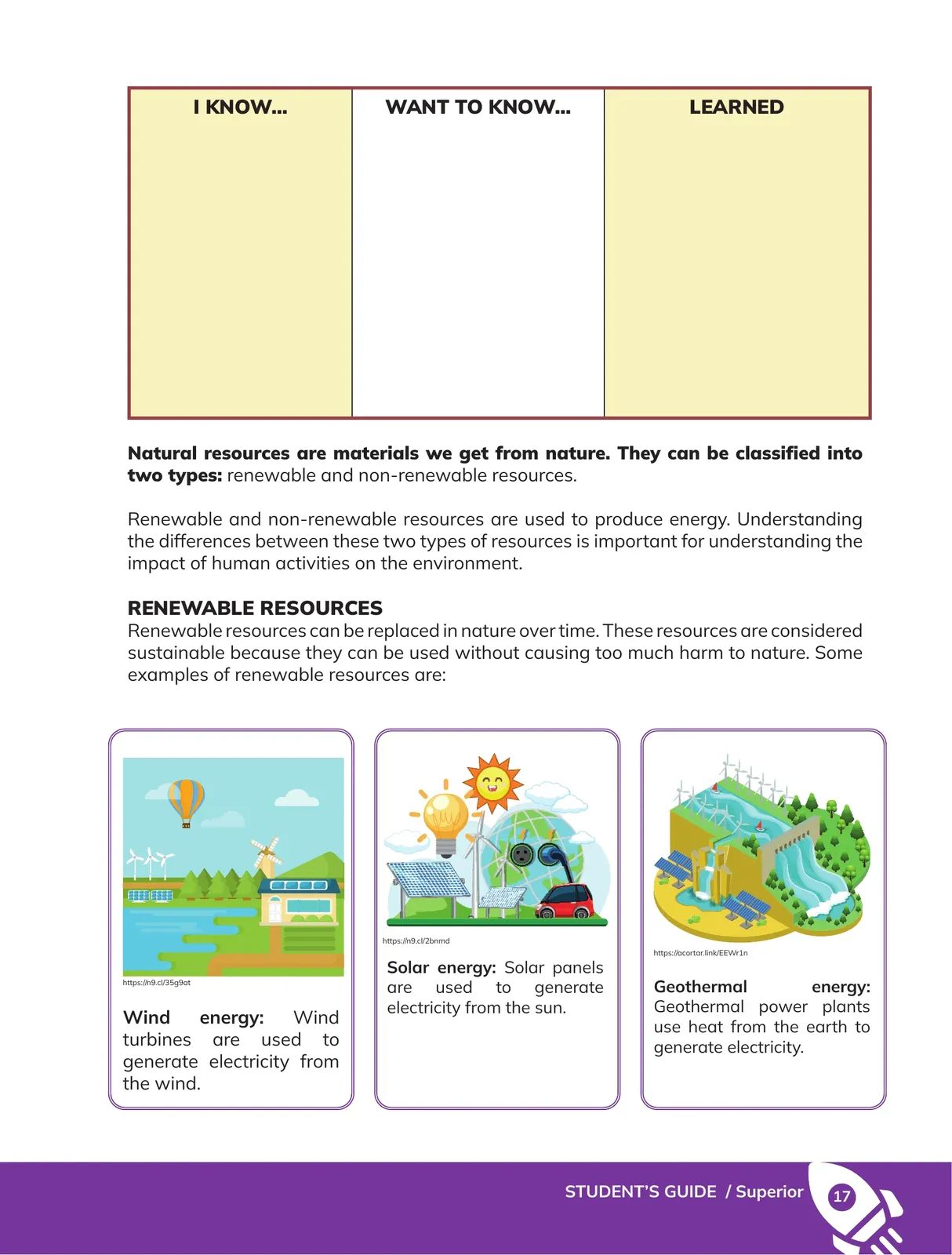
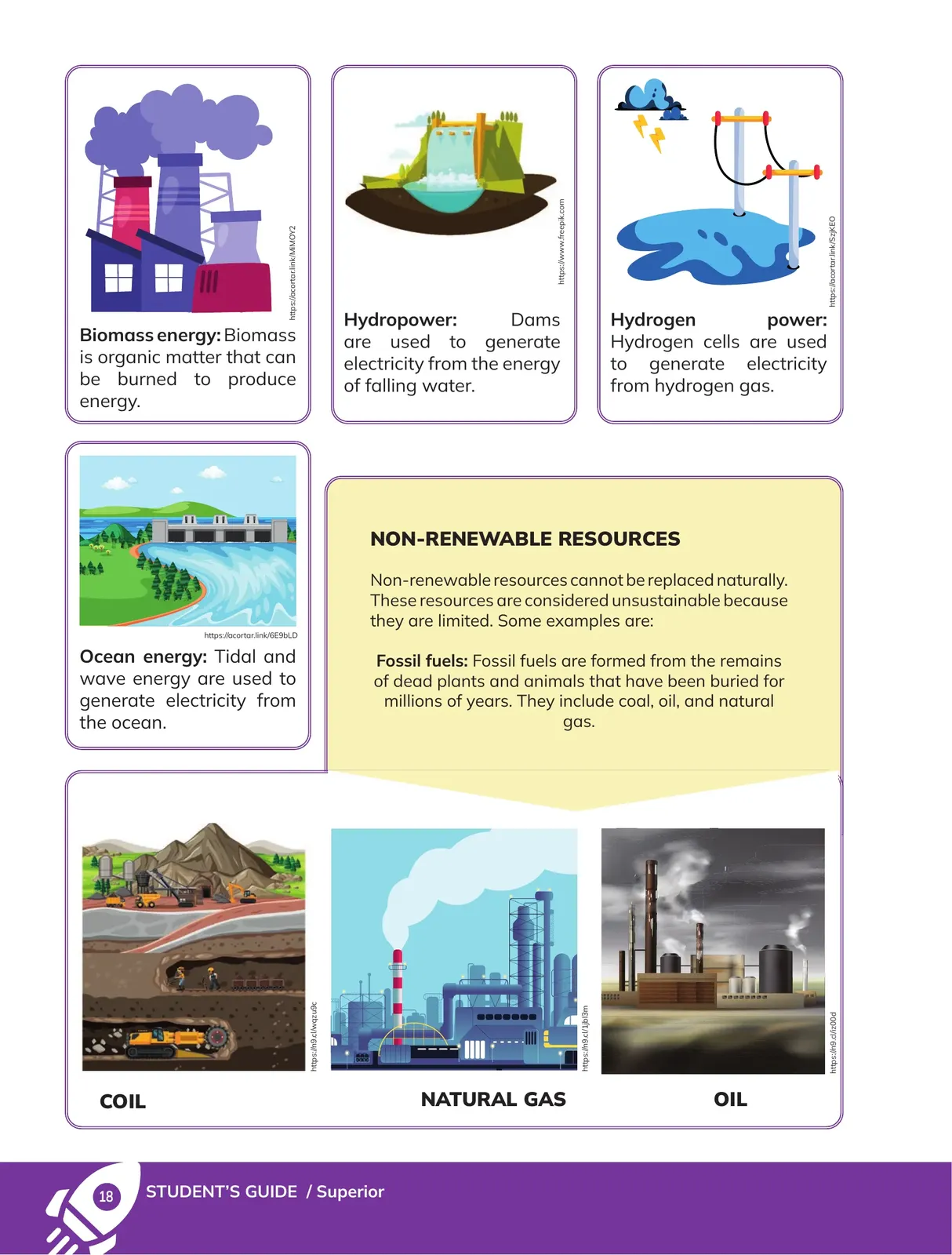
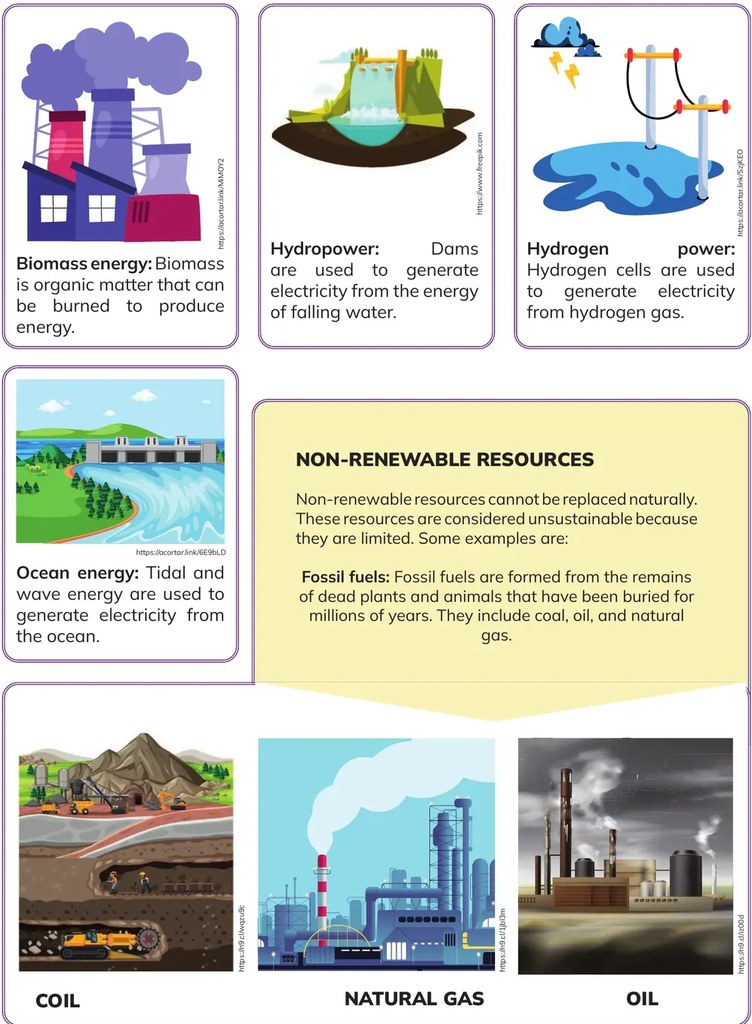
Biomass energy

Biomass is organic matter that can be burned to produce energy.

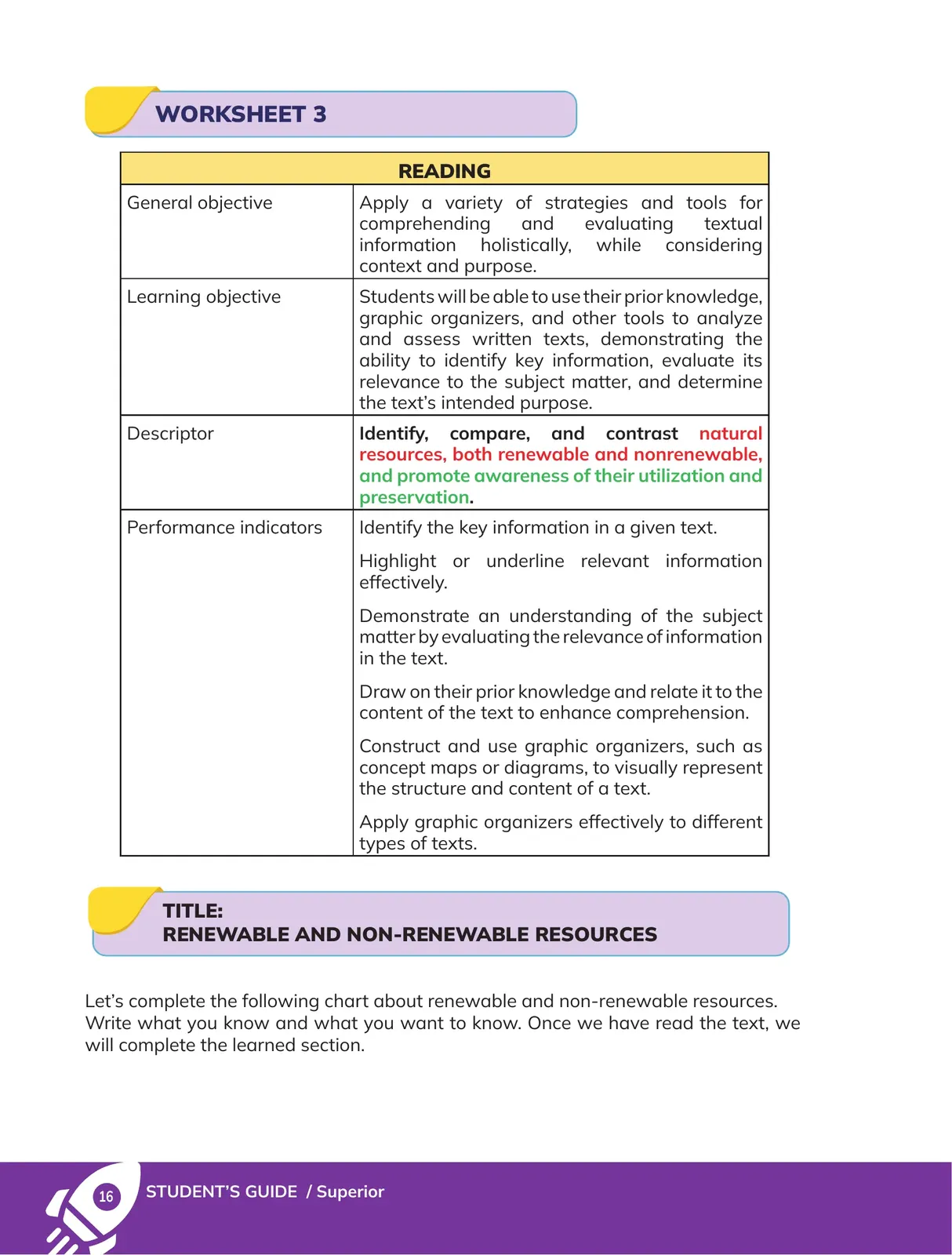
Hydropower

Dams are used to generate electricity from the energy of falling water.

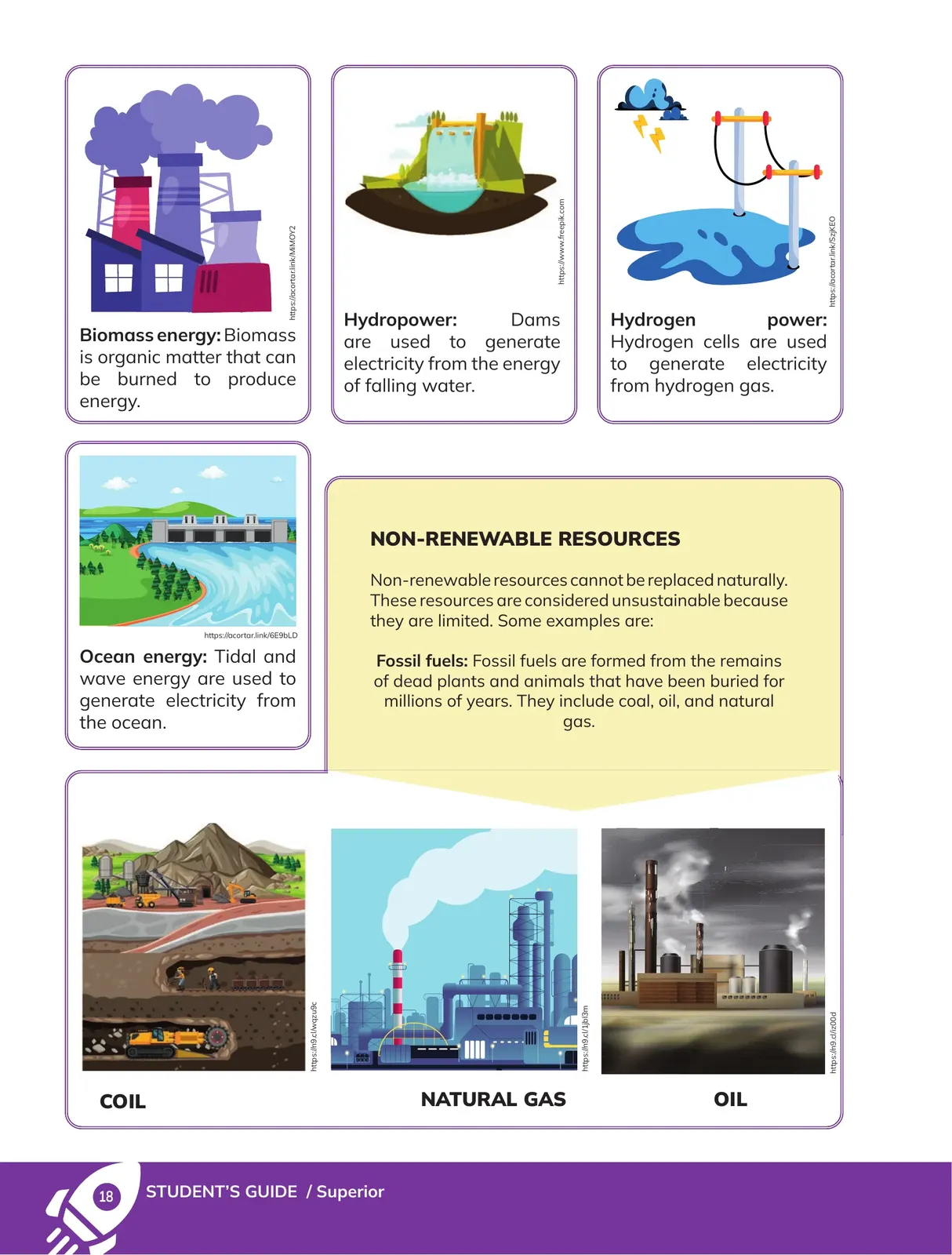
Hydrogen power

Hydrogen cells are used to generate electricity from hydrogen gas.

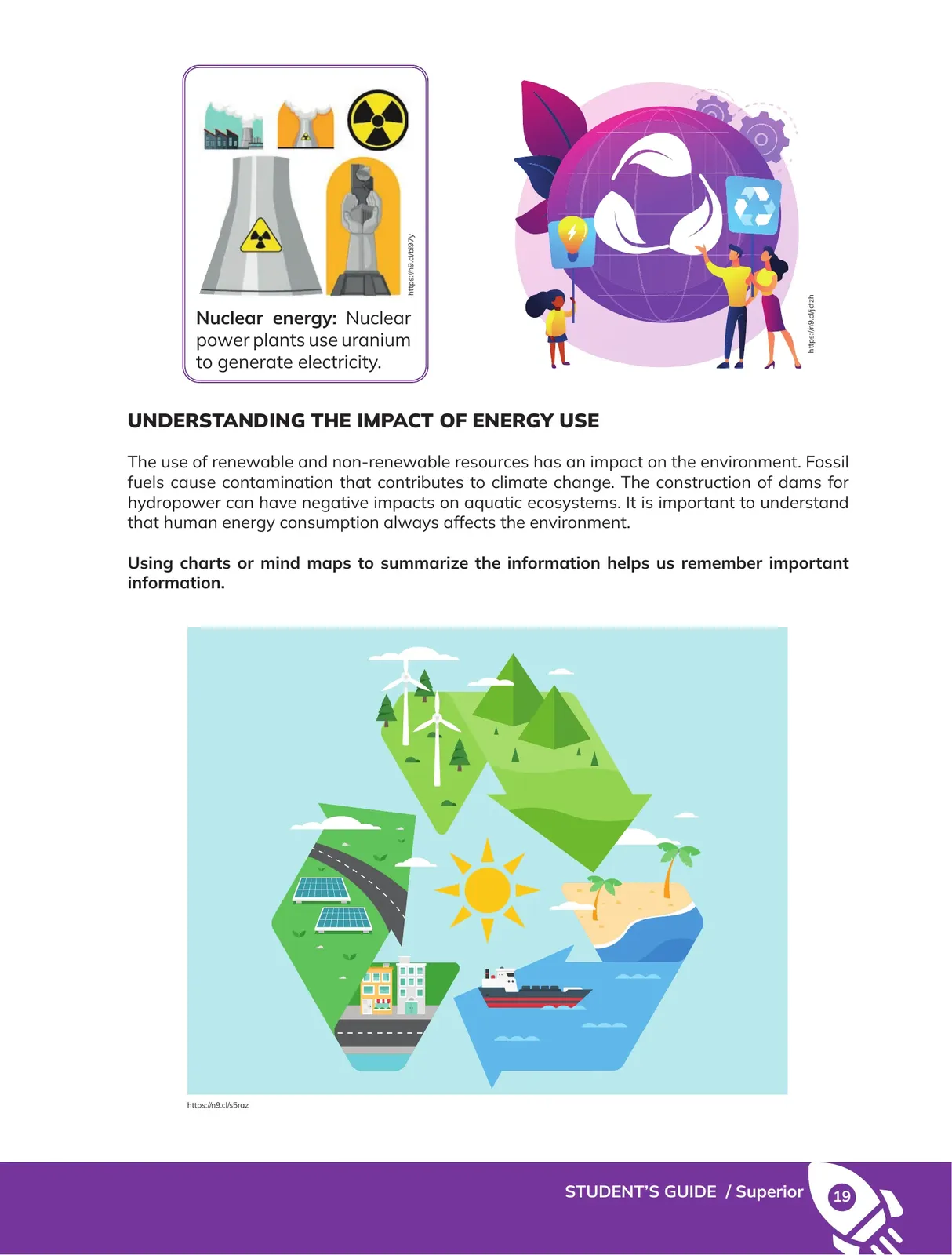
Ocean energy

Tidal and wave energy are used to generate electricity from the ocean.

NON-RENEWABLE RESOURCES

Non-renewable resources cannot be replaced naturally. These resources are considered unsustainable because they are limited. Some examples are:

Fossil fuels: Fossil fuels are formed from the remains of dead plants and animals that have been buried for millions of years. They include coal, oil, and natural gas.

Preguntas abiertas

1
Ejercicio 1

** ¿Por qué los combustibles fósiles tardan millones de años en formarse?

Respuesta orientativa: Porque requieren la descomposición lenta y enterramiento de materia orgánica bajo presión y calor durante eras geológicas.

Diagrama 1

Tipos de recursos renovables y no renovables

mindmap
  root((Natural Resources))
    Renewable
      Wind
      Solar
      Geothermal
      Biomass
      Hydropower
      Hydrogen
      Ocean
    Non-renewable
      Fossil fuels
        Coal
        Oil
        Natural gas

Glosario

  • biomass: Biomasa: materia orgánica usada como combustible.
  • hydropower: Energía hidroeléctrica.
  • dam: Represa, dique.
  • hydrogen: Hidrógeno (elemento químico H).
  • tidal: De marea (relativo a las mareas).
  • wave: Ola.
  • fossil fuels: Combustibles fósiles: carbón, petróleo y gas natural.
  • coal: Carbón mineral.
  • oil: Petróleo.
  • natural gas: Gas natural.
  • unsustainable: No sostenible.

Fuentes

¿Te fue útil esta página?

Figuras de la página (1)

Represa hidroeléctrica con agua cayendo.
Figura 2 image

Preguntas que la gente también hace

¿Por qué los combustibles fósiles tardan millones de años en formarse?
Consulta la solución completa arriba o explora el libro entero para temas relacionados.
📌 Antes de leer esto
  • Ver pág. 18: Continuación de recursos renovables.
  • Ver pág. 20: Energía nuclear e impacto del consumo energético.
Siguiente tema sugerido
Nuclear energy & Understanding the impact of energy use
📝 Transcripción de la página (texto seleccionable) 786 caracteres

Ne

https://acortar.link/6E9bLD Ocean energy: Tidal and wave energy are used to generate electricity from the ocean.

y

https:/hn9.clwqzu9c

NON-RENEWABLE RESOURCES

Non-renewable resources cannot be replaced naturally. These resources are considered unsustainable because they are limited. Some examples are:

Fossil fuels: Fossil fuels are formed from the remains of dead plants and animals that have been buried for millions of years. They include coal, oil, and natural

gas.

A f A f
. ] E Hydropower: Dams Hydrogen power: Biomass energy: Biomass are used to generate Hydrogen cells are used is organic matter that can electricity from the energy to generate electricity be burned to produce of falling water. from hydrogen gas. energy. O N 2. y 7 ~

httpsisin9.cl/iz00d

OIL

\

Ad

Otros libros recomendados

Ver todos →
Ad

Usamos cookies propias y de terceros para personalizar contenido, mostrar publicidad y analizar el tráfico. Las cookies necesarias siempre están activas.