















Saltar al contenido
MisLibrosTexto
Ad

Creativity at Work: designing games with tombolas

📄 ejercicios ingles 🎓 secundaria · 2° Secundaria México 🇲🇽 MX 🗣 Español
Página 102
102 de 171
Página 102 de Uérakua anapu uantakua. Projects and Readings.  Libro de Educación Secundaria Grado 2°  Ciclo Escolar 2025 - 2026
Anterior Página 102 / 171 Siguiente

Respuesta rápida

  1. Papelitos por categoría (juegos, materiales, modalidades). 2. Tres tómbolas rotuladas con abertura. 3. Juego diseñado con reglas, lugar y fecha.
📚 exercise ingles ⭐⭐ Dificultad 2/5 ⏱ 6 min lectura

Solución — Página 102

Uérakua anapu uantakua. Projects and Readings. Libro de Educación Secundaria Grado 2° Ciclo Escolar 2025 - 2026

1
Ejercicio 1

In communities, write on slips of paper the information on the games, instructions, or objects you have agreed on for the following categories.

a
Parte 1.a

Types of games

  1. Se acuerdan en comunidad los tipos de juegos posibles.
  2. Se escriben en papelitos ejemplos como: chase (persecución), cooperative (cooperativo), divided court (cancha dividida).
  3. Se agregan otros: relay races, tag, hide and seek.
Respuesta

Papelitos con: chase, cooperative, divided court, relay race, tag.

b
Parte 1.b

Materials

  1. Se listan los materiales disponibles en el entorno.
  2. Se anotan cantidades concretas: two balls, three hoops, two ropes.
  3. Se añaden otros: cones, chalk, scarves.
Respuesta

two balls, three hoops, two ropes, cones, chalk.

c
Parte 1.c

Work modalities

  1. Se definen formas de participar.
  2. Se escriben: holding hands, in pairs, using only the lower extremities.
  3. Se añaden: in teams of four, blindfolded, hopping.
Respuesta

holding hands, in pairs, using only the lower extremities, in teams of four.
2
Ejercicio 2

Get cardboard boxes, one for each category. These will be the tombolas.

a
Parte 2.a

Opening

  1. Se toma una caja de cartón por categoría.
  2. Se recorta un orificio en un lado lo bastante grande para meter la mano.
Respuesta

Caja con abertura lateral para la mano.

b
Parte 2.b

Decorate and label

  1. Se forra o pinta cada caja.
  2. Se etiqueta con el nombre de la categoría: Types of games, Materials, Work modalities.
Respuesta

Tres tómbolas decoradas y rotuladas.

c
Parte 2.c

Fold and insert

  1. Se dobla cada papelito.
  2. Se introduce en la tómbola de su categoría.
Respuesta

Papelitos doblados dentro de la tómbola correspondiente.

3
Ejercicio 3

Shake the tombolas to mix up the papers.

a
Parte 3.a

Draw

  1. Cada comunidad agita su tómbola.
  2. Un representante extrae un papel de cada tómbola.
Respuesta

Un papel por categoría extraído al azar.

b
Parte 3.b

Design a game

  1. Con los tres papelitos se combina: tipo de juego + materiales + modalidad.
  2. Ejemplo: cooperative + two balls + in pairs.
  3. Se redactan las reglas: objetivo, número de jugadores, acciones permitidas, faltas y puntaje.
Respuesta

Juego diseñado con reglas escritas que integran las tres categorías.

c
Parte 3.c

Place and day

  1. Se elige un espacio seguro y amplio (patio, cancha).
  2. Se fija fecha y hora.
Respuesta

Lugar y día definidos en el calendario del grupo.

Contenido de la página

Creativity at Work

  1. In communities, write on slips of paper the information on the games, instructions, or objects you have agreed on for the following categories:

    • a) Types of games: chase, cooperative, divided court, among others.
    • b) Materials: two balls, three hoops, two ropes. Consider objects available in your surroundings.
    • c) Work modalities: holding hands, in pairs, using only the lower extremities, among others.
  2. Get cardboard boxes, one for each category. These will be the tombolas.

    • a) Make an opening on one side of each box so that your hand can fit through.
    • b) Decorate and label each tombola according to the established category.
    • c) Fold each sheet of paper and insert it into the corresponding tombola.
  3. Shake the tombolas to mix up the papers.

    • a) Each community draws a paper from each tombola.
    • b) Design a game based on the information from each piece of paper obtained from the tombola. Include all the participation actions and game rules.
    • c) Define the place and the day to play the games.

Ejemplos resueltos

Combinar los papelitos: cooperative + two balls + in pairs.

Juego cooperativo con dos balones donde los participantes juegan en parejas; gana el equipo que logre más pases sin dejar caer el balón.

Tabla

Categoría Ejemplos
Types of games chase, cooperative, divided court
Materials two balls, three hoops, two ropes
Work modalities holding hands, in pairs, lower extremities

Diagrama

flowchart TD
A[Escribir papelitos] --> B[Cajas/tombolas]
B --> C[Recortar abertura]
C --> D[Decorar y rotular]
D --> E[Doblar e insertar]
E --> F[Agitar tombolas]
F --> G[Extraer un papel por categoría]
G --> H[Diseñar juego y reglas]
H --> I[Definir lugar y día]

Glosario (5)

tombola
Caja o recipiente donde se depositan papelitos doblados para sortearlos al azar.
chase
Juego de persecución donde un jugador corre tras los demás.
divided court
Juego de cancha dividida, cada equipo ocupa la mitad del espacio.
hoop
Aro o argolla que se usa como material en juegos.
lower extremities
Extremidades inferiores: piernas y pies.

Preguntas para practicar

Why is it useful to decide the game categories in community?

Because it ensures everyone's ideas are included and the game reflects the group's interests and available resources.

How does the tombola make the game design more creative?

It forces random combinations of game type, materials and modality, which sparks unexpected and original rules.

Temas y conceptos clave

Creativity at WorkTombolasDiseño de juegostypes of gamesmaterialswork modalitiestombolagame rules
¿Te fue útil esta página?

Figuras de la página (3)

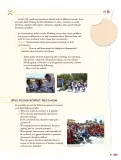
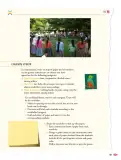
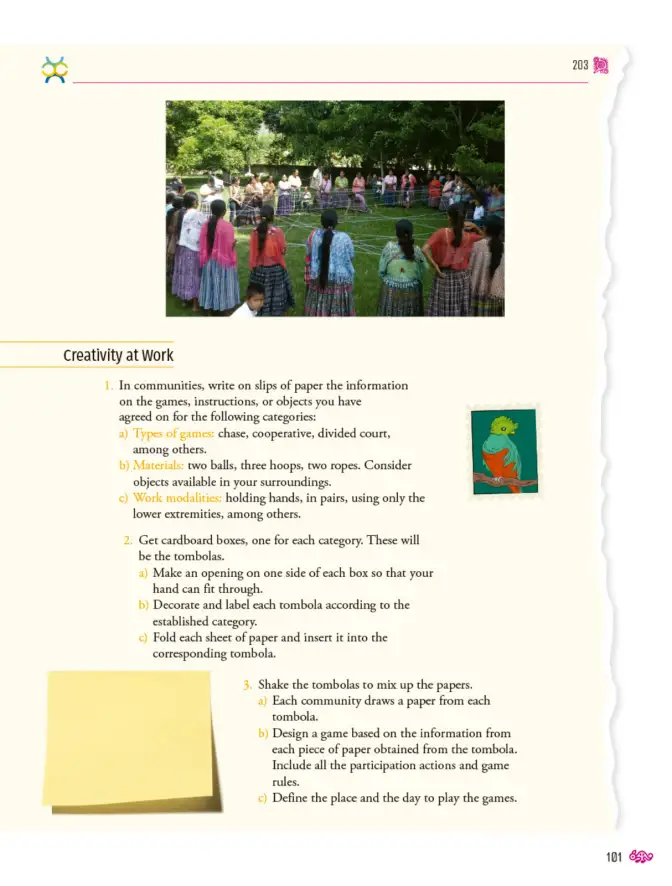
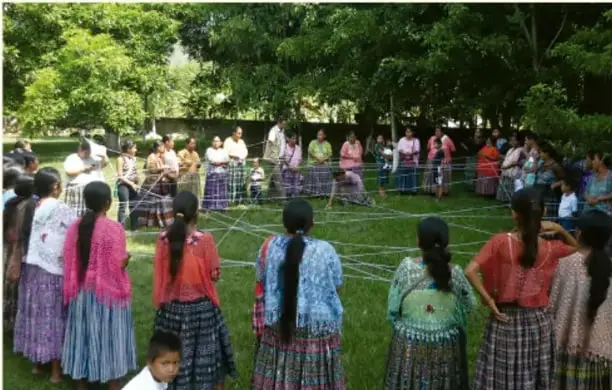
Grupo de personas de comunidades indígenas reunidas en círculo al aire libre, algunas sentadas y otras de pie, participando en una actividad comunitaria.
Figura 1 image
Ilustración de un ave colorida posada sobre una rama, tipo postal.
Figura 2 image
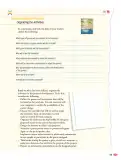
Nota adhesiva amarilla en blanco.
Figura 3 image

Preguntas que la gente también hace

¿Qué es una tómbola y cómo se usa en clase?
Consulta la solución completa arriba o explora el libro entero para temas relacionados.
¿Cómo diseñar un juego cooperativo paso a paso?
Consulta la solución completa arriba o explora el libro entero para temas relacionados.
¿Qué materiales reciclados sirven para juegos escolares?
Consulta la solución completa arriba o explora el libro entero para temas relacionados.
📌 Antes de leer esto
  • • Vocabulario básico de juegos en inglés
  • • Trabajo en equipo
  • • Uso de tijeras y materiales reciclados
Siguiente tema sugerido
Presentación oral de las reglas del juego en inglés
📝 Transcripción de la página (texto seleccionable) 1165 caracteres

Creativity at Work

  1. In communities, write on slips of paper the information on the games, instructions, or objects you have agreed on for the following categories:

a) Types of games: chase, cooperative, divided court,among others.

b) Materials: two balls, three hoops, two ropes. Consider objects available in your surroundings.

c) Work modalities: holding hands, in pairs, using only the lower extremities, among others.

  1. Get cardboard boxes, one for each category. These will be the tombolas.

a) Make an opening on one side of each box so that your hand can fit through.

b) Decorate and label each tombola according to the established category.

) Fold each sheet of paper and insert it into the corresponding tombola.

  1. Shake the tombolas to mix up the papers.

a) Each community draws a paper from each tombola.

b) Design a game based on the information from each piece of paper obtained from the tombola.Include all the participation actions and game rules.

c) Define the place and the day to play the games.

č

203

![](page=0,bbox=[297, 179, 909, 569])

![](page=0,bbox=[844, 733, 972, 893])

![](page=0,bbox=[82, 1210, 402, 1466])

101

8

Ad

Otros libros recomendados

Ver todos →
Ad

Usamos cookies propias y de terceros para personalizar contenido, mostrar publicidad y analizar el tráfico. Las cookies necesarias siempre están activas.