
















Saltar al contenido
MisLibrosTexto
Ad

Solubilidad y conductividad eléctrica de materiales

📄 ejercicios ciencias-naturales 🎓 bachillerato · 3° Secundaria México 🇲🇽 MX 🗣 Español
Página 46
46 de 187
Página 46 de Uérakua anapu uantakua. Projects and Readings.  Libro de Educación Secundaria Grado 3°  Ciclo Escolar 2025 - 2026
Anterior Página 46 / 187 Siguiente

Respuesta rápida

  1. Sal, azúcar y bicarbonato solubles; talco insoluble. 6a) Control: agua destilada. 6b) Sal se disuelve hasta saturación. 6c) Solubles: azúcar, bicarbonato; poco soluble: ácido acetilsalicílico. 6d) Conducen: sal, bicarbonato, vinagre. 6e) Vinagre conduce; alcohol no.
📚 exercise ciencias-naturales ⭐⭐ Dificultad 2/5 ⏱ 8 min lectura

Solución — Página 46

Uérakua anapu uantakua. Projects and Readings. Libro de Educación Secundaria Grado 3° Ciclo Escolar 2025 - 2026

5
Ejercicio 5

Once you get the conductivity meter, test the solubility of the materials and include those that were mentioned in your interview.

  1. Reunir los materiales de la lista: 10 cucharadas de sal, 50 ml de vinagre, 50 ml de alcohol, 3 cucharadas de talco, 10 cucharadas de azúcar, 10 cucharadas de bicarbonato de sodio, 2 tabletas de ácido acetilsalicílico, colorante en polvo, 1 L de agua destilada o de plancha, 50 g de café instantáneo, vasos plásticos, un biberón, etiquetas y marcador indeleble.
  2. Etiquetar cada vaso con el nombre de la sustancia que contendrá.
  3. Probar la solubilidad de cada material agregándolo al agua y agitando; anotar si se disuelve por completo, parcialmente o no se disuelve.
  4. Registrar también las sustancias mencionadas en la entrevista previa.

Respuesta orientativa: Se espera que los sólidos iónicos como la sal, el azúcar y el bicarbonato se disuelvan en agua; el talco y el café instantáneo forman mezclas heterogéneas o suspensiones; el ácido acetilsalicílico es poco soluble en agua fría. Los líquidos como el vinagre y el alcohol se mezclan con el agua, mientras que el colorante en polvo se disuelve dando color.
6
Ejercicio 6

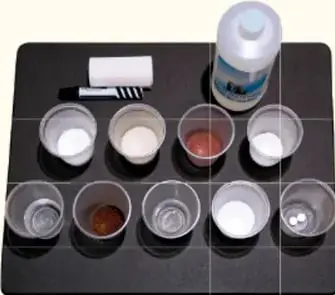
Place the glasses as follows:

a
Parte 6.a

Glass 1 will be the control, which means that it only contains water for the iron (distilled water).

  1. Verter agua destilada en el vaso 1 hasta un cuarto de su capacidad.
  2. No agregar ninguna sustancia; será el control negativo.
Respuesta

El vaso 1 contiene solo agua destilada y sirve como referencia de comparación.

b
Parte 6.b

Pour ironing water into glass 2 until it covers a quarter of the container. Add salt until saturation point is reached; that is, until the salt is no longer dissolved. Answer in your notebook how easy it was to dissolve the salt and then saturate the water with salt.

  1. Llenar el vaso 2 con agua de plancha hasta un cuarto de su volumen.
  2. Agregar sal poco a poco y agitar; al inicio se disuelve rápido.
  3. Continuar agregando sal hasta que aparezca sedimento en el fondo y ya no se disuelva: punto de saturación.

Respuesta orientativa: La sal se disolvió con facilidad al principio porque el agua tiene alta polaridad y separa los iones \text{Na}^{+} y \text{Cl}^{-}. Al acercarse a la saturación, cada vez costó más disolverla hasta que quedó sal sin disolver en el fondo.

c
Parte 6.c

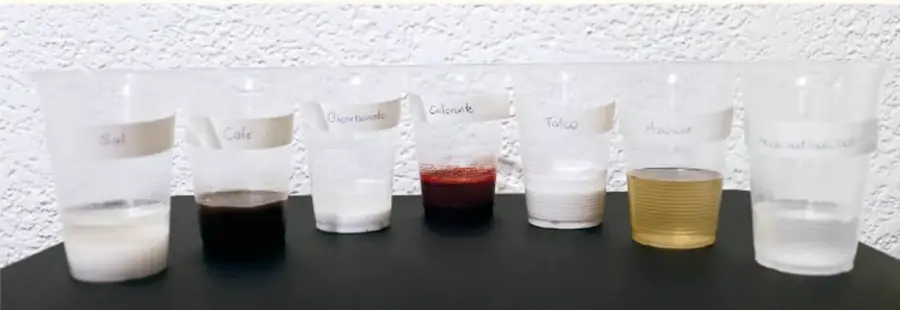
Repeat the previous steps with the other solid substances: talcum powder, sugar, baking soda, instant coffee, and acetylsalicylic acid. Write down whether the substances were soluble or not.

  1. Repetir el procedimiento en vasos separados con talco, azúcar, bicarbonato, café instantáneo y ácido acetilsalicílico.
  2. Agitar y observar si la sustancia se disuelve completamente.
Respuesta

Azúcar y bicarbonato: solubles. Talco: insoluble (suspensión). Café instantáneo: parcialmente soluble. Ácido acetilsalicílico: poco soluble en agua fría.

d
Parte 6.d

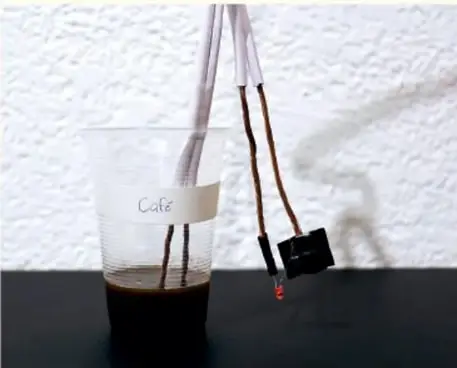
Once the containers are ready, place the tips of the conductivity meter into each mixture and record whether the light turned on or not. Between each measurement, rinse the tips with distilled water.

  1. Introducir las puntas del medidor de conductividad en cada mezcla.
  2. Observar si el foco se enciende y anotar el resultado.
  3. Enjuagar las puntas con agua destilada entre cada medición.
Respuesta

Se enciende con disoluciones de sal, bicarbonato y vinagre (electrolitos). No se enciende con agua destilada, alcohol, azúcar ni talco.

e
Parte 6.e

Place each type of liquid separately in a different glass; immerse the tips of the cable and record if the light turned on or not.

  1. Colocar vinagre, alcohol y agua de plancha en vasos separados.
  2. Sumergir las puntas del cable en cada líquido.
  3. Registrar si el foco se enciende.
Respuesta

El vinagre y el agua de plancha conducen electricidad (foco encendido); el alcohol no conduce (foco apagado).

Contenido de la página

5. Once you get the conductivity meter, test the solubility of the materials and include those that were mentioned in your interview.

  • 10 tablespoons of salt
  • 50 ml of vinegar
  • 50 ml of alcohol
  • 3 tablespoons of talcum powder
  • 10 tablespoons of sugar
  • 10 tablespoons of baking soda
  • 2 powdered acetylsalicylic acid tablets
  • Coloring powder
  • 1 l of distilled water or ironing water
  • 50 g of instant coffee
  • Other substances you use daily
  • Plastic cups
  • A feeding bottle
  • Labels and indelible marker

6. Place the glasses as follows:

a) Glass 1 will be the control, which means that it only contains water for the iron (distilled water).

b) Pour ironing water into glass 2 until it covers a quarter of the container. Add salt until saturation point is reached; that is, until the salt is no longer dissolved. Answer in your notebook how easy it was to dissolve the salt and then saturate the water with salt.

c) Repeat the previous steps with the other solid substances: talcum powder, sugar, baking soda, instant coffee, and acetylsalicylic acid. Write down whether the substances were soluble or not.

d) Once the containers are ready, place the tips of the conductivity meter into each mixture and record whether the light turned on or not. Between each measurement, rinse the tips with distilled water.

e) Place each type of liquid separately in a different glass; immerse the tips of the cable and record if the light turned on or not.

Tabla

Sustancia ¿Soluble en agua? ¿Conduce electricidad?
Sal Sí Sí
Azúcar Sí No
Bicarbonato Sí Sí
Talco No No
Café instantáneo Parcial No
Ácido acetilsalicílico Poco No
Vinagre Sí Sí
Alcohol Sí No
Agua destilada — No

Glosario (5)

solubility
Capacidad de una sustancia para disolverse en otra.
saturation point
Momento en que el disolvente ya no admite más soluto y este queda sin disolver.
conductivity meter
Instrumento que detecta si una disolución conduce electricidad.
control
Muestra de referencia sin la variable estudiada.
distilled water
Agua purificada sin sales ni minerales.

Preguntas para practicar

How easy was it to dissolve the salt and then saturate the water with salt?

Al inicio la sal se disolvió rápidamente porque el agua es polar y separa los iones. Conforme se agregó más sal, el proceso se volvió más lento hasta que apareció sedimento y ya no se disolvió más, alcanzando el punto de saturación.

Temas y conceptos clave

SolubilidadConductividad eléctricaDisolucionessolutodisolventesaturaciónelectrolitocontrol experimental
¿Te fue útil esta página?

Figuras de la página (3)

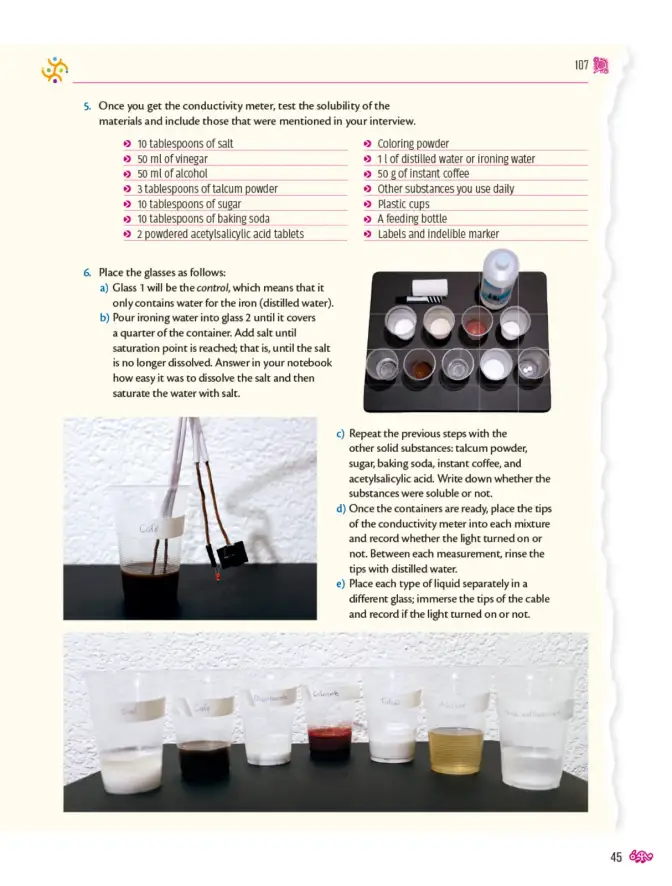
Bandeja con vasos pequeños que contienen distintas sustancias en polvo y líquidos, junto a un frasco de agua.
Figura 1 image
Vaso con agua y café, con las puntas de un medidor de conductividad sumergidas.
Figura 2 image
Fila de vasos etiquetados con sal, café, bicarbonato, colorante, talco, azúcar y ácido acetilsalicílico.
Figura 3 image

Preguntas que la gente también hace

¿Por qué la sal conduce electricidad en agua pero el azúcar no?
Consulta la solución completa arriba o explora el libro entero para temas relacionados.
¿Qué es el punto de saturación de una disolución?
Consulta la solución completa arriba o explora el libro entero para temas relacionados.
¿Cómo hacer un medidor de conductividad casero?
Consulta la solución completa arriba o explora el libro entero para temas relacionados.
📌 Antes de leer esto
  • • Mezclas homogéneas y heterogéneas
  • • Propiedades de la materia
  • • Circuito eléctrico simple
Siguiente tema sugerido
Métodos de separación de mezclas: filtración, evaporación y destilación
📝 Transcripción de la página (texto seleccionable) 1583 caracteres
  1. Once you get the conductivity meter, test the solubility of the materials and include those that were mentioned in your interview.

10 tablespoons of salt 50ml of vinegar

50 ml of alcohol

3 tablespoons of talcum powder )10 tablespoons of sugar 》10 tablespoons of baking soda 2 powdered acetylsalicylic acid tablets

6. Place the glasses as follows:

a) Glass 1 will be the control, which means that it only contains water for the iron (distilled water).

b) Pour ironing water into glass 2 until it covers a quarter of the container. Add salt until saturation point is reached; that is, until the salt is no longer dissolved. Answerin your notebook how easy it was to dissolve the salt and then saturate the water with salt.

7Coloring powder

1 l of distilled water or ironing water 50 g of instant coffee

Other substances you use daily 》Plastic cups

A feeding bottle

Labels and indelible marker

C)Repeat the previous steps with the other solid substances: talcum powder,sugar, baking soda, instant coffee, and acetylsalicylic acid. Write down whether the substances were soluble or not.

d) Once the containers are ready, place the tips of the conductivity meter into each mixture and record whether the light turned on or not. Between each measurement, rinse the tips with distilled water.

e)Place each type of liquid separately in a different glass; immerse the tips of the cable and record if the light turned on or not.

107

![](page=0,bbox=[114, 749, 571, 1117])

![](page=0,bbox=[656, 448, 991, 743])

![](page=0,bbox=[115, 1138, 1060, 1463])

45

Ad

Otros libros recomendados

Ver todos →
Ad

Usamos cookies propias y de terceros para personalizar contenido, mostrar publicidad y analizar el tráfico. Las cookies necesarias siempre están activas.