Saltar al contenido
MisLibrosTexto
Ad
Guia Docente · Inicial · 2024

Ministerio de Educación del Ecuador

53/54

Anexo 2 (continuación): Strategies for Interdisciplinary Work and Cross-Cutting Competencies

📄 otro guia-docente 🎓 Inicial Inicial Ecuador 🇪🇨 EC 🗣 Español
Página 53
53 de 54
Página 53 de Guia Docente · Inicial · 2024
Anterior Página 53 / 54 Siguiente
guia-docente ⭐⭐⭐ Dificultad 3/5 ⏱ 1 min lectura

Solución — Página 53

Guia Docente · Inicial · 2024

1
Ejercicio 1

Teaching Strategies for the Development of Key Competencies and Interdisciplinary Work

Comprehensive teaching strategies for cultivating foundational and cross-cutting competencies across chosen fields and subjects, showcasing interdisciplinary work, encompass:

i
Parte 1.i

nterdisciplinary Approach

Integrate diverse subjects to offer students a comprehensive learning experience. Recognize connections between various areas of study.

r
Parte 1.r

eal-World Examples

Utilize real-world examples and case studies. Demonstrate practical applications of learning.

c
Parte 1.c

ross-Cutting Skills

Prioritize critical thinking, teamwork, problem-solving and collaboration with diverse peers. These skills are indispensable across fields.

c
Parte 1.c

ollaborative Projects

Foster group work and collaboration. Encourage effective communication, negotiation and empathy.

r
Parte 1.r

ubrics and Assessment Tools

Employ rubrics to gauge advancement in different competencies. Helps students recognize strengths and areas of improvement; provides educators with insights.

r
Parte 1.r

eflection and Self-Assessment

Cultivate regular reflection and self-assessment. Enables students to evaluate their own learning, identify areas for enhancement and develop a growth mindset for continuous improvement.
Preguntas abiertas

1
Ejercicio 1

** ¿Cómo introduzco la autoevaluación en niños de educación inicial?

Respuesta orientativa: Mediante caritas (felices, neutras, tristes), semáforos del aprendizaje, dibujos representando 'qué aprendí hoy', diálogos breves al cierre de la sesión.

Diagrama 1

Six interdisciplinary teaching strategies

mindmap
  root((Interdisciplinary Strategies))
    Interdisciplinary approach
    Real-world examples
    Cross-cutting skills
      Critical thinking
      Teamwork
      Problem-solving
    Collaborative projects
    Rubrics & Assessment
    Reflection & Self-assessment
      Growth mindset

Glosario

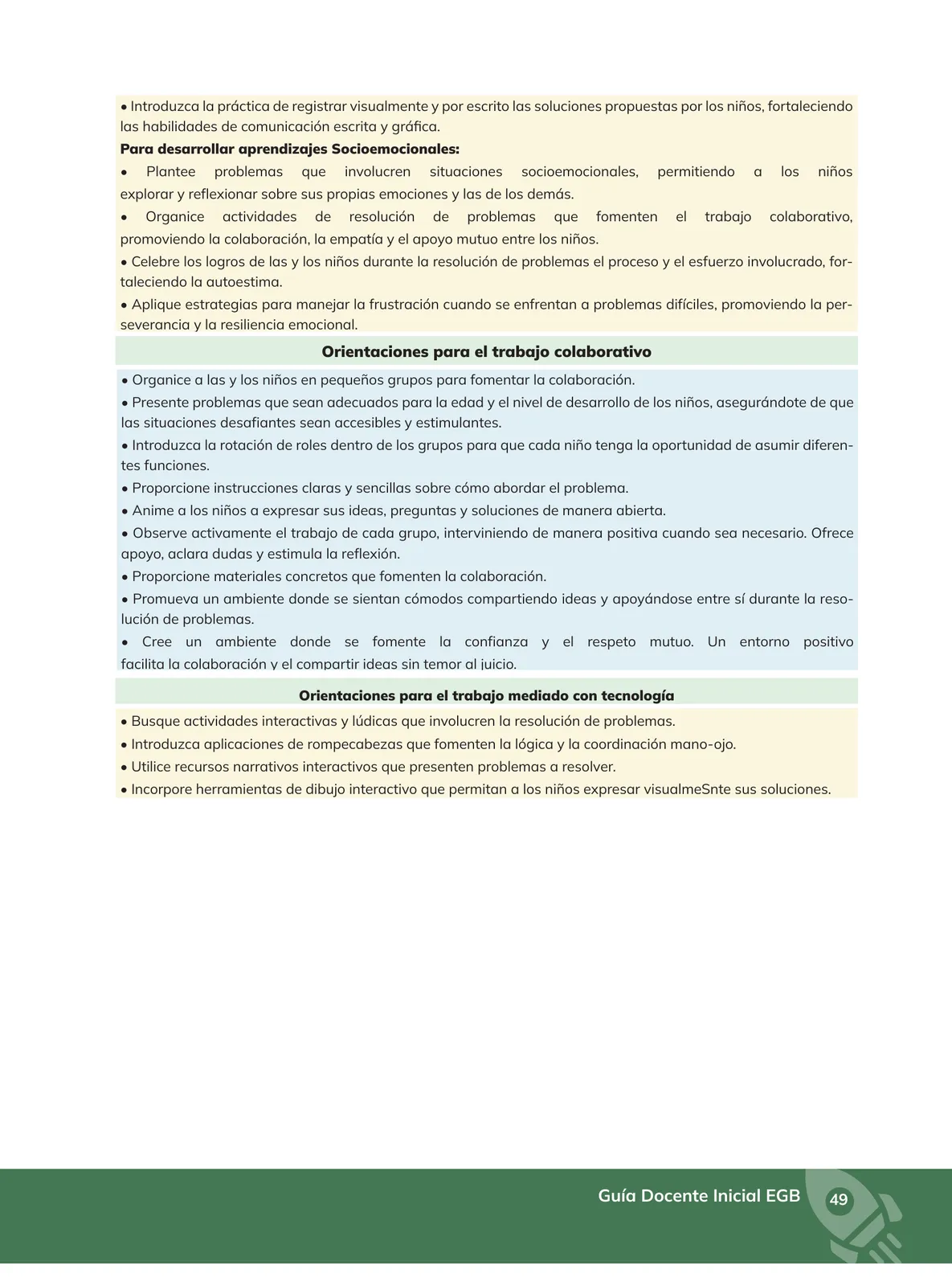
  • interdisciplinary approach: Teaching strategy that integrates two or more disciplines to address a topic or problem holistically.
  • cross-cutting skills: Transversal competencies applicable across different domains (critical thinking, communication, collaboration).
  • rubric: Scoring tool that lists criteria and performance levels to evaluate student work.
  • growth mindset: Belief that abilities can be developed through dedication and hard work (Carol Dweck).
  • self-assessment: Process where students evaluate their own work or learning.
¿Te fue útil esta página?

Preguntas que la gente también hace

¿Cómo introduzco la autoevaluación en niños de educación inicial?
Consulta la solución completa arriba o explora el libro entero para temas relacionados.
📌 Antes de leer esto
  • Ver pág. 54: Contraportada institucional.
Siguiente tema sugerido
Contraportada — República del Ecuador y redes oficiales
📝 Transcripción de la página (texto seleccionable) 1558 caracteres

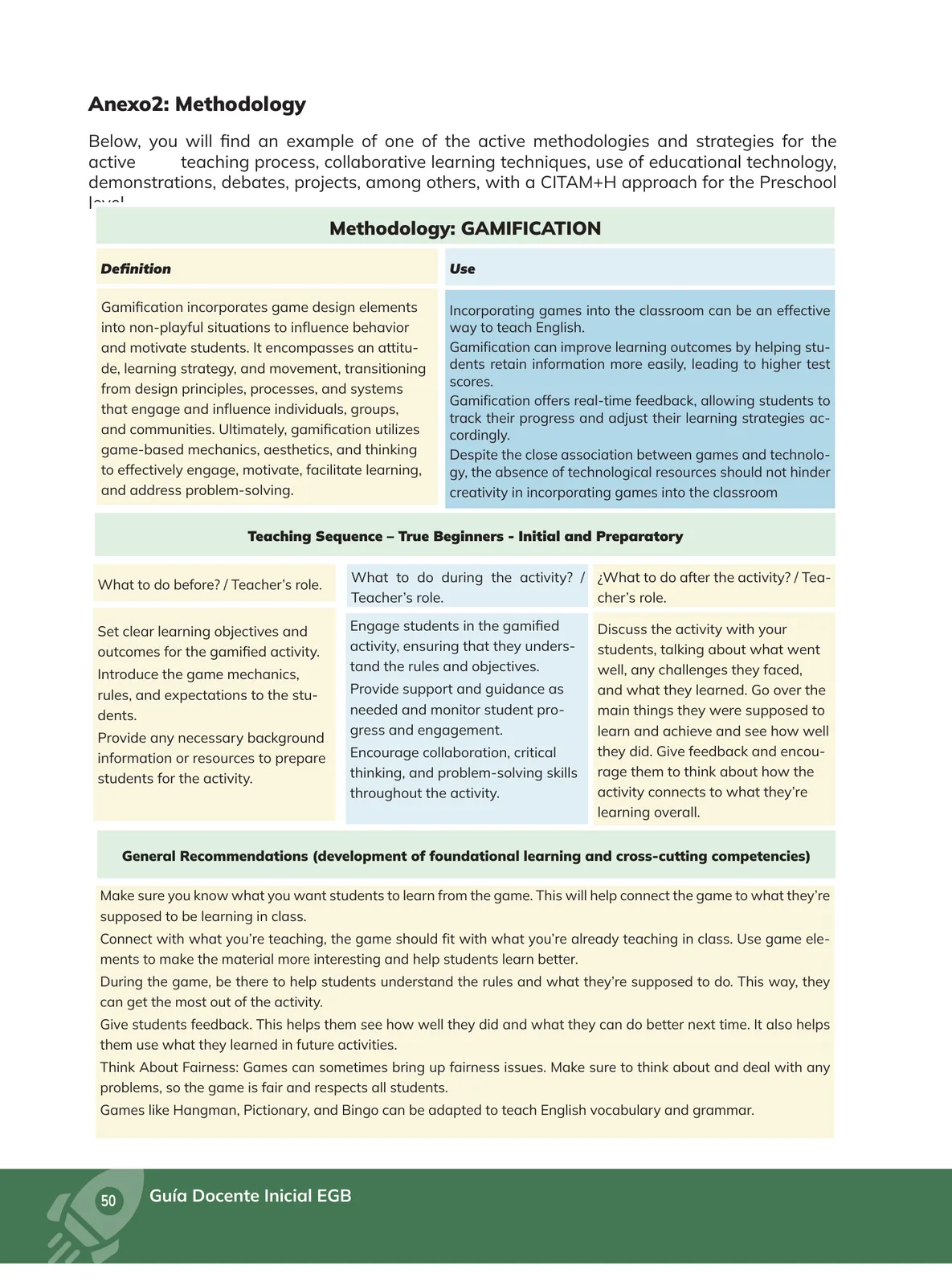
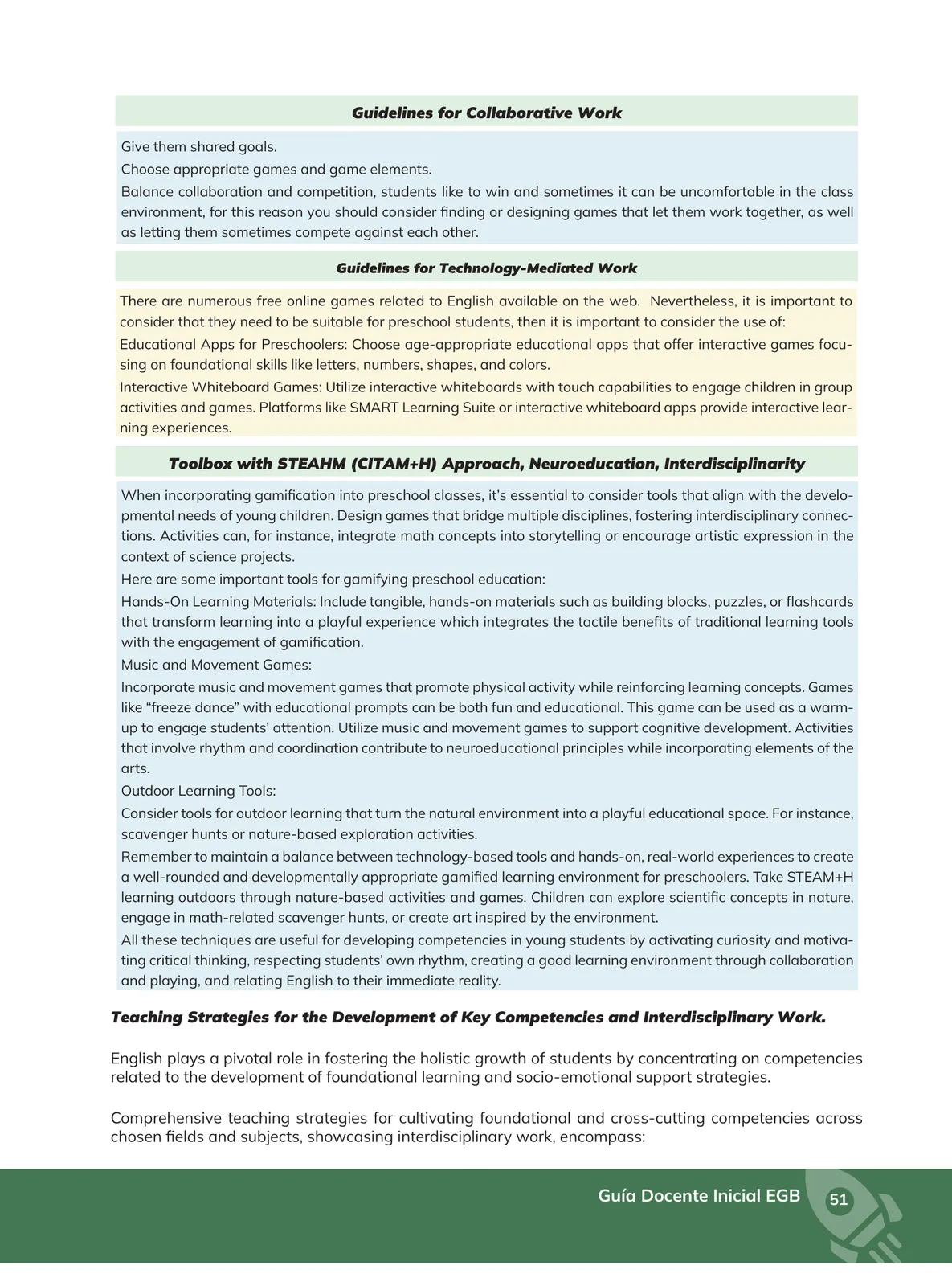
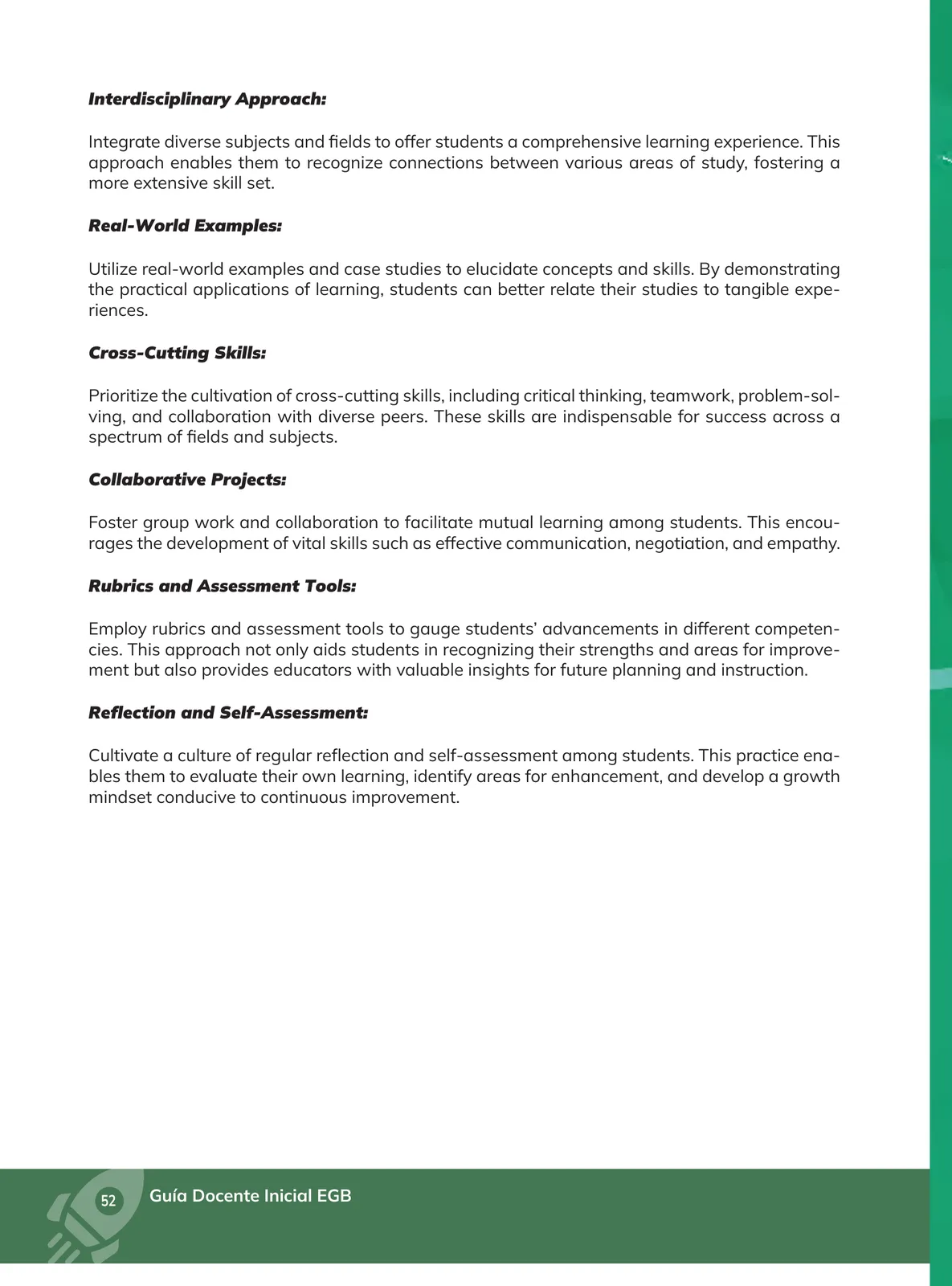
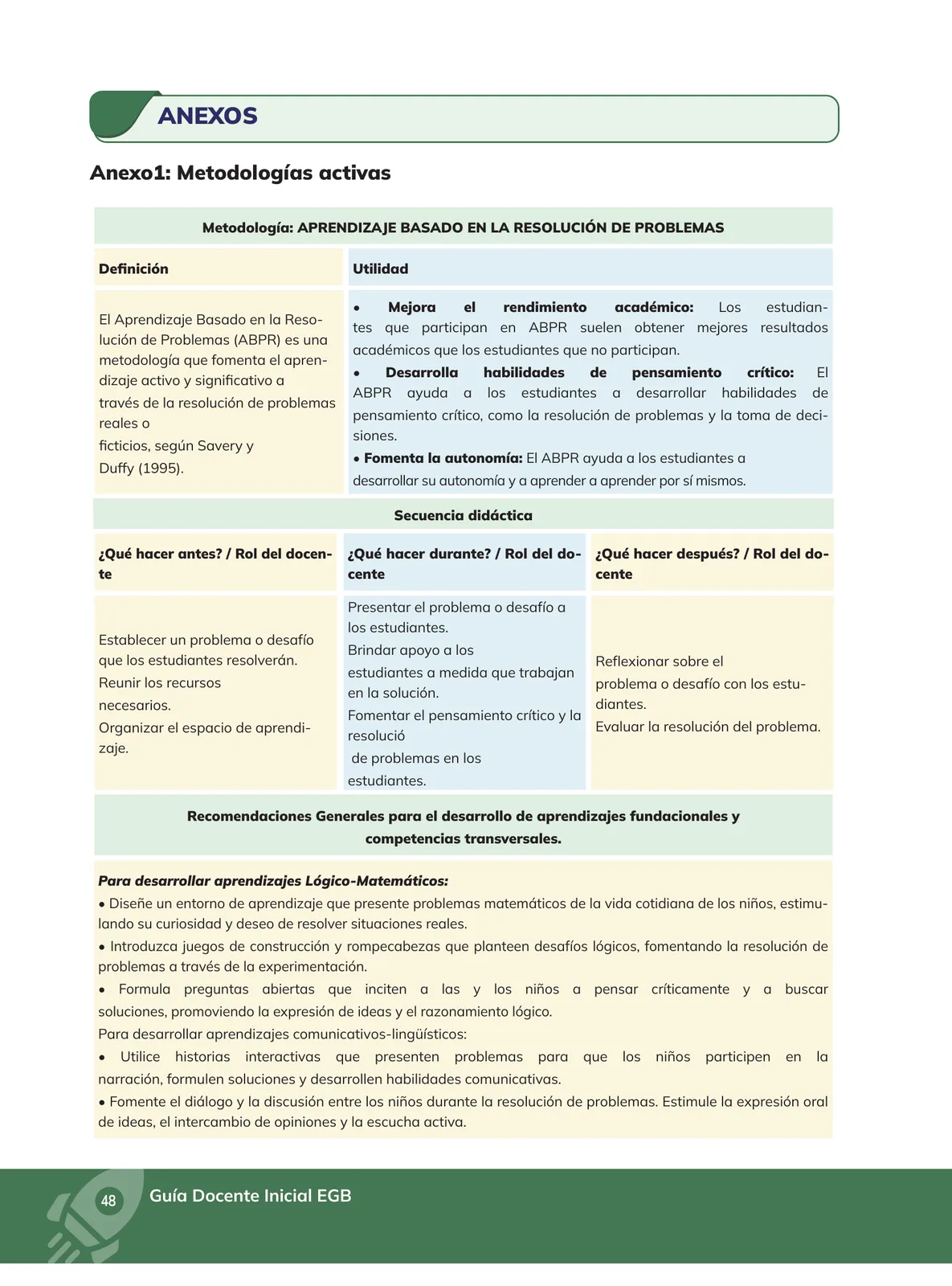
Interdisciplinary Approach: Integrate diverse subjects and fields to offer students a comprehensive learning experience. This

approach enables them to recognize connections between various areas of study, fostering a more extensive skill set.

Real-World Examples:

Utilize real-world examples and case studies to elucidate concepts and skills. By demonstrating the practical applications of learning, students can better relate their studies to tangible expe- riences.

Cross-Cutting Skills:

Prioritize the cultivation of cross-cutting skills, including critical thinking, teamwork, problem-sol- ving, and collaboration with diverse peers. These skills are indispensable for success across a spectrum of fields and subjects.

Collaborative Projects:

Foster group work and collaboration to facilitate mutual learning among students. This encou- rages the development of vital skills such as effective communication, negotiation, and empathy.

Rubrics and Assessment Tools:

Employ rubrics and assessment tools to gauge students’ advancements in different competen- cies. This approach not only aids students in recognizing their strengths and areas for improve- ment but also provides educators with valuable insights for future planning and instruction. Reflection and Self-Assessment:

Cultivate a culture of regular reflection and self-assessment among students. This practice ena-

bles them to evaluate their own learning, identify areas for enhancement, and develop a growth mindset conducive to continuous improvement.

  1. Guia Docente Inicial EGB
Ad

Páginas cercanas

Otros libros recomendados

Ver todos →
Ad

Usamos cookies propias y de terceros para personalizar contenido, mostrar publicidad y analizar el tráfico. Las cookies necesarias siempre están activas.