Ejercicio 1
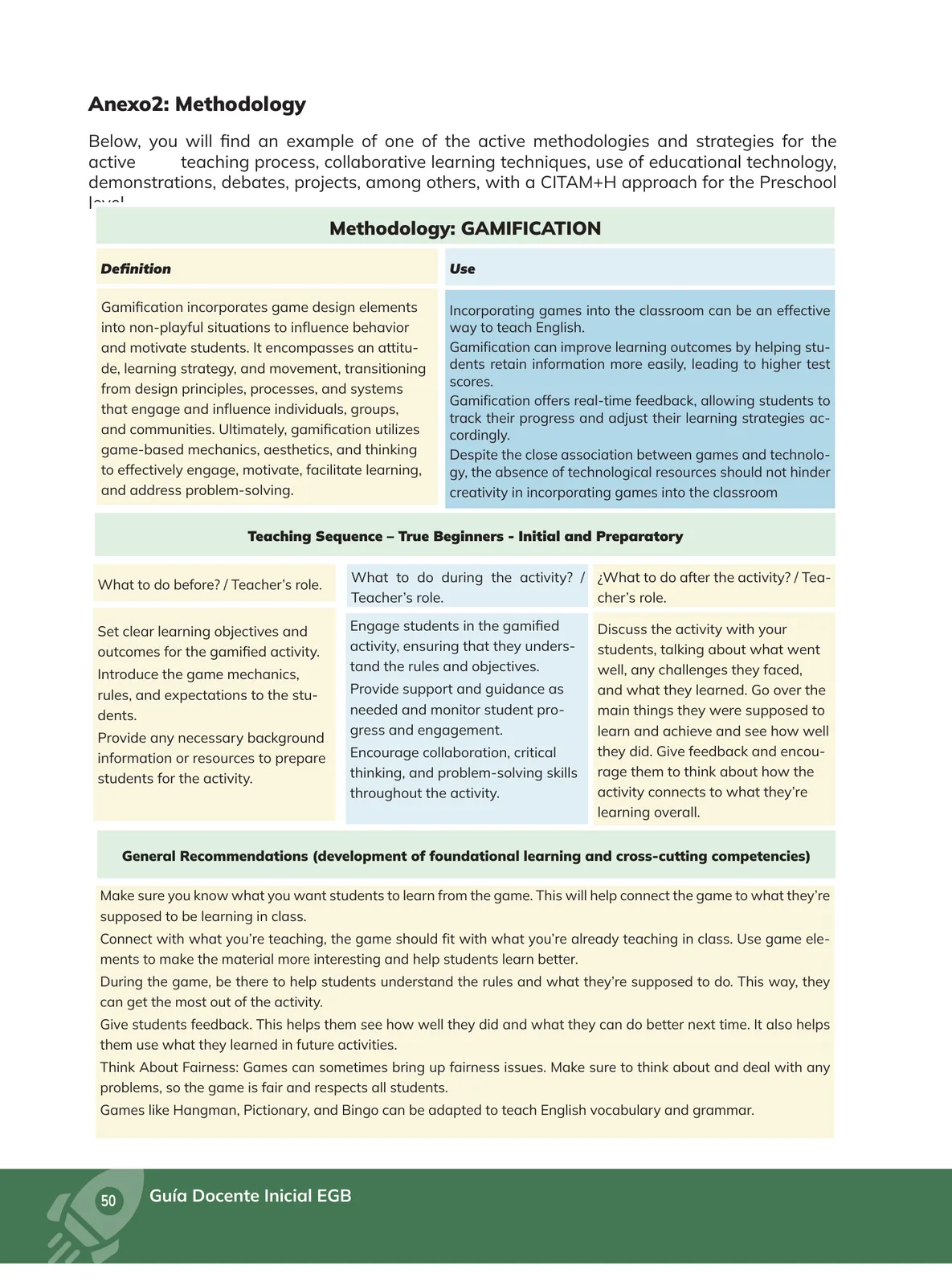
Anexo 2: Methodology
Below you will find an example of one of the active methodologies and strategies for the active teaching process, collaborative learning techniques, use of educational technology, demonstrations, debates, projects, among others, with a CITAM+H approach for the Preschool.
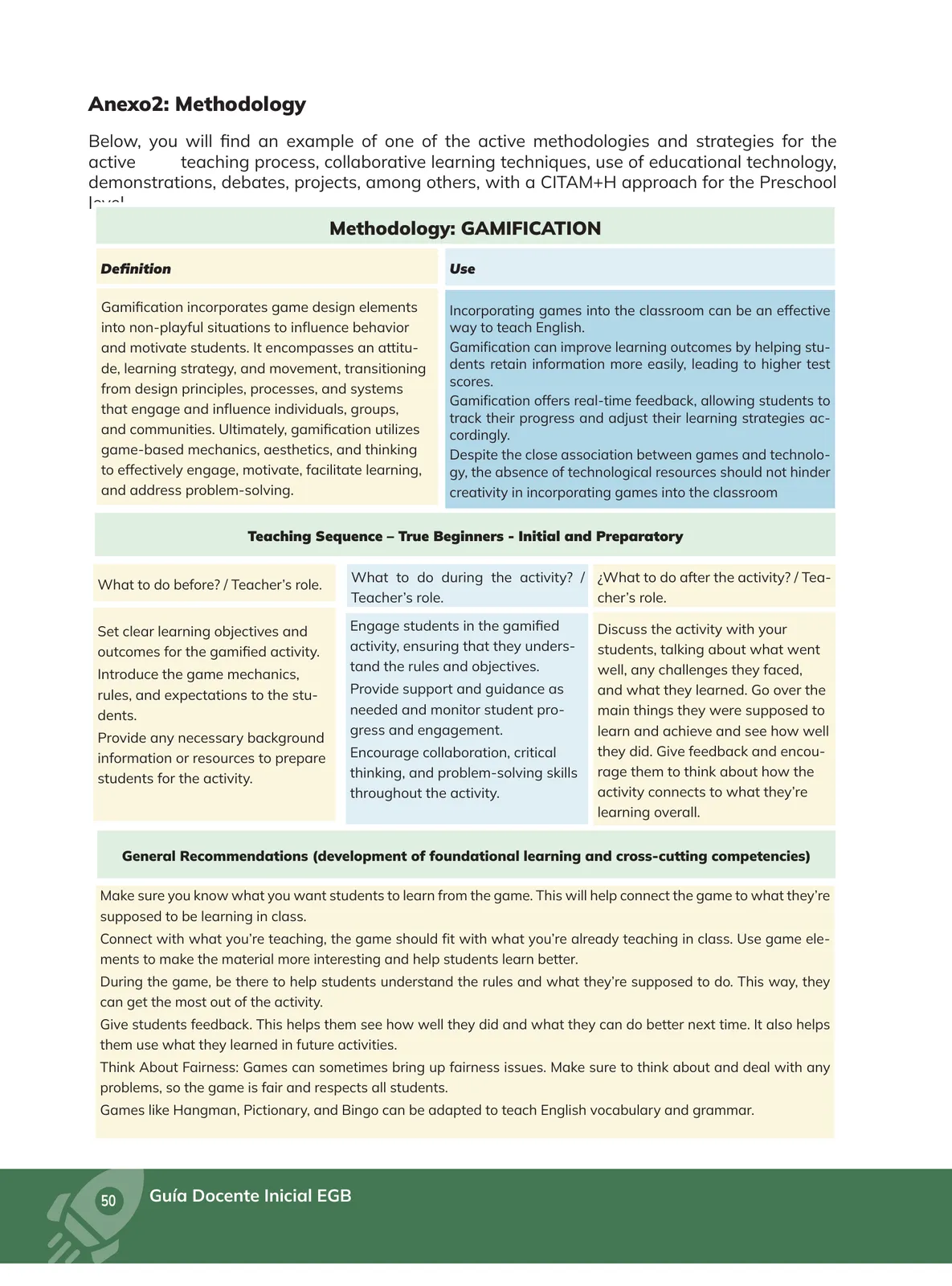
Methodology: GAMIFICATION
Definition
Gamification incorporates game design elements into non-playful situations to influence behavior and motivate students. It encompasses an attitude, learning strategy and movement, transitioning from design principles, processes and systems that engage and influence individuals, groups and communities. Gamification utilizes game-based mechanics, aesthetics and thinking to engage, motivate, facilitate learning and problem-solving.
Use
- Incorporating games into the classroom is an effective way to teach English.
- Gamification can improve learning outcomes, helping students retain information.
- Offers real-time feedback, allowing students to track progress.
- Despite association with technology, the absence of tech should not hinder creativity.
Teaching Sequence — True Beginners — Initial and Preparatory
| Before | During | After |
|---|---|---|
| Set clear learning objectives and outcomes | Engage students, ensure they understand rules | Discuss the activity (what went well, challenges, lessons) |
| Introduce game mechanics, rules, expectations | Provide support and monitor progress | Review main objectives |
| Provide background information or resources | Encourage collaboration, critical thinking, problem-solving | Give feedback and connect with overall learning |
General Recommendations
- Make sure you know what you want students to learn.
- Connect the game to what you're teaching.
- Be there to help students understand rules.
- Give students feedback.
- Think about fairness: address fairness issues so the game respects all students.
- Games like Hangman, Pictionary and Bingo can be adapted to teach English vocabulary and grammar.