
Dinámica de las competencias para Lengua Extranjera - Inglés
Solución — Página 53
Guia Docente · Preparatoria · 2024
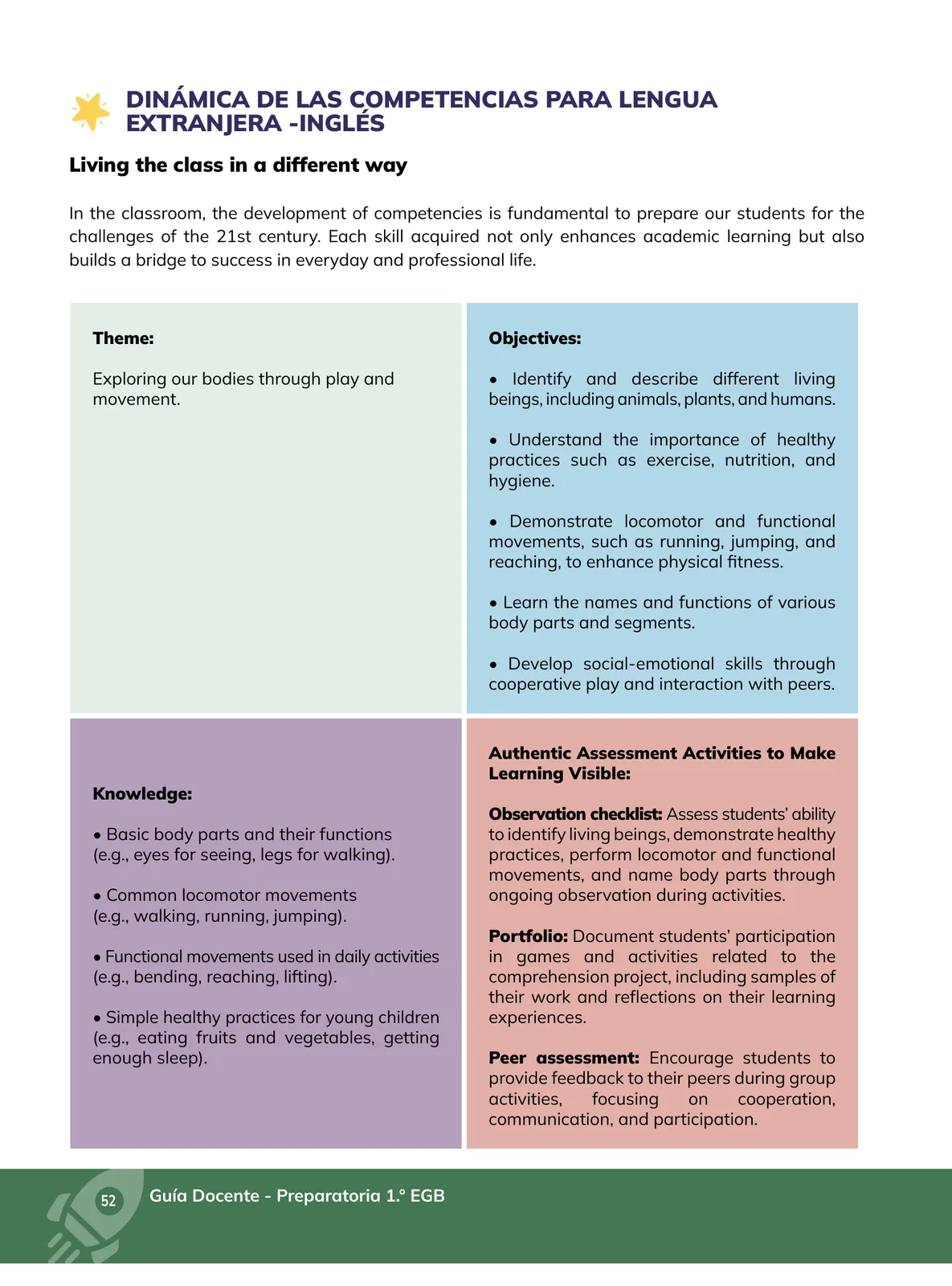
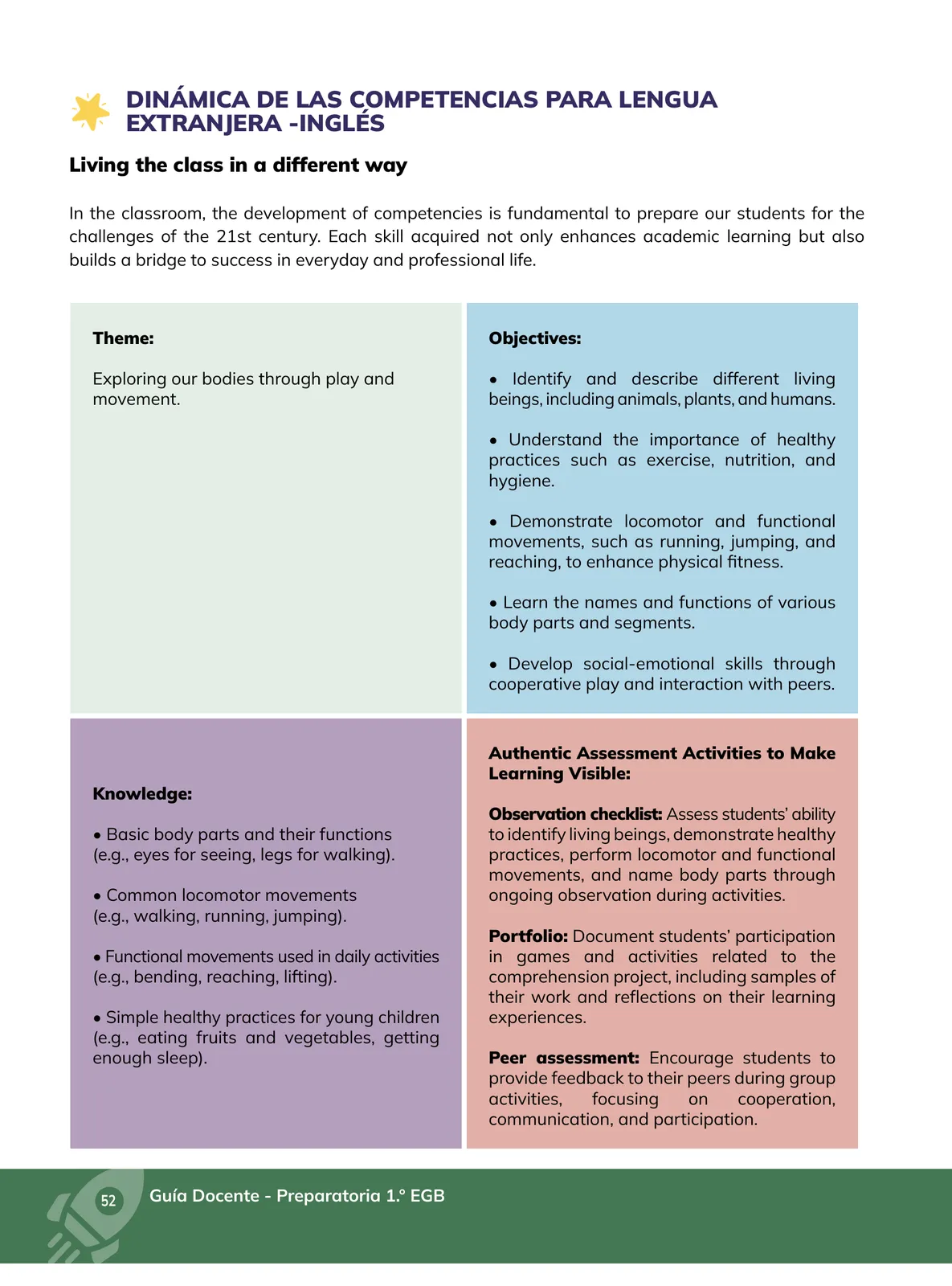
DINÁMICA DE LAS COMPETENCIAS PARA LENGUA EXTRANJERA - INGLÉS
Living the class in a different way
In the classroom, the development of competencies is fundamental to prepare our students for the challenges of the 21st century. Each skill acquired not only enhances academic learning but also builds a bridge to success in everyday and professional life.
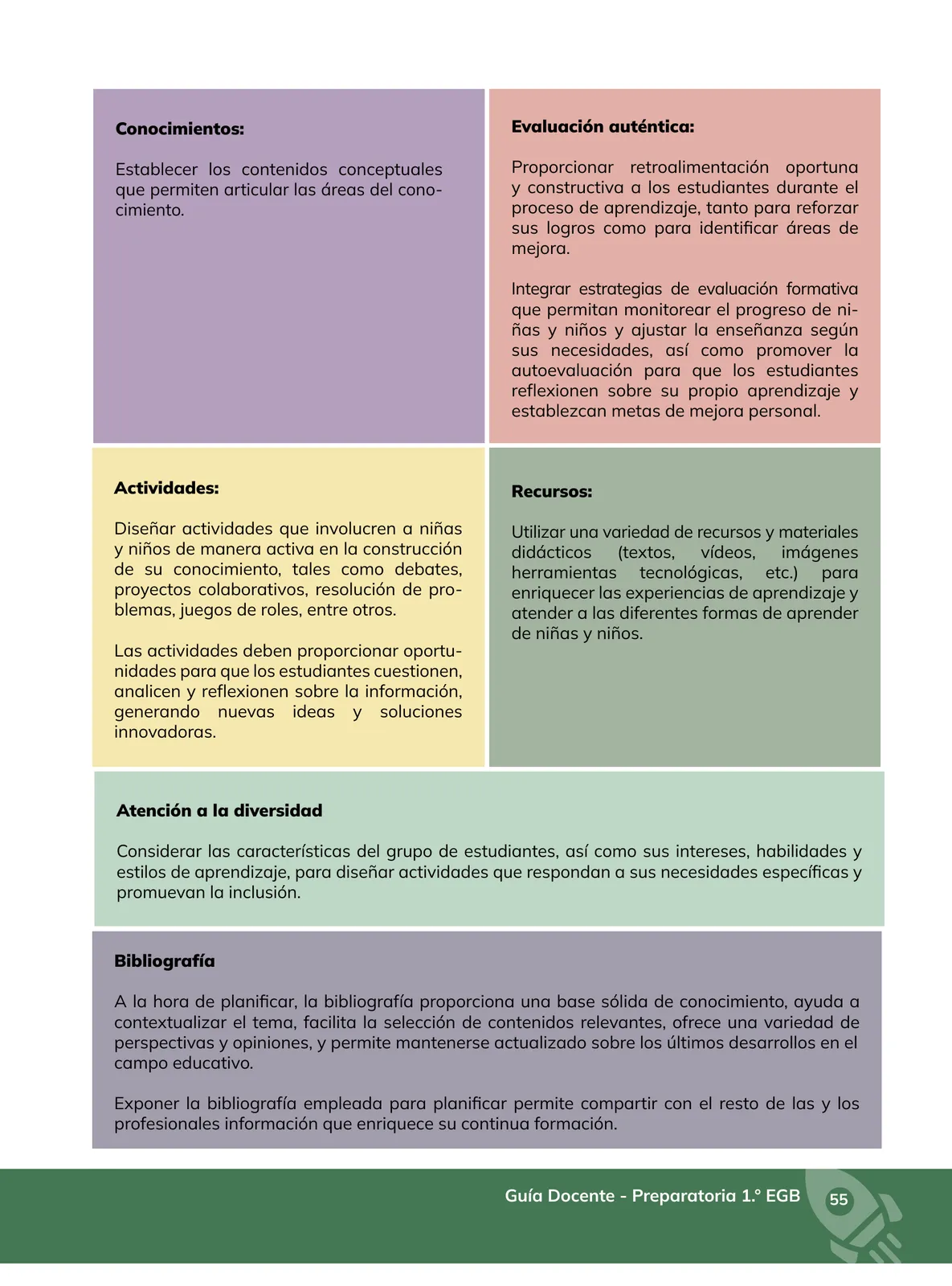
Theme
Exploring our bodies through play and movement.
Objectives
- Identify and describe different living beings, including animals, plants, and humans.
- Understand the importance of healthy practices such as exercise, nutrition, and hygiene.
- Demonstrate locomotor and functional movements, such as running, jumping, and reaching, to enhance physical fitness.
- Learn the names and functions of various body parts and segments.
- Develop social-emotional skills through cooperative play and interaction with peers.
Knowledge
- Basic body parts and their functions (e.g., eyes for seeing, legs for walking).
- Common locomotor movements (e.g., walking, running, jumping).
- Functional movements used in daily activities (e.g., bending, reaching, lifting).
- Simple healthy practices for young children (e.g., eating fruits and vegetables, getting enough sleep).
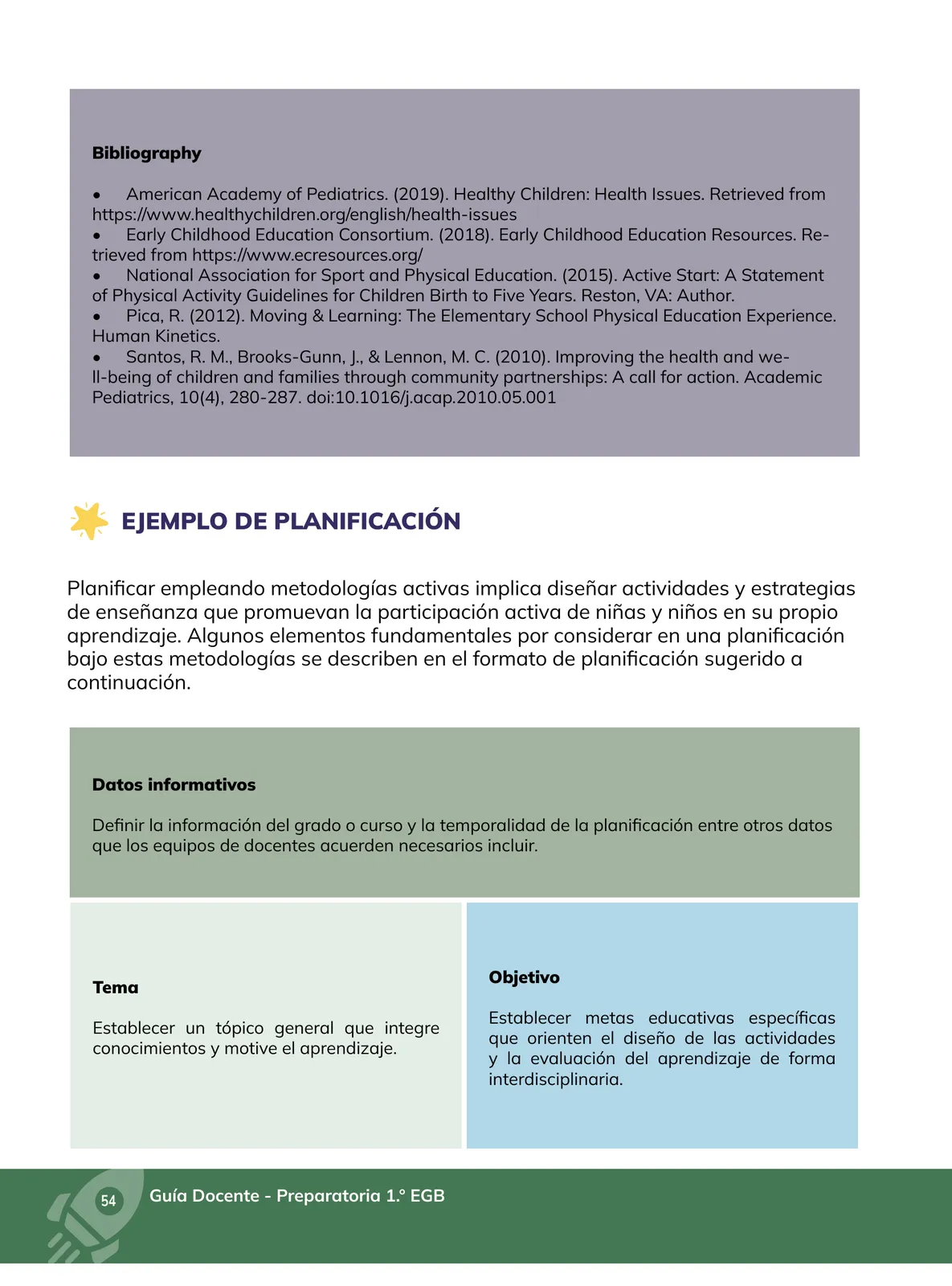
Authentic Assessment Activities to Make Learning Visible
- Observation checklist: Assess students' ability to identify living beings, demonstrate healthy practices, perform locomotor and functional movements, and name body parts through ongoing observation during activities.
- Portfolio: Document students' participation in games and activities related to the comprehension project, including samples of their work and reflections on their learning experiences.
- Peer assessment: Encourage students to provide feedback to their peers during group activities, focusing on cooperation, communication, and participation.
Glosario
- living beings: Seres vivos: animales, plantas y humanos.
- locomotor movements: Movimientos que permiten desplazamiento (caminar, correr, saltar).
- functional movements: Movimientos usados en actividades diarias (agacharse, alcanzar).
- peer assessment: Evaluación entre pares.
- portfolio: Carpeta de evidencias del aprendizaje del estudiante.
- • Ver pág. 54: Continúa la sesión de inglés con actividades y DUA.
📝 Transcripción de la página (texto seleccionable) 1898 caracteres
» DINÁMICA DE LAS COMPETENCIAS PARA LENGUA “~~ EXTRANJERA -INGLES
Living the class in a different way
In the classroom, the development of competencies is fundamental to prepare our students for the challenges of the 21st century. Each skill acquired not only enhances academic learning but also builds a bridge to success in everyday and professional life.
Theme:
Exploring our bodies through play and movement.
Knowledge:
e Basic body parts and their functions (e.g., eyes for seeing, legs for walking).
e Common locomotor movements (e.g., walking, running, jumping).
e Functional movements used in daily activities (e.g., bending, reaching, lifting).
e Simple healthy practices for young children (e.g., eating fruits and vegetables, getting enough sleep).
52 Guia Docente - Preparatoria 1.° EGB
Objectives:
e Identify and describe different living beings, including animals, plants, and humans.
e Understand the importance of healthy practices such as exercise, nutrition, and hygiene.
e Demonstrate locomotor and functional movements, such as running, jumping, and reaching, to enhance physical fitness.
e Learn the names and functions of various body parts and segments.
e Develop social-emotional skills through cooperative play and interaction with peers.
Authentic Assessment Activities to Make Learning Visible:
Observation checklist: Assess students’ ability to identify living beings, demonstrate healthy practices, perform locomotor and functional movements, and name body parts through ongoing observation during activities.
Portfolio: Document students’ participation in games and activities related to the comprehension project, including samples of their work and reflections on their learning experiences.
Peer assessment: Encourage students to provide feedback to their peers during group activities, focusing on cooperation, communication, and participation.
Otros libros recomendados
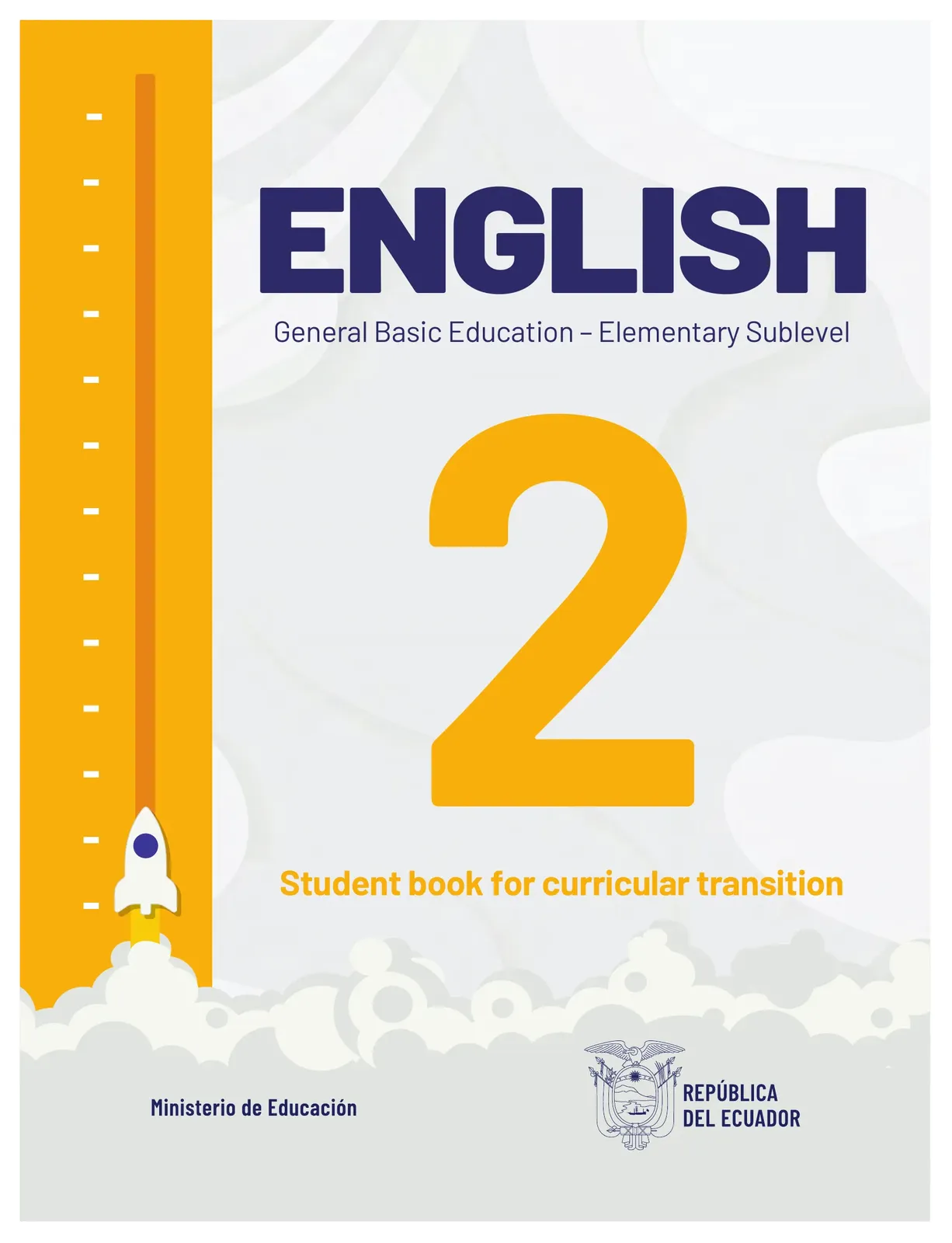
Ingles · 2 EGB · 2024
Ministerio de Educación del Ecuador
48 págs.
Ciencias Naturales · 2 EGB · 2025
Ministerio de Educación del Ecuador
146 págs.
Lengua Y Literatura · 2 EGB · 2025
Ministerio de Educación del Ecuador
246 págs.
Lengua Y Literatura · 2 EGB · 2024
Ministerio de Educación del Ecuador
70 págs.
Matematica · 6 EGB · 2025
Ministerio de Educación del Ecuador
218 págs.
Estudios Sociales · 6 EGB · 2025
Ministerio de Educación del Ecuador
226 págs.
Ingles · 6 EGB · 2024
Ministerio de Educación del Ecuador
50 págs.
Etnoeducacion · 6 EGB · 2024
Ministerio de Educación del Ecuador
100 págs.