Saltar al contenido
MisLibrosTexto
Ad
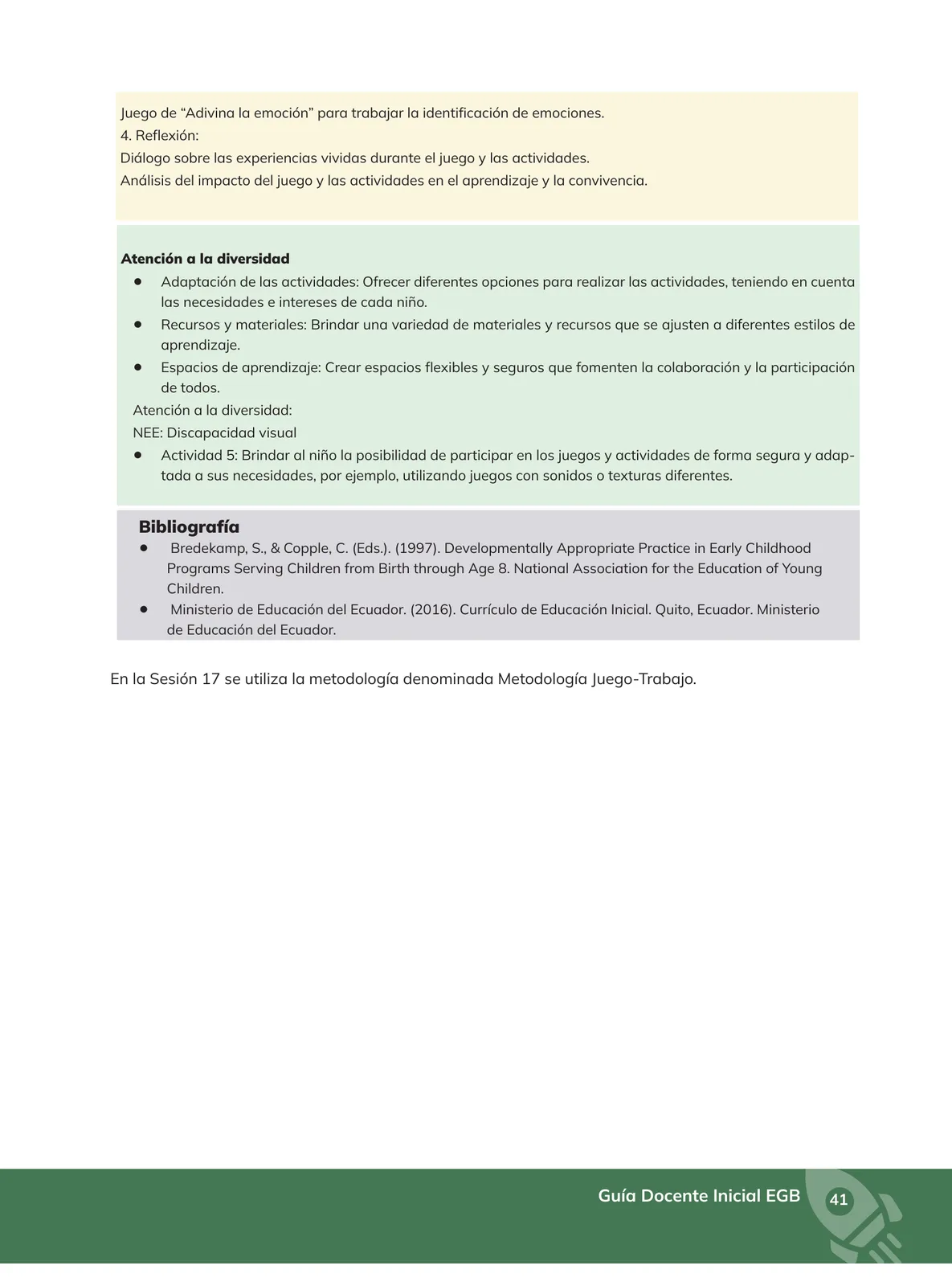
Guia Docente · Inicial · 2024

Ministerio de Educación del Ecuador

43/54

Dinámica de las competencias para Lengua Extranjera - Inglés

📄 contenido guia-docente 🎓 Inicial Inicial Ecuador 🇪🇨 EC 🗣 Español
Página 43
43 de 54
Página 43 de Guia Docente · Inicial · 2024
Anterior Página 43 / 54 Siguiente
📚 theory guia-docente ⭐⭐⭐ Dificultad 3/5 ⏱ 2 min lectura

Solución — Página 43

Guia Docente · Inicial · 2024

1
Ejercicio 1

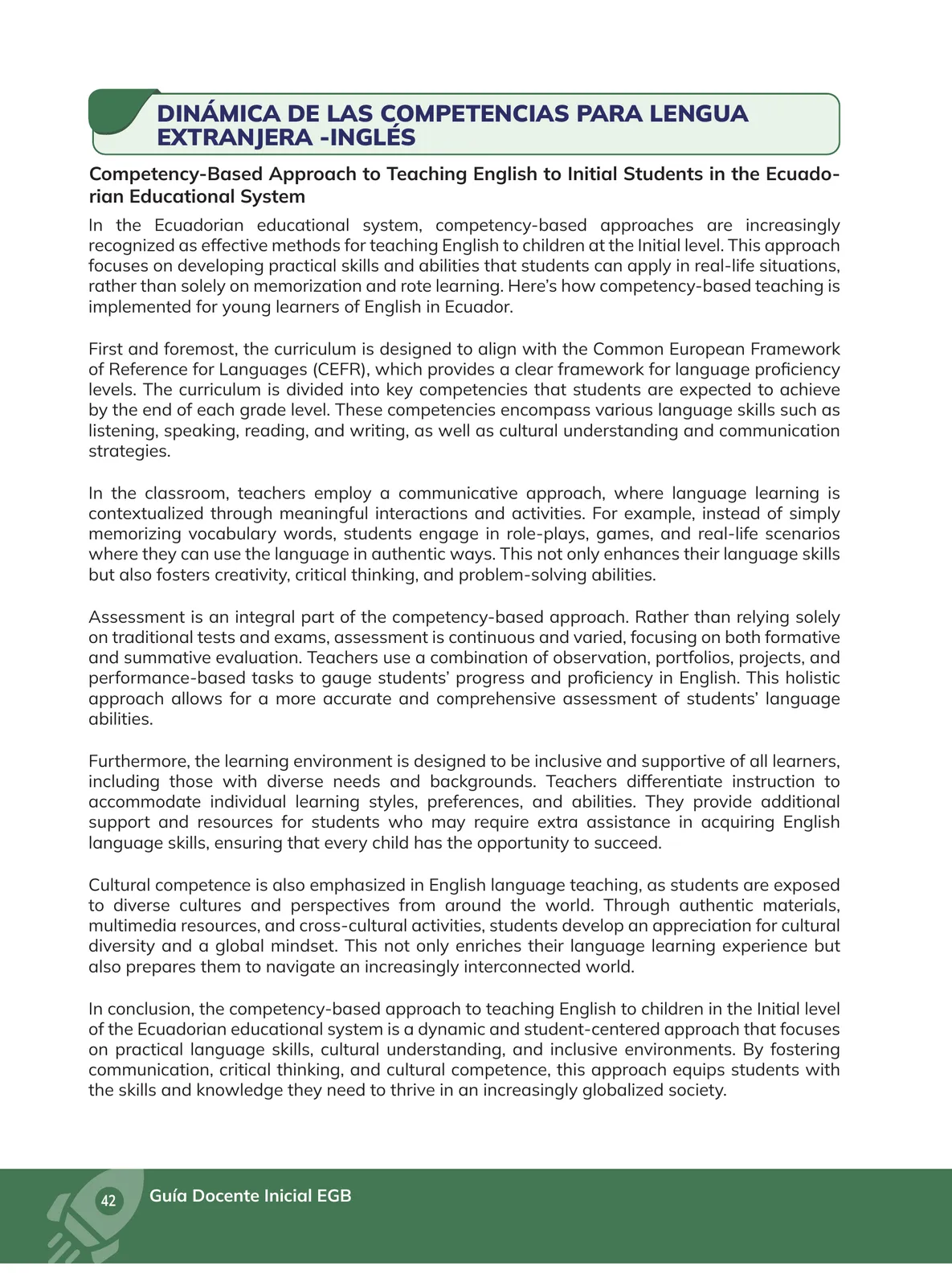
DINÁMICA DE LAS COMPETENCIAS PARA LENGUA EXTRANJERA - INGLÉS

Competency-Based Approach to Teaching English to Initial Students in the Ecuadorian Educational System

In the Ecuadorian educational system, competency-based approaches are increasingly recognized as effective methods for teaching English to children at the Initial level. This approach focuses on developing practical skills and abilities that students can apply in real-life situations.

Alignment with CEFR

The curriculum is designed to align with the Common European Framework of Reference for Languages (CEFR), providing a clear framework for language proficiency levels. Key competencies include:

  • Listening
  • Speaking
  • Reading
  • Writing
  • Cultural understanding
  • Communication strategies

Communicative Approach in the Classroom

Teachers employ a communicative approach where language learning is contextualized through meaningful interactions:

  • Role-plays
  • Games
  • Real-life scenarios

This fosters creativity, critical thinking and problem-solving abilities.

Continuous Assessment

Assessment is continuous and varied, focusing on formative and summative evaluation through:

  • Observation
  • Portfolios
  • Projects
  • Performance-based tasks

Inclusive Environment

The learning environment is inclusive and supportive of all learners, including those with diverse needs. Teachers differentiate instruction and provide additional support and resources.

Cultural Competence

Students are exposed to diverse cultures and perspectives. Through authentic materials, multimedia and cross-cultural activities, students develop appreciation for cultural diversity and a global mindset.

Conclusion

This approach is dynamic and student-centered, focusing on practical language skills, cultural understanding and inclusive environments, equipping students to thrive in an increasingly globalized society.
Preguntas abiertas

1
Ejercicio 1

** How can I make English learning meaningful for Initial students?

Respuesta orientativa: Through role-play, songs, real-life scenarios, and connection with their cultural context.

Diagrama 1

Pillars of the competency-based English approach

mindmap
  root((English Competency Approach))
    CEFR alignment
      Listening
      Speaking
      Reading
      Writing
    Communicative methods
      Role-play
      Games
      Real-life scenarios
    Continuous assessment
      Observation
      Portfolios
      Projects
    Inclusion
    Cultural competence

Glosario

  • CEFR (Common European Framework of Reference for Languages): Marco común europeo de referencia para las lenguas que establece niveles de competencia lingüística (A1-C2).
  • enfoque comunicativo: Metodología que prioriza el uso del idioma en situaciones reales de comunicación.
  • competencia cultural: Capacidad de interactuar respetuosamente con personas de diversas culturas.
  • evaluación basada en desempeño: Modalidad evaluativa que mide la capacidad del estudiante de aplicar conocimientos en tareas reales.
¿Te fue útil esta página?

Preguntas que la gente también hace

How can I make English learning meaningful for Initial students?
Consulta la solución completa arriba o explora el libro entero para temas relacionados.
📌 Antes de leer esto
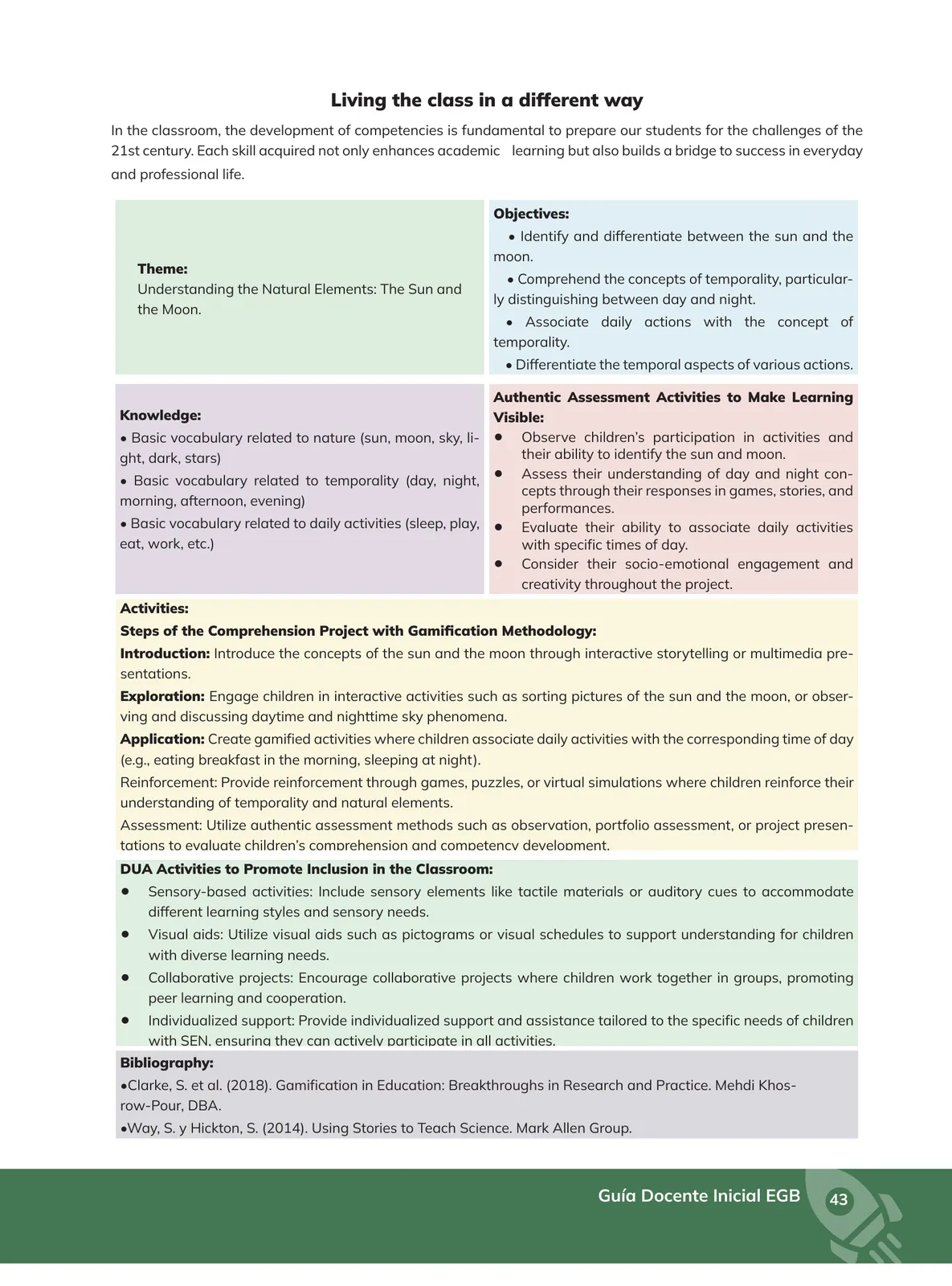
  • Ver pág. 44: Continuación con 'Living the class in a different way' (ejemplo en inglés).
Siguiente tema sugerido
Living the class in a different way — Understanding the Natural Elements: The Sun and the Moon
📝 Transcripción de la página (texto seleccionable) 3387 caracteres

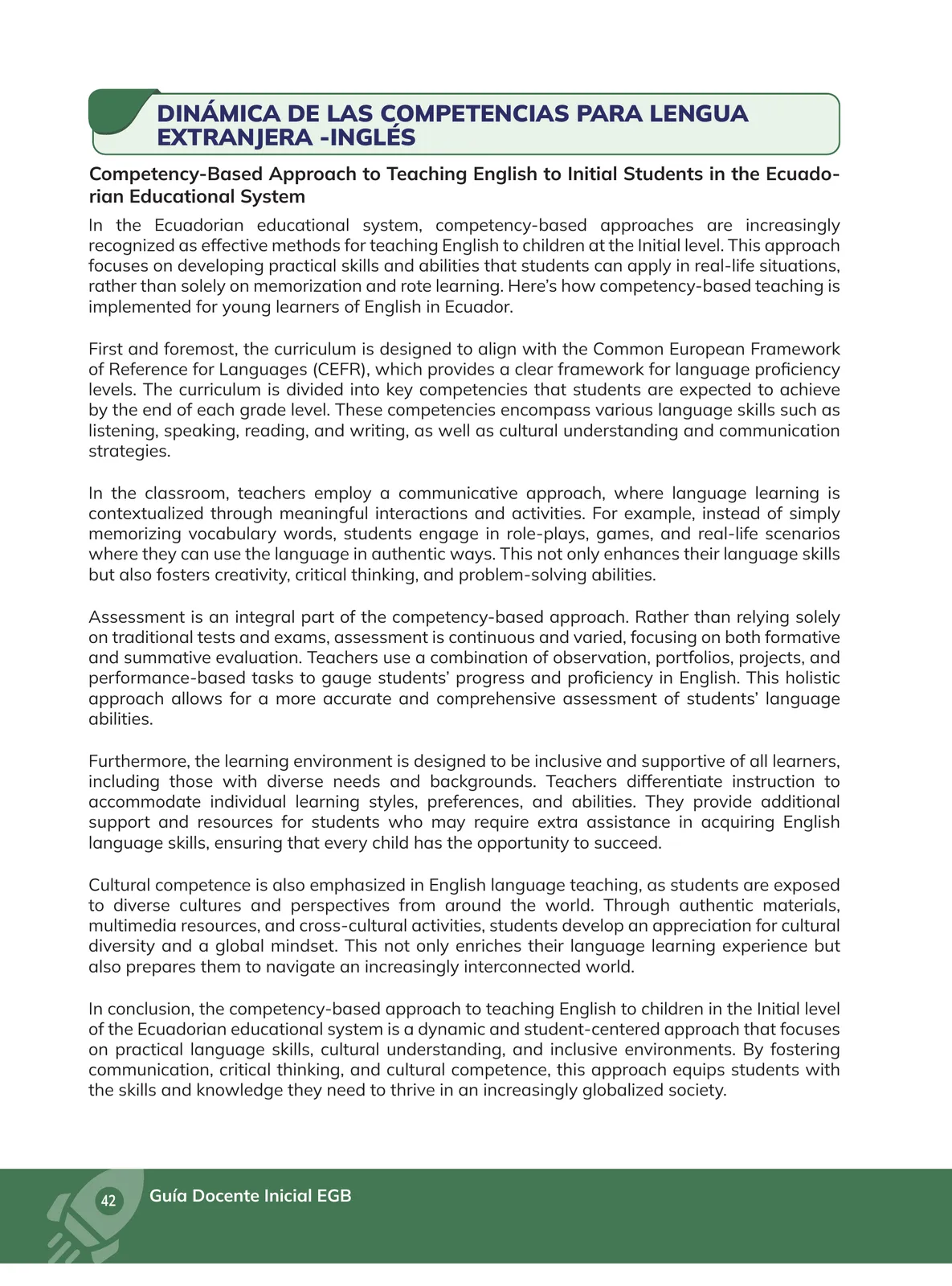
DINÁMICA DE LAS COMPETENCIAS PARA LENGUA EXTRANJERA -INGLES

Competency-Based Approach to Teaching English to Initial Students in the Ecuado- rian Educational System

In the Ecuadorian educational system, competency-based approaches are increasingly recognized as effective methods for teaching English to children at the Initial level. This approach focuses on developing practical skills and abilities that students can apply in real-life situations, rather than solely on memorization and rote learning. Here's how competency-based teaching is implemented for young learners of English in Ecuador.

First and foremost, the curriculum is designed to align with the Common European Framework of Reference for Languages (CEFR), which provides a clear framework for language proficiency levels. The curriculum is divided into key competencies that students are expected to achieve by the end of each grade level. These competencies encompass various language skills such as listening, speaking, reading, and writing, as well as cultural understanding and communication strategies.

In the classroom, teachers employ a communicative approach, where language learning is contextualized through meaningful interactions and activities. For example, instead of simply memorizing vocabulary words, students engage in role-plays, games, and real-life scenarios where they can use the language in authentic ways. This not only enhances their language skills but also fosters creativity, critical thinking, and problem-solving abilities.

Assessment is an integral part of the competency-based approach. Rather than relying solely on traditional tests and exams, assessment is continuous and varied, focusing on both formative and summative evaluation. Teachers use a combination of observation, portfolios, projects, and performance-based tasks to gauge students' progress and proficiency in English. This holistic approach allows for a more accurate and comprehensive assessment of students' language abilities.

Furthermore, the learning environment is designed to be inclusive and supportive of all learners, including those with diverse needs and backgrounds. Teachers differentiate instruction to accommodate individual learning styles, preferences, and abilities. They provide additional support and resources for students who may require extra assistance in acquiring English language skills, ensuring that every child has the opportunity to succeed.

Cultural competence is also emphasized in English language teaching, as students are exposed to diverse cultures and perspectives from around the world. Through authentic materials, multimedia resources, and cross-cultural activities, students develop an appreciation for cultural diversity and a global mindset. This not only enriches their language learning experience but also prepares them to navigate an increasingly interconnected world.

In conclusion, the competency-based approach to teaching English to children in the Initial level of the Ecuadorian educational system is a dynamic and student-centered approach that focuses on practical language skills, cultural understanding, and inclusive environments. By fostering communication, critical thinking, and cultural competence, this approach equips students with the skills and knowledge they need to thrive in an increasingly globalized society.
42 Guia Docente Inicial EGB

Ad

Otros libros recomendados

Ver todos →
Ad

Usamos cookies propias y de terceros para personalizar contenido, mostrar publicidad y analizar el tráfico. Las cookies necesarias siempre están activas.